Which Is Louder
Two clips with identical peak levels, and one is obviously louder. Your answers reveal which of three measures you are actually following, and it is not the one on the meter.
20 projects
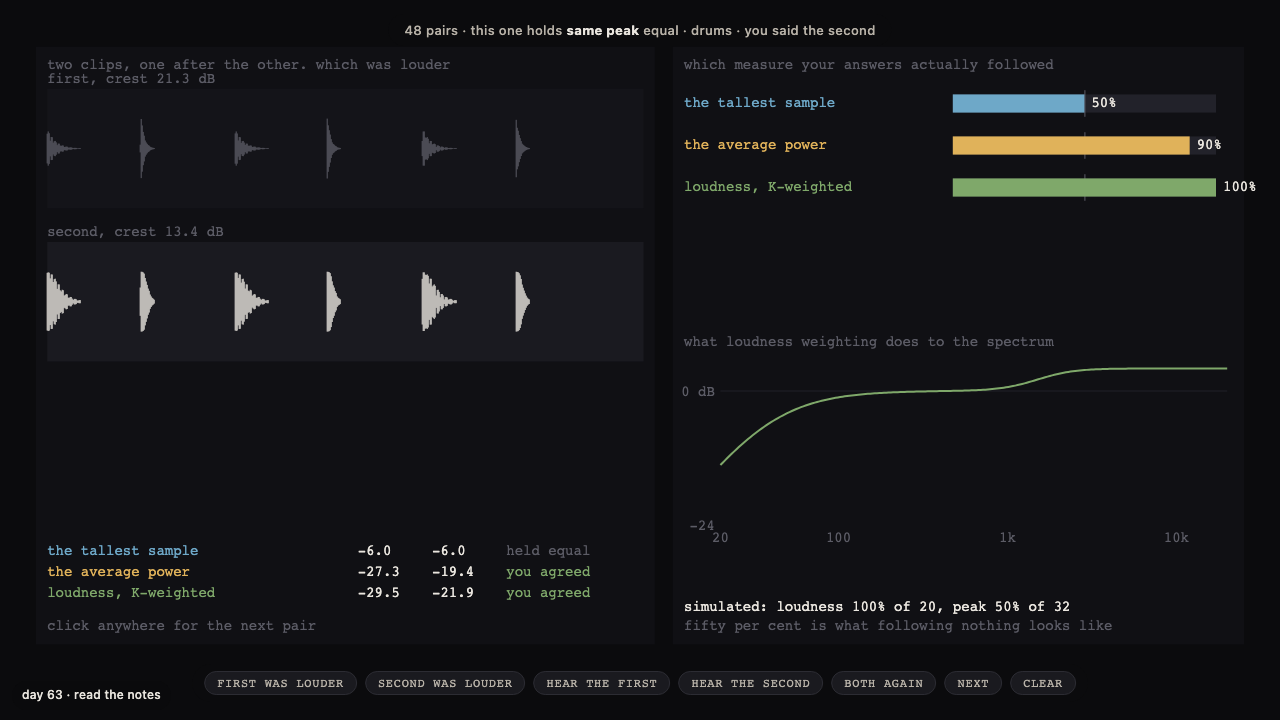
Two clips with identical peak levels, and one is obviously louder. Your answers reveal which of three measures you are actually following, and it is not the one on the meter.
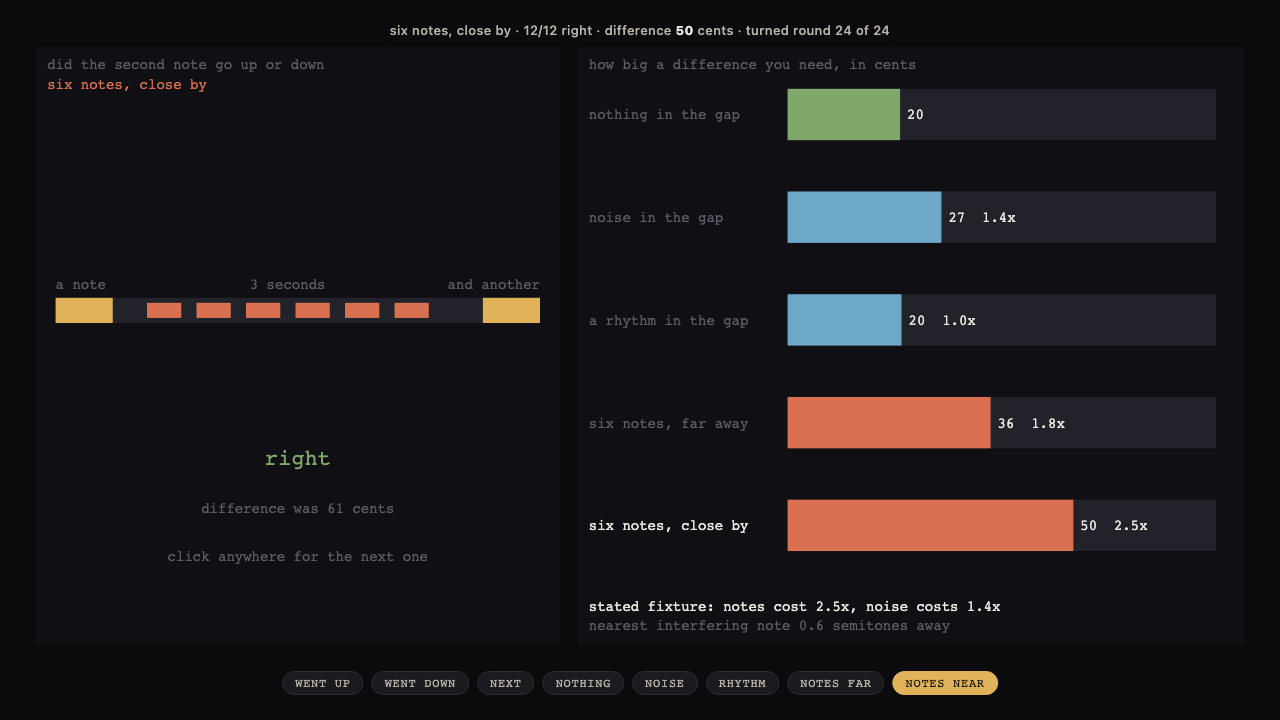
Hold a note in your head for three seconds and you can spot a twenty cent change. Put six other notes in the gap and it takes fifty. Fill it with noise instead and almost nothing happens.
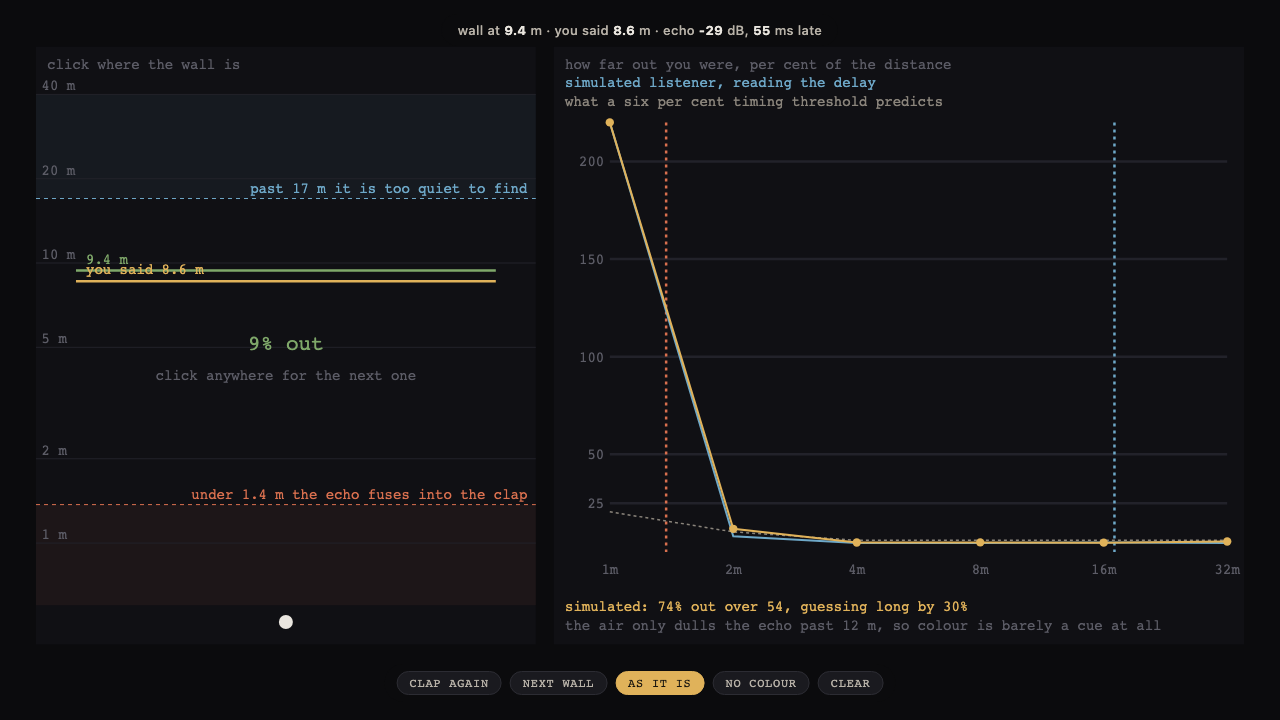
Clap, hear the echo, click the distance. You will be within about five per cent in a minute, and completely lost outside a band three and a half doublings wide.
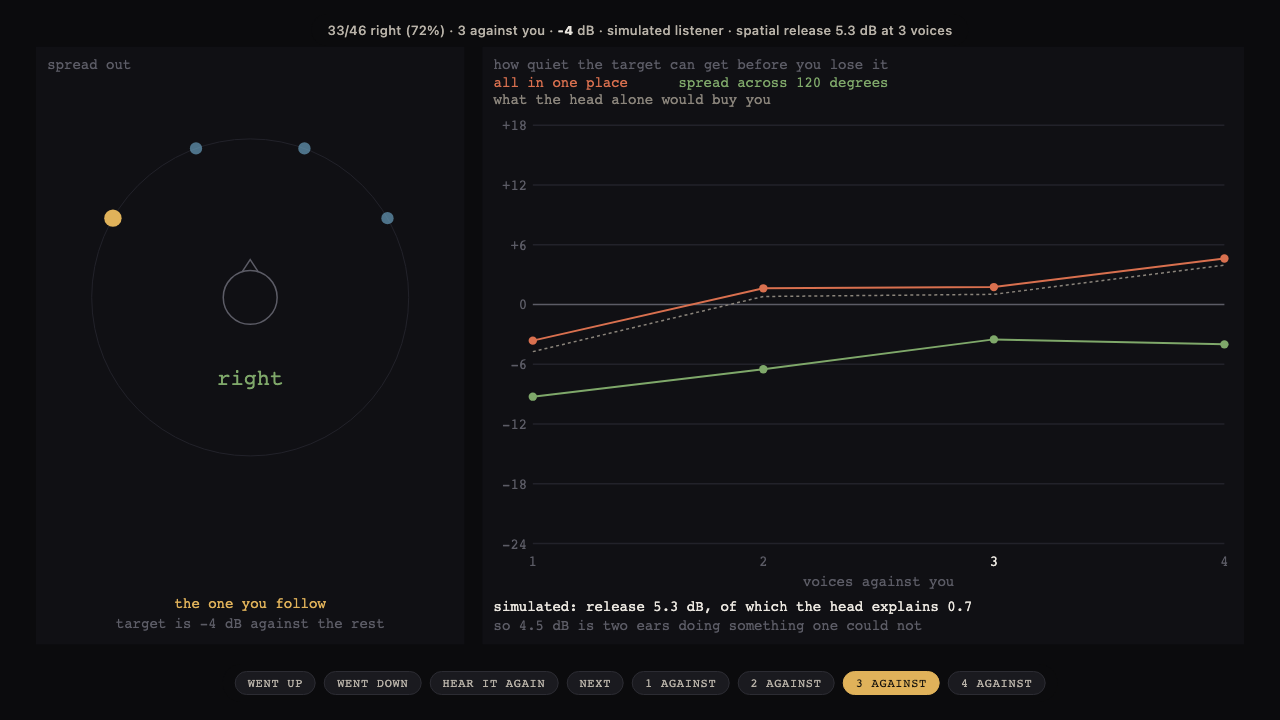
Two voices in different places are far easier to separate than two in the same place. The help has a size in decibels, and at this pitch almost none of it comes from your head being in the way.
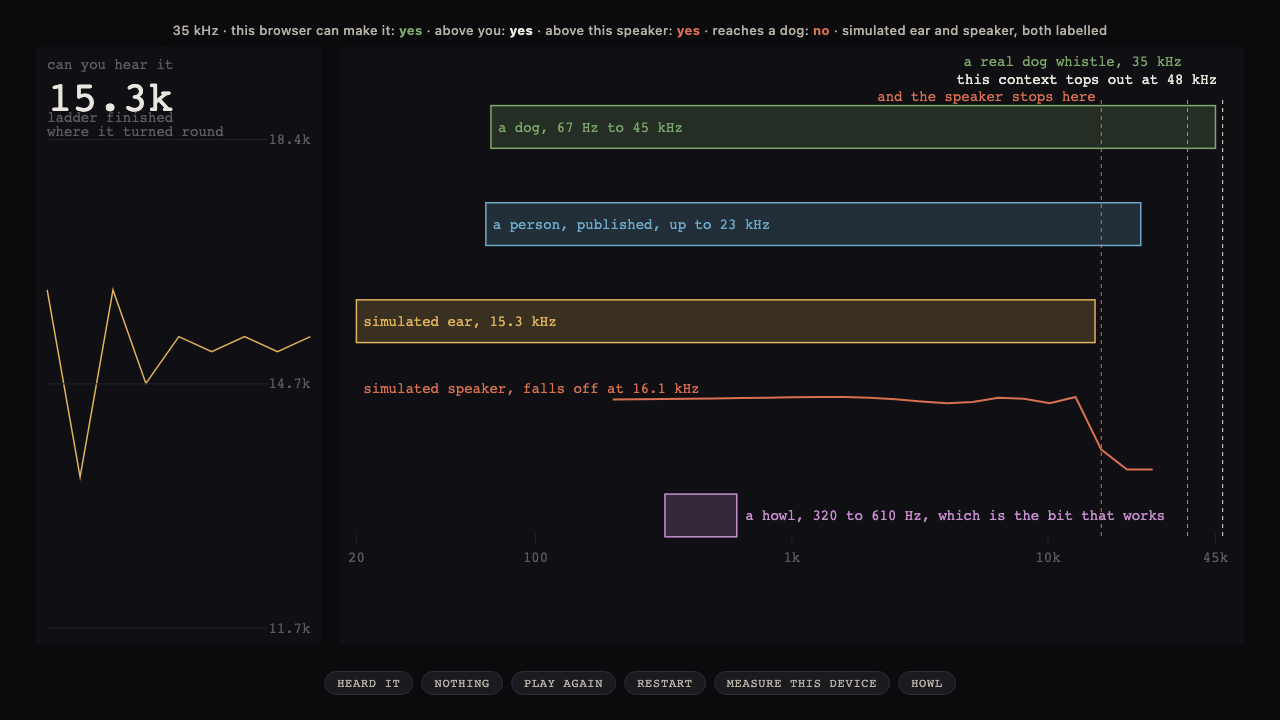
A browser will hand you a 96 kHz audio context and let you synthesise a 35 kHz dog whistle without complaint. Three ceilings stand between that and a dog, and the code only clears one of them.
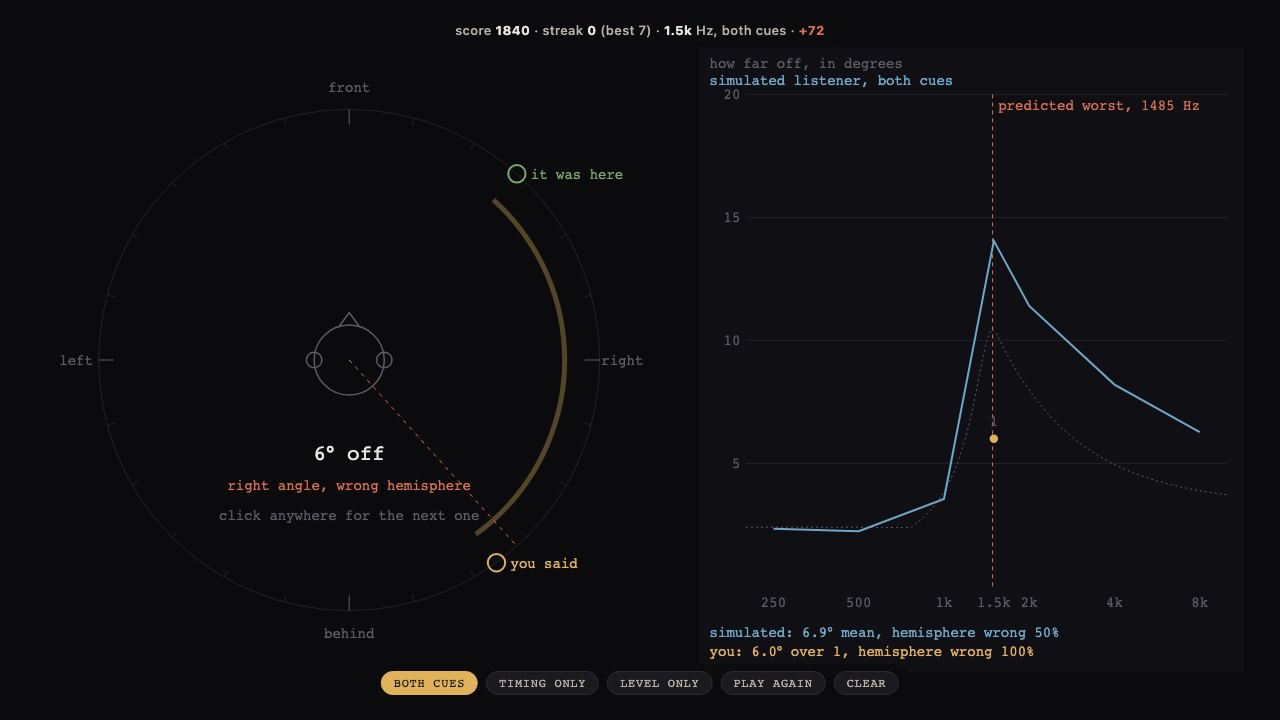
A shooting gallery for your ears. Switch off one cue at a time and the score tells you what that cue was worth, in degrees.
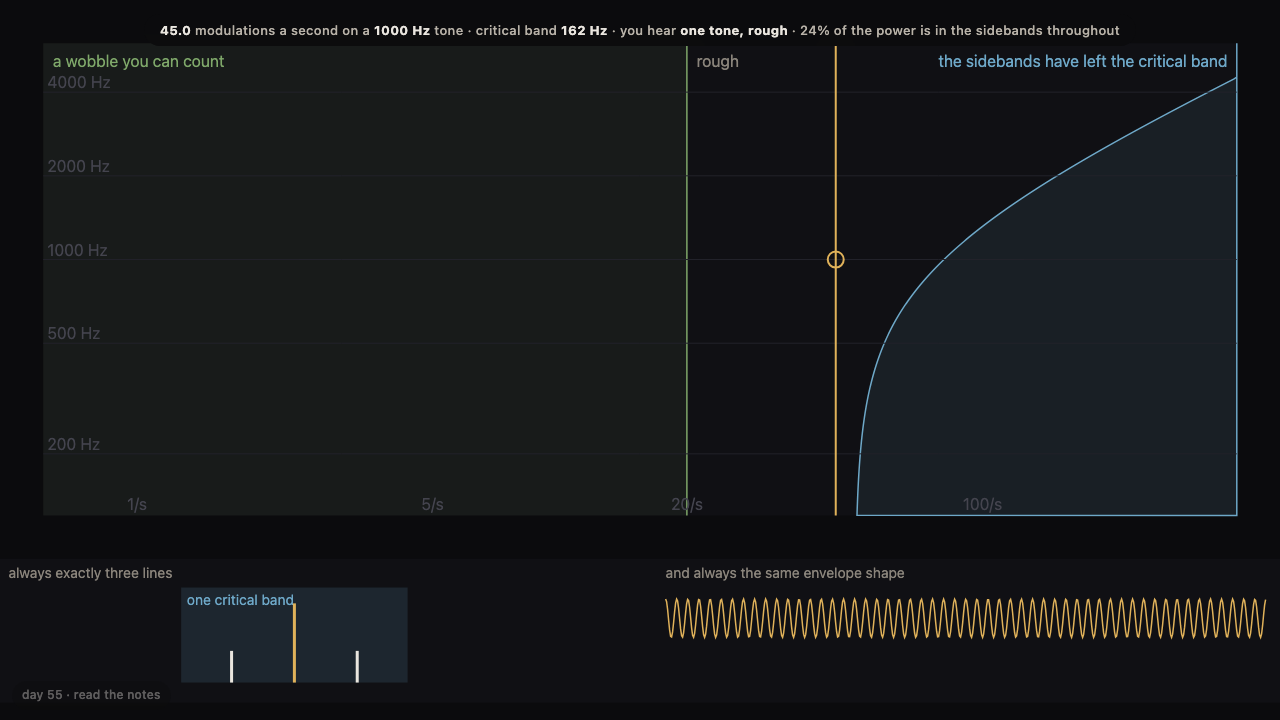
A tone whose loudness wobbles. Speed the wobble up and it becomes three separate notes, without the signal changing in any way at all.
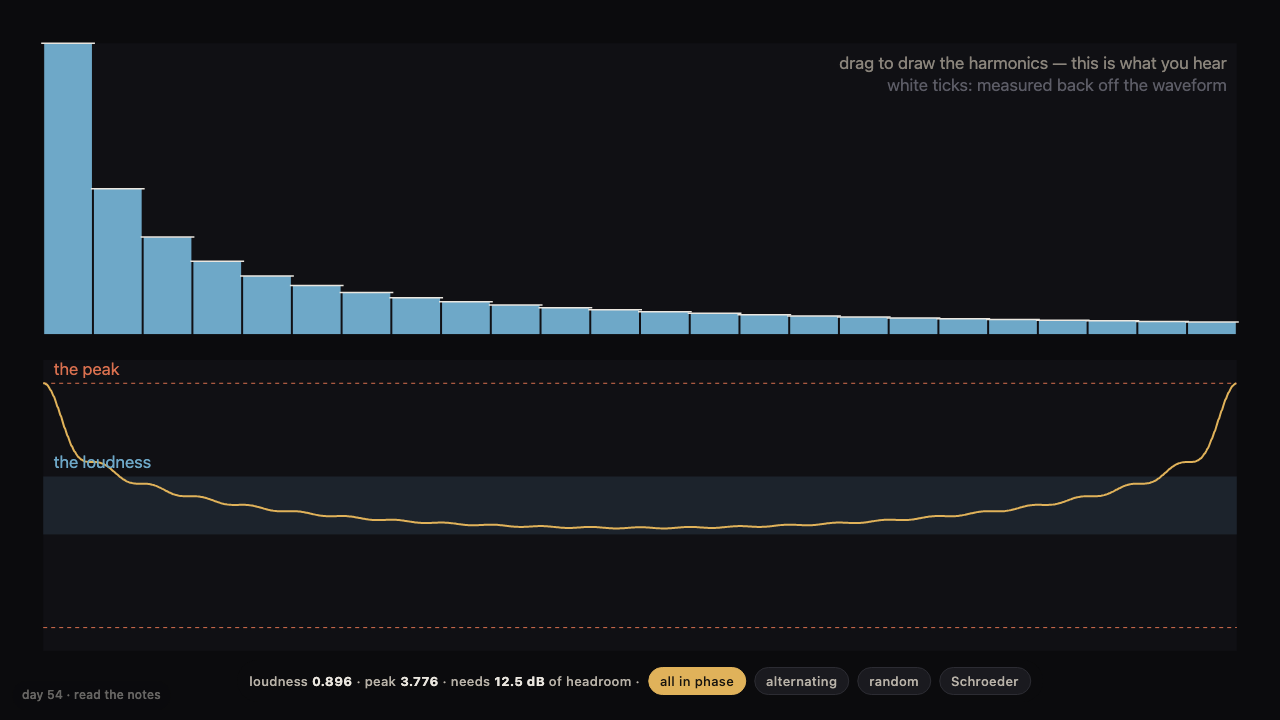
Draw a spectrum, then rearrange its phases. The waveform becomes unrecognisable, the sound does not change, and the peak moves by six decibels.
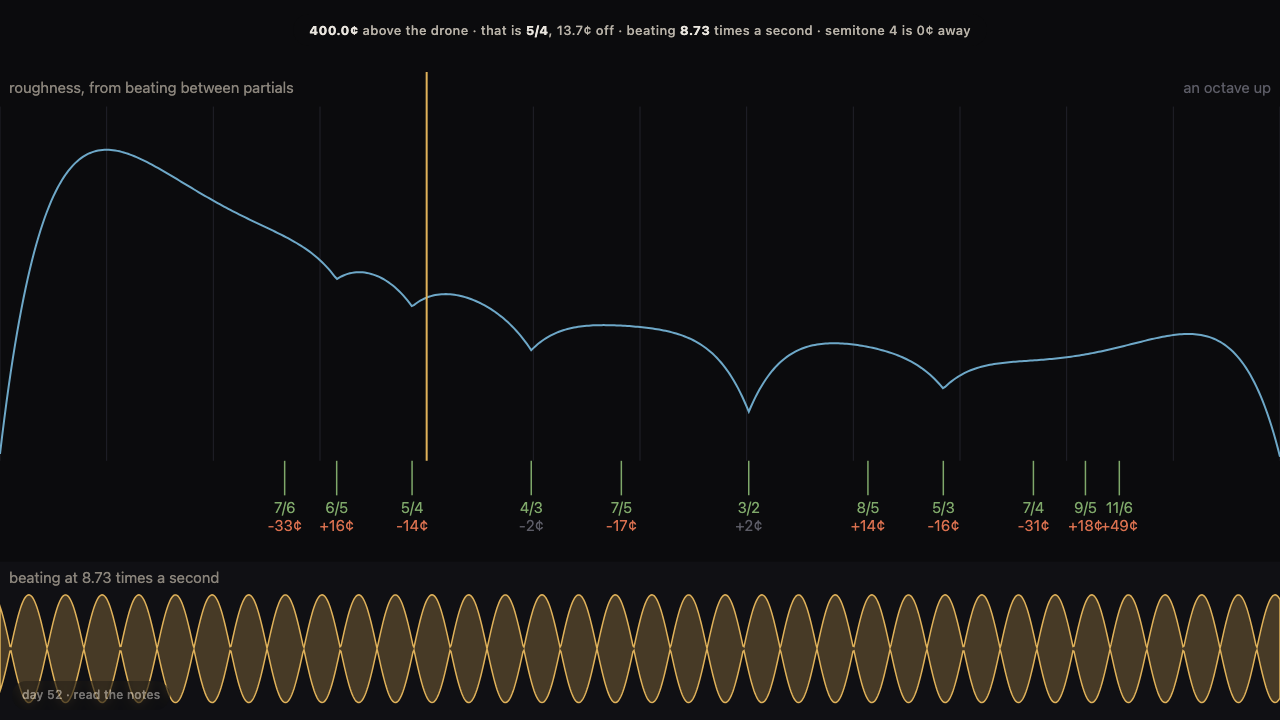
Slide one note against another and hunt for the places the wobble disappears. They turn out to be the intervals music already uses.
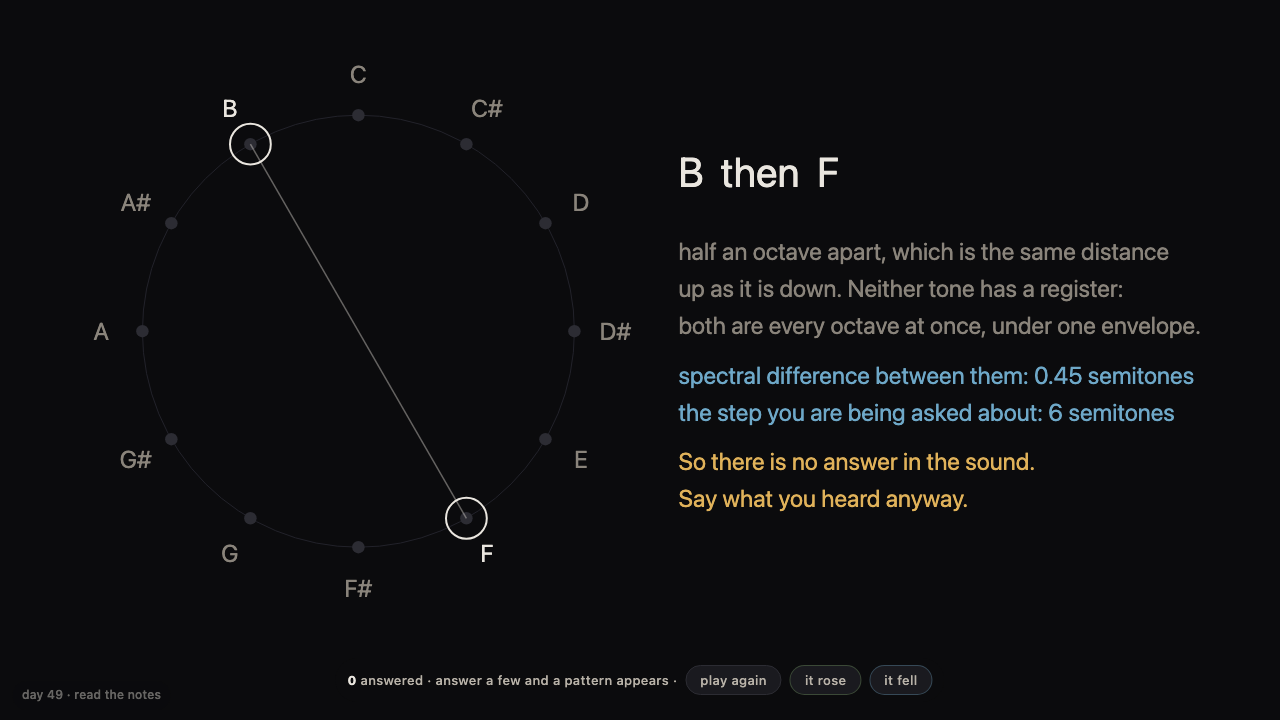
Two tones half an octave apart. Whether they went up or down is not in the signal, and you will still be sure.
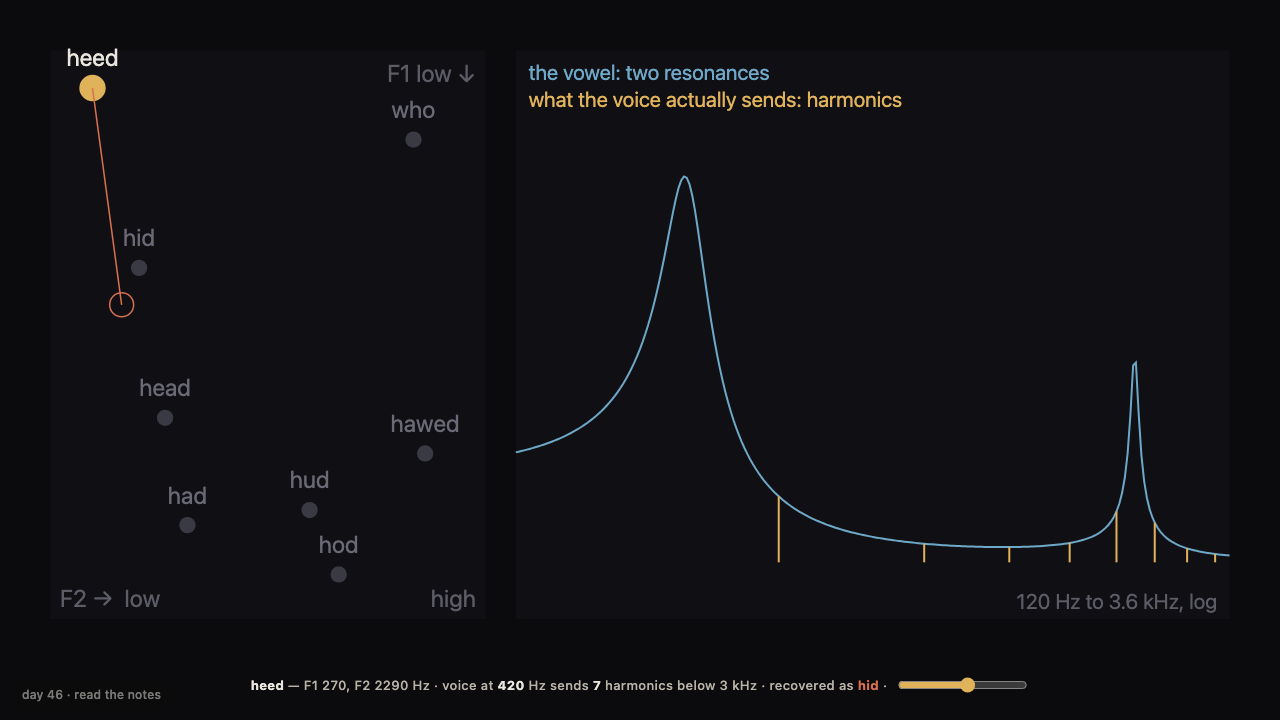
A vowel is two bumps in a spectrum. A voice can only send them at multiples of its own pitch, and a high voice cannot send enough.
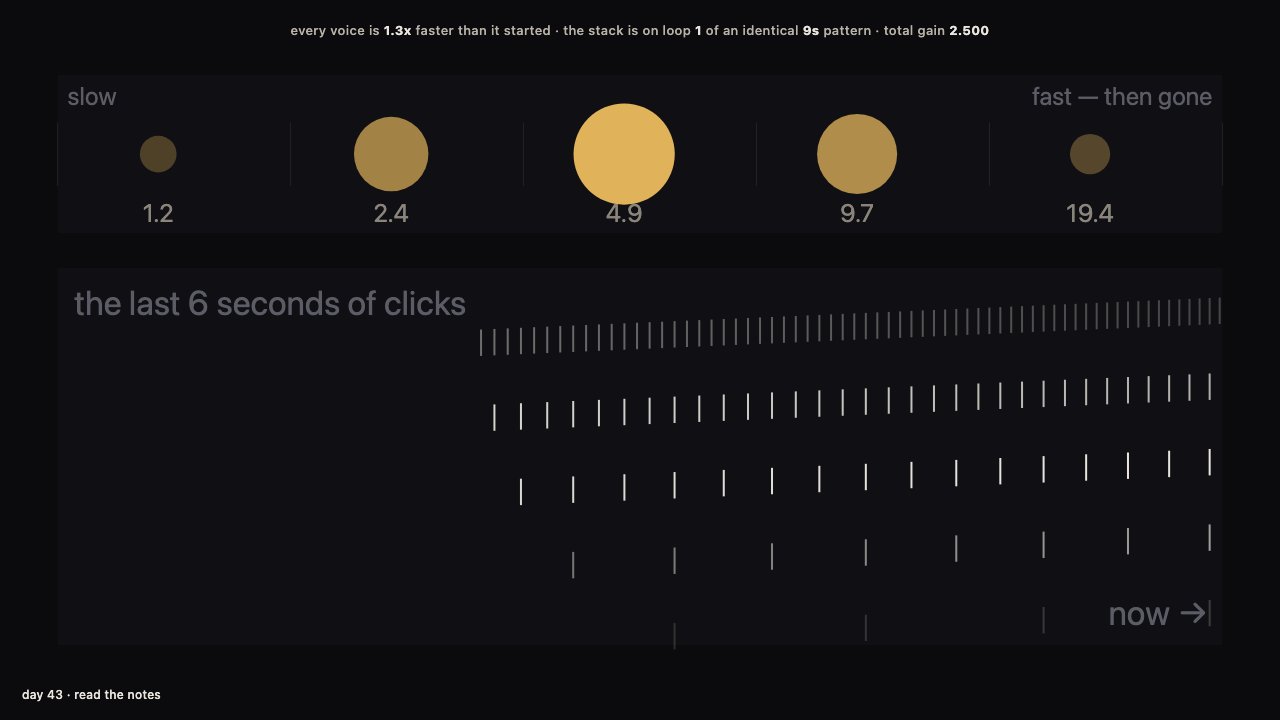
A click track that speeds up without limit, built out of a nine-second loop that repeats exactly.
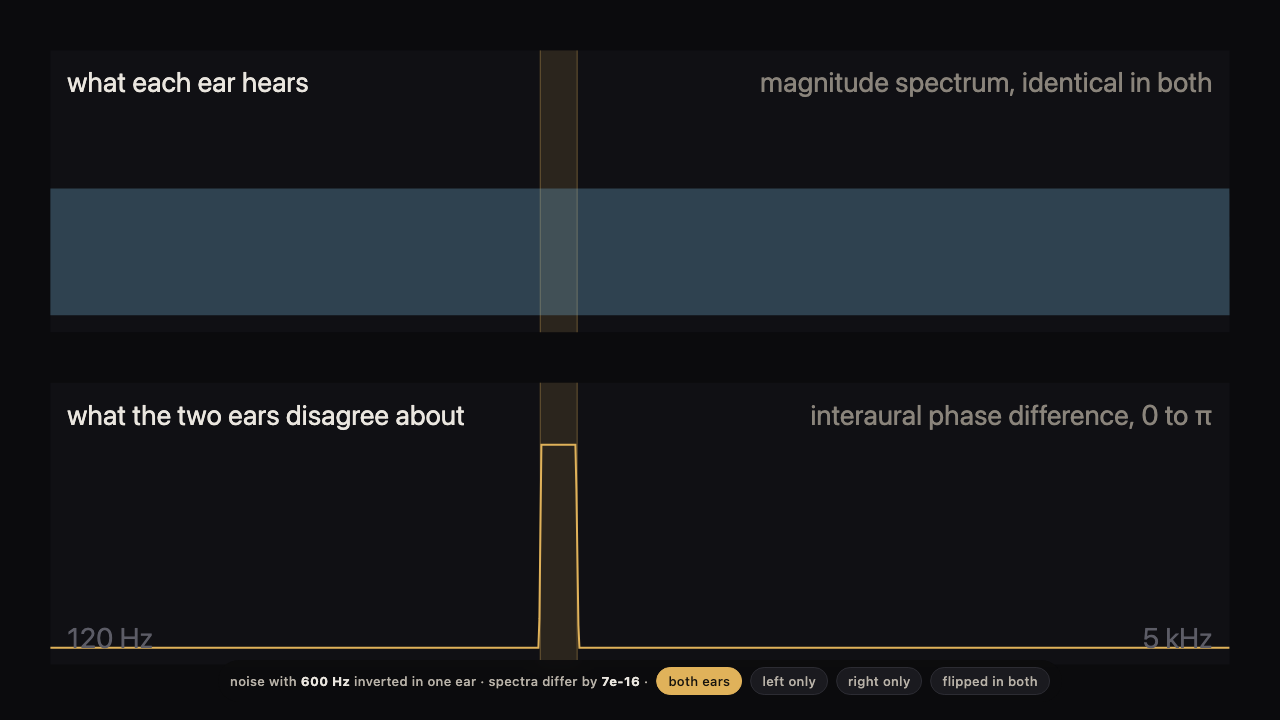
The same noise in both ears, with one narrow band phase-inverted on the right. Each ear alone is featureless. Together they produce a pitch.
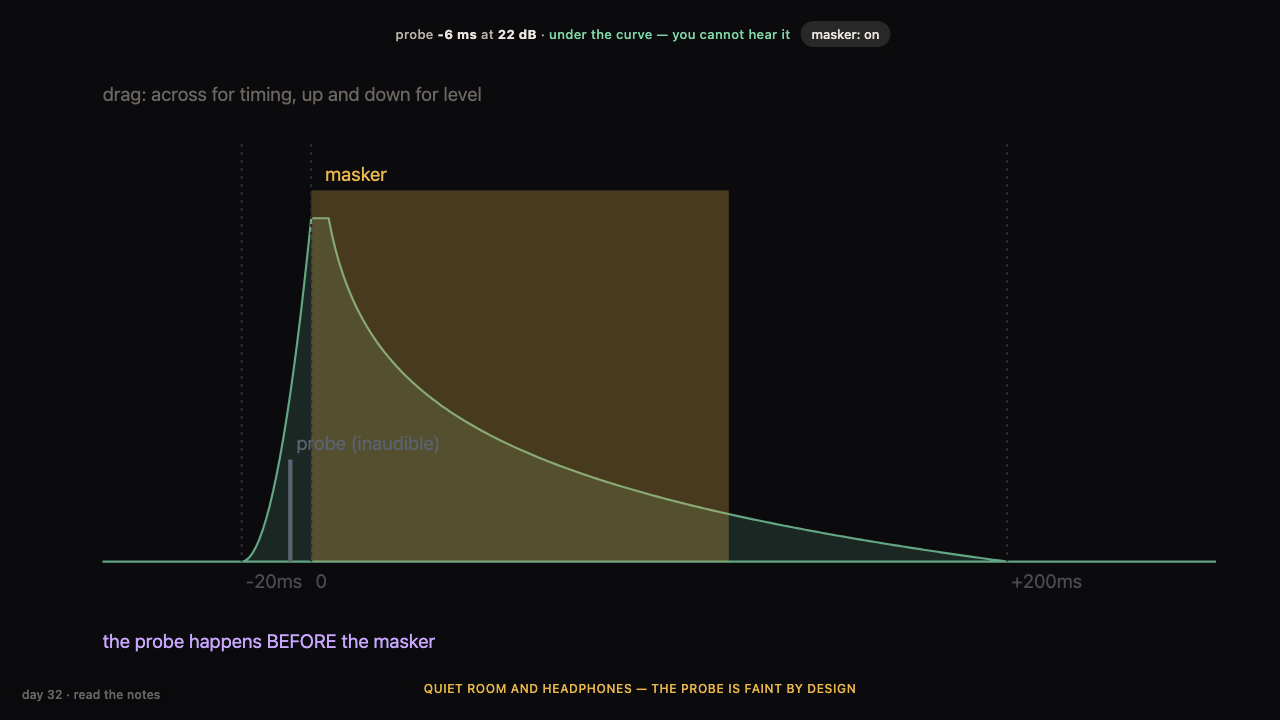
A loud sound hides quiet ones for a fifth of a second afterwards, and for a few milliseconds beforehand.
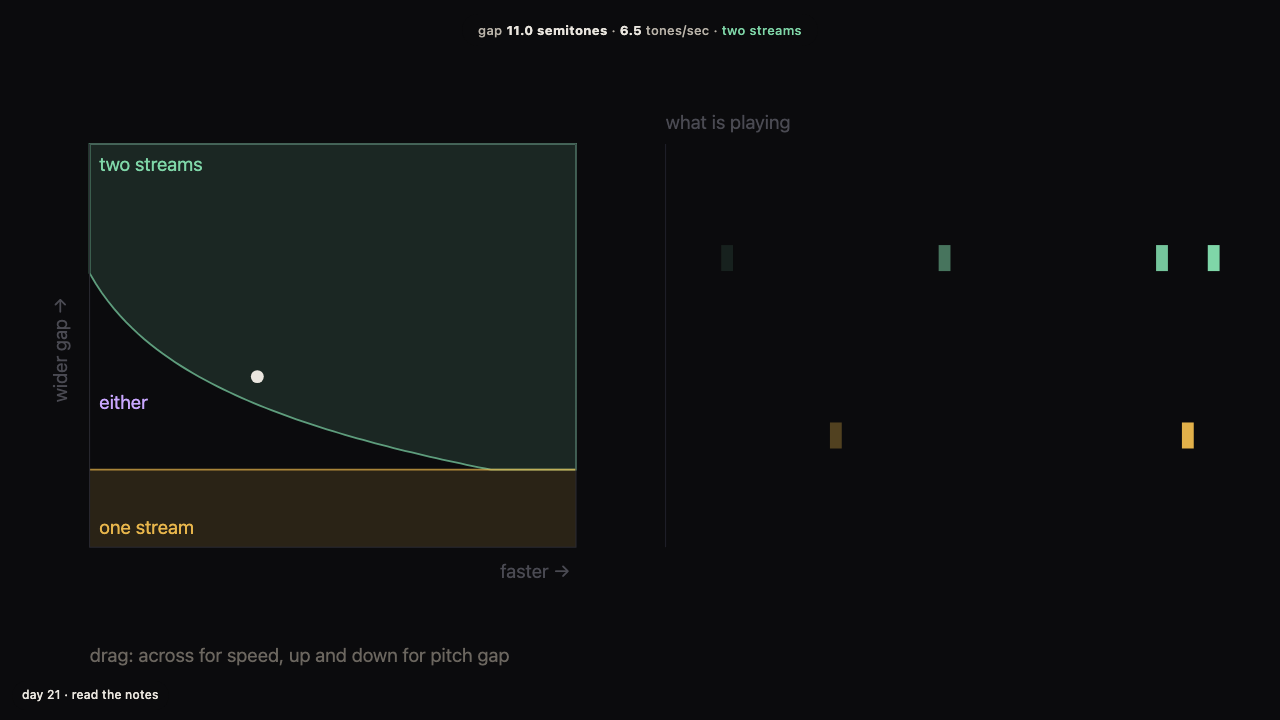
High, low, high, rest. Either a galloping rhythm or two separate beeping lines, and near the boundary, both.
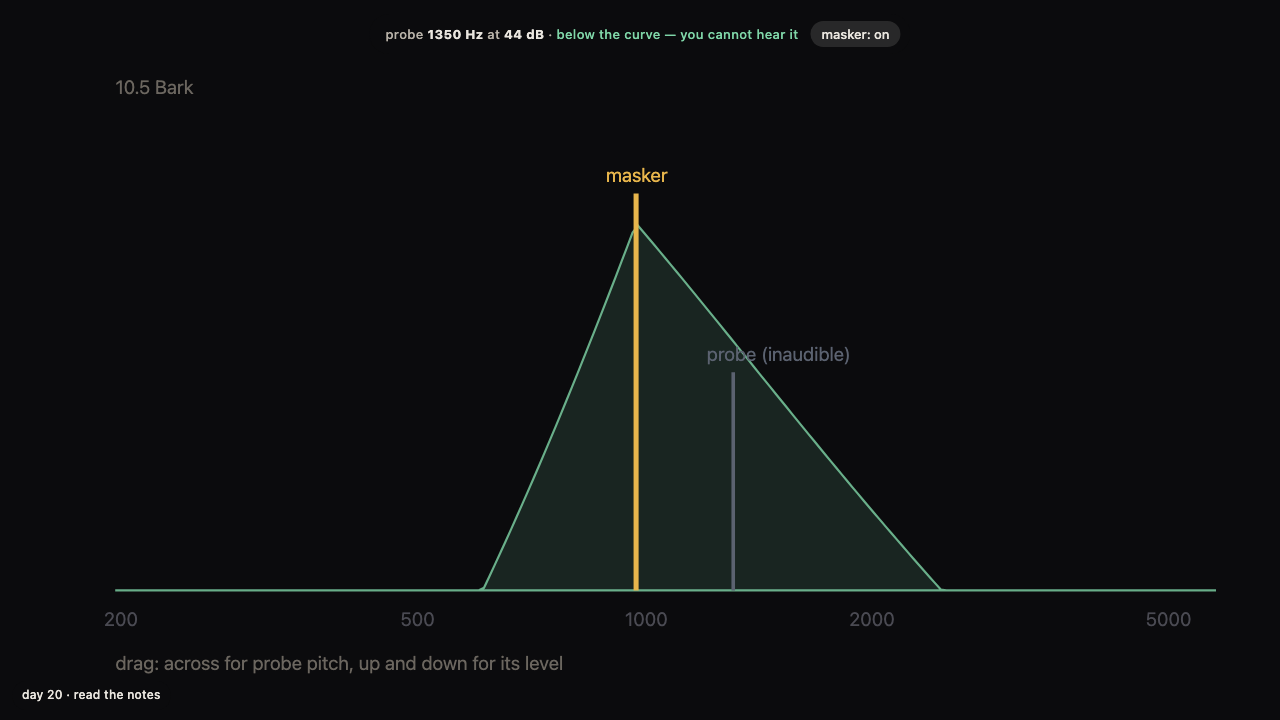
A loud tone does not make its quiet neighbour quieter. It makes it not exist. This is why MP3 works.
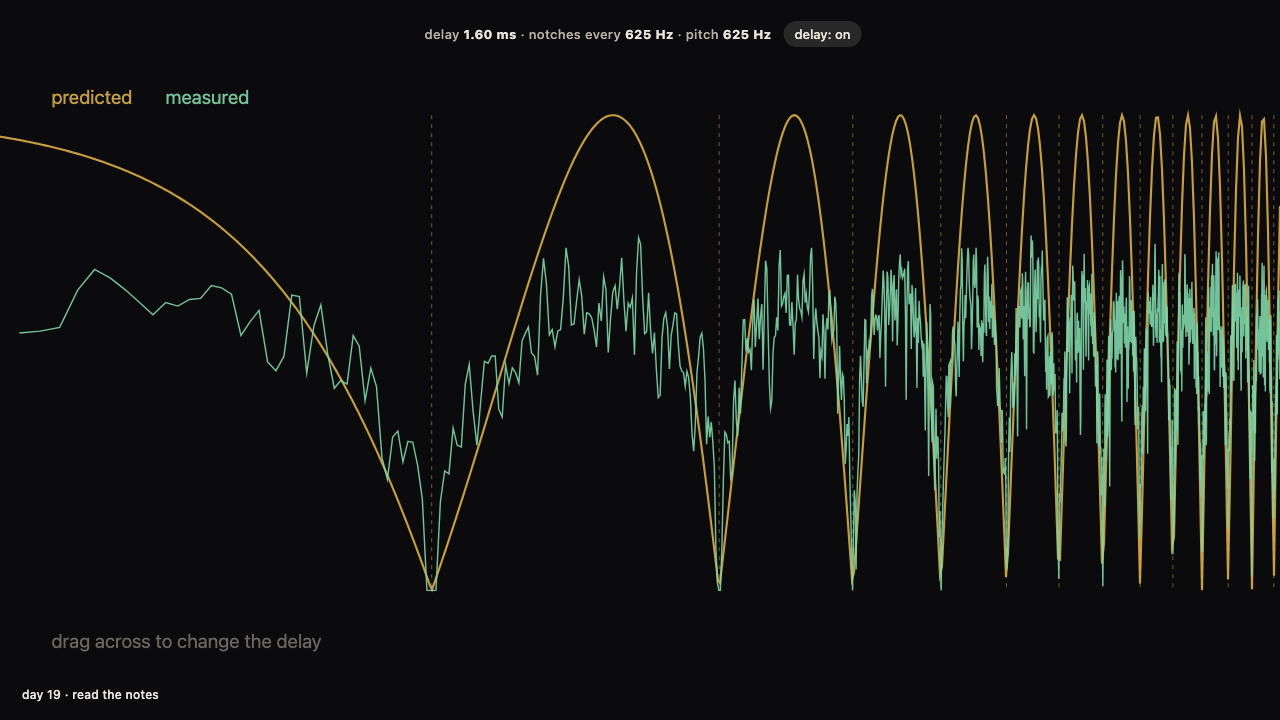
Add a sound to a copy of itself a millisecond late and specific frequencies vanish, at places you can calculate exactly.
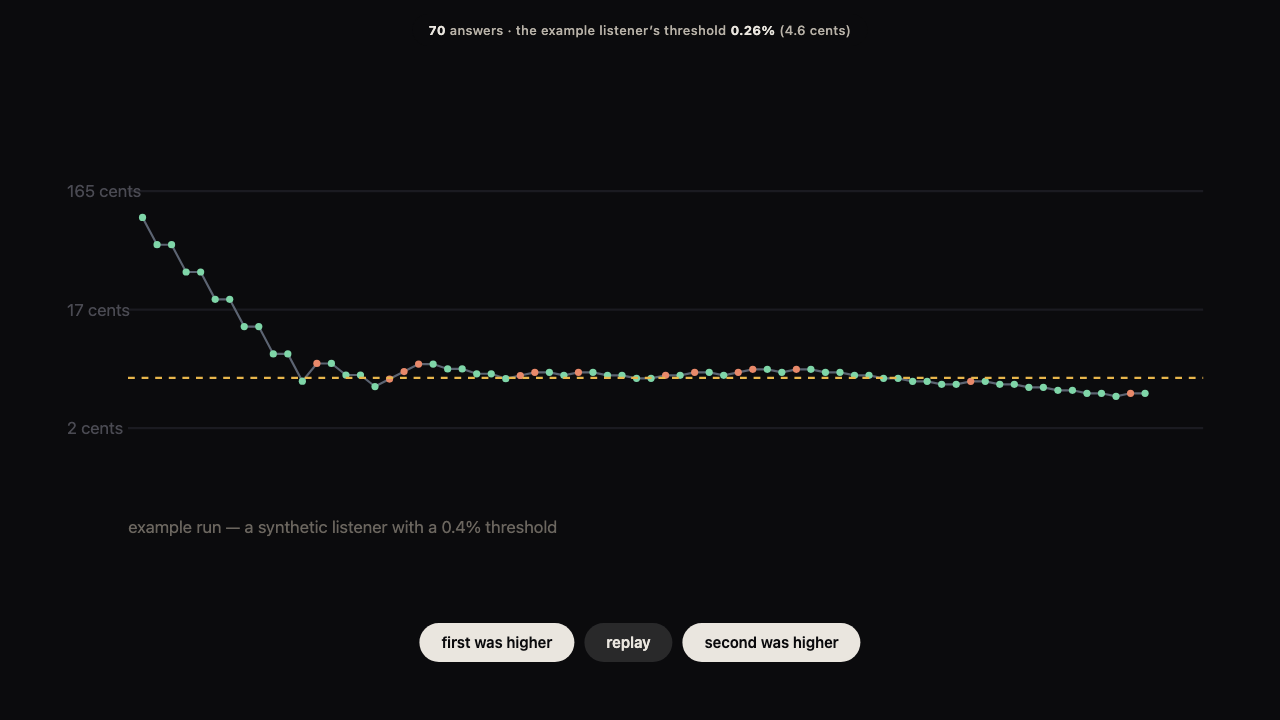
Two tones, almost the same. Twenty questions later the page knows your pitch threshold to within about ten percent.
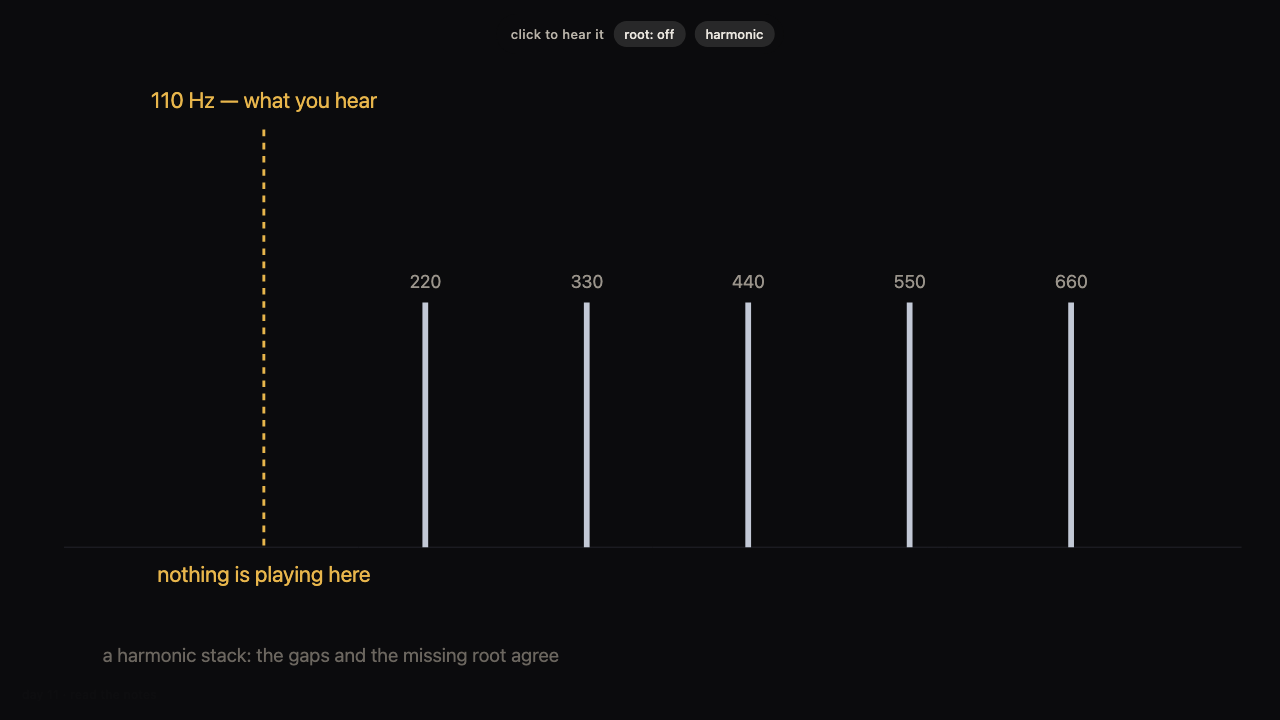
Play a chord of upper harmonics with no root, and your ear invents the root anyway.
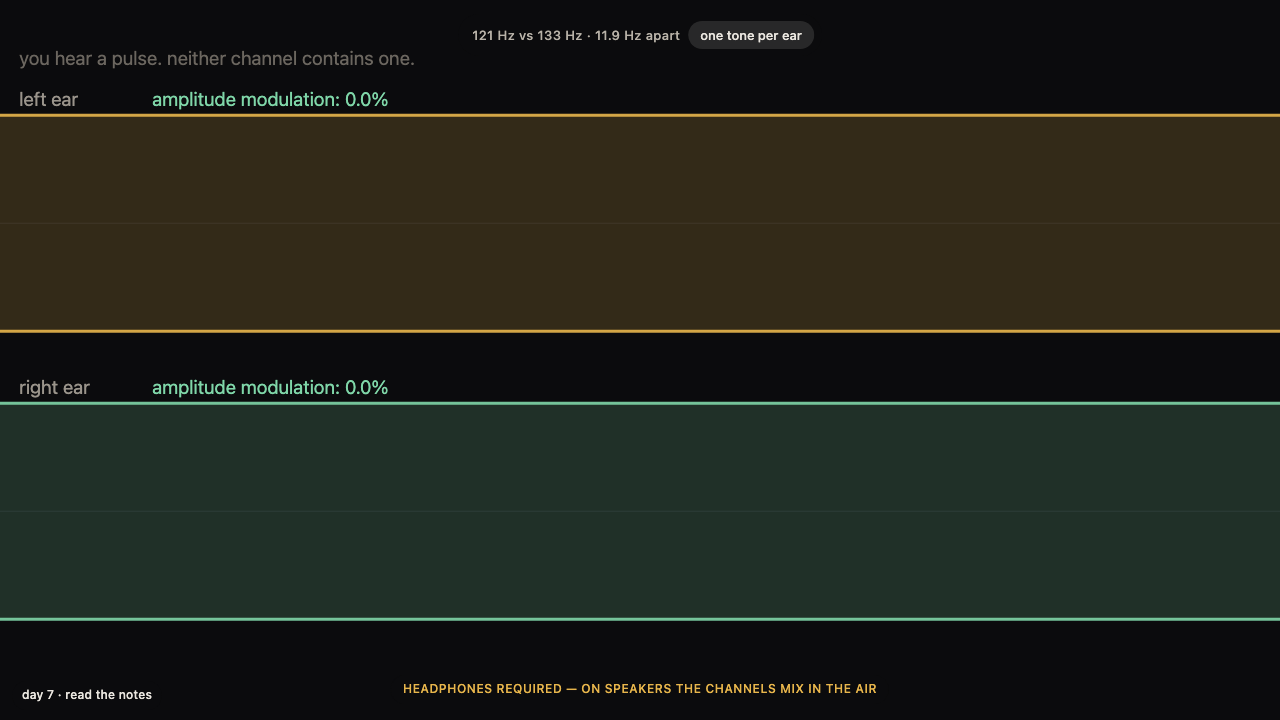
Two steady tones, one per ear. You hear a pulse that exists in neither of them.