Stack Sines, Get a Saw
A sawtooth is not a thing a synth has, it is a stack of sine waves each 1/n as loud as the first. Build it one sine at a time and listen to it turn into the sound every bass patch starts from.
16 projects
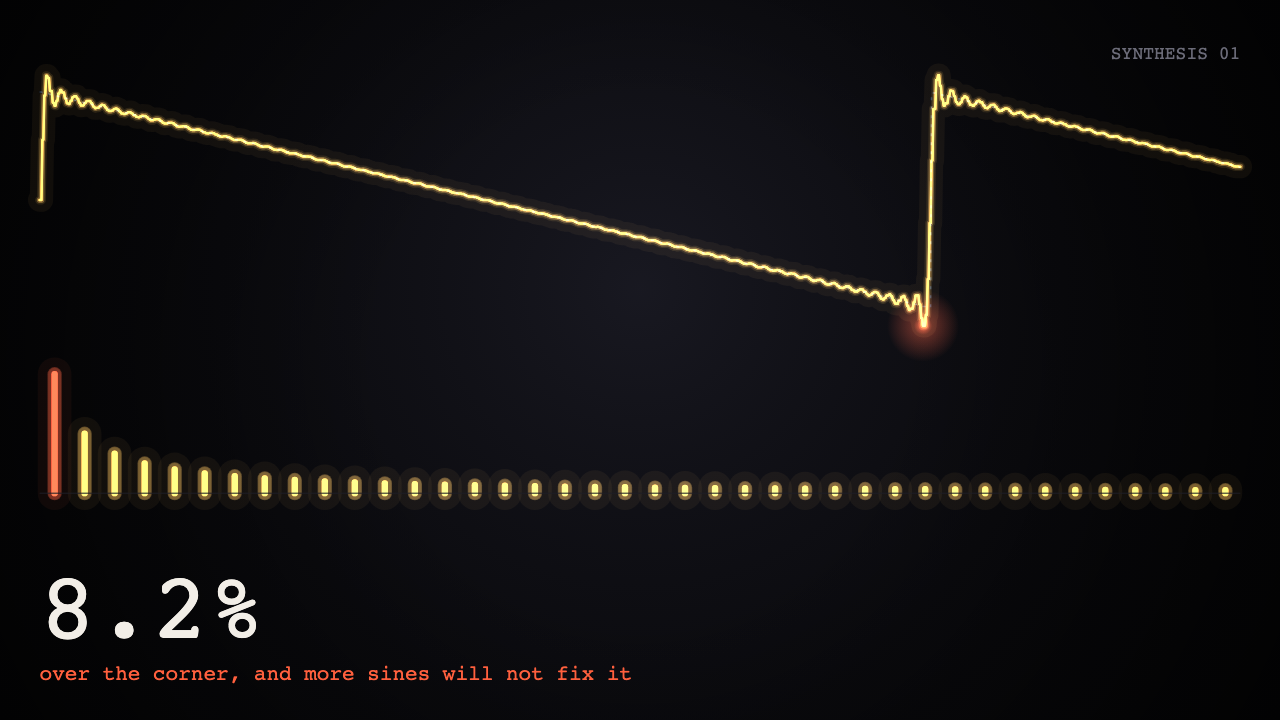
A sawtooth is not a thing a synth has, it is a stack of sine waves each 1/n as loud as the first. Build it one sine at a time and listen to it turn into the sound every bass patch starts from.
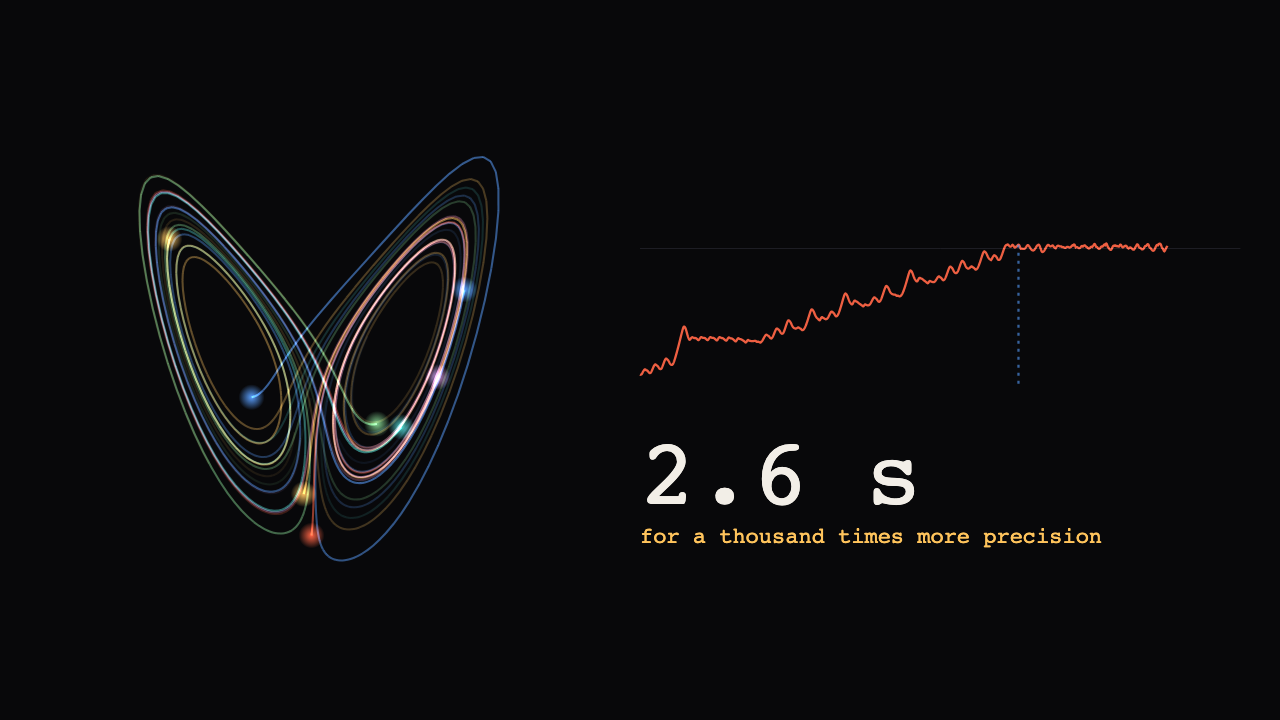
Eight copies of the same system, started a billionth apart. They move as one and then they do not, and the moment they stop agreeing is a number. A thousand times more precision buys 2.6 more seconds.
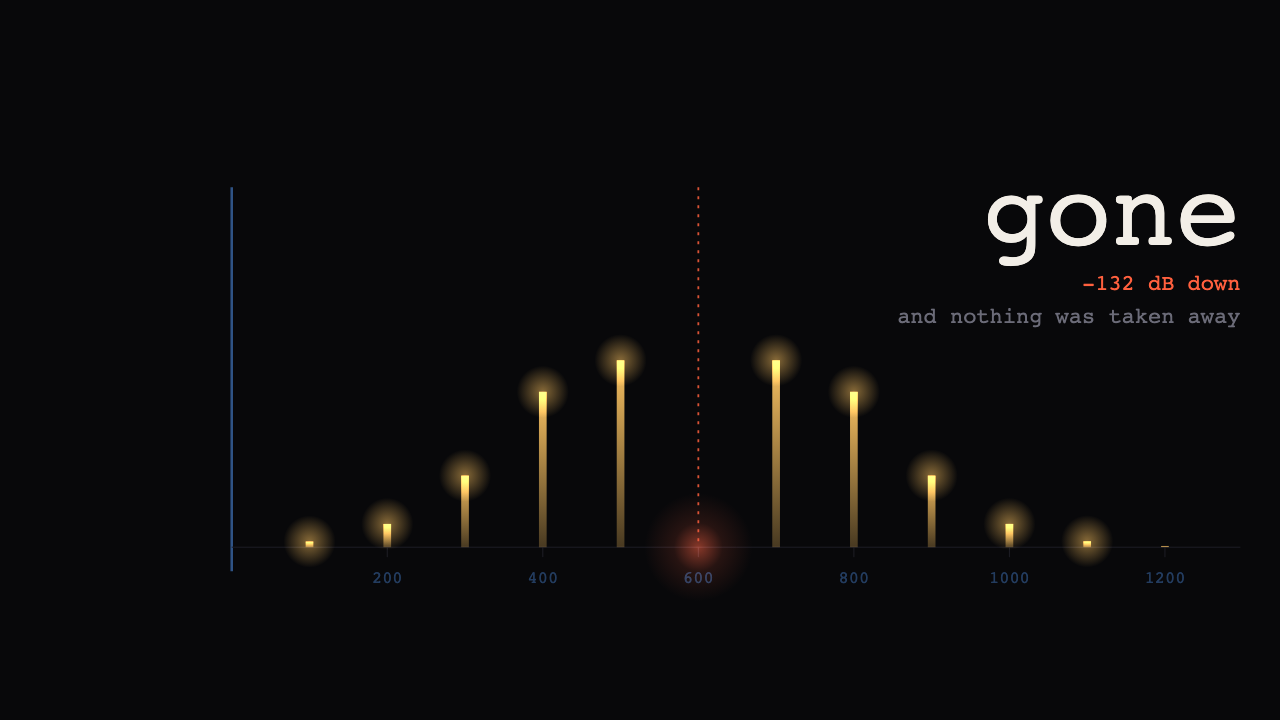
Wobble a note's pitch fast enough and it stops being a wobble and becomes a chord. Turn the depth to 2.405 and the note you started with is 132 dB down, while everything around it carries on.
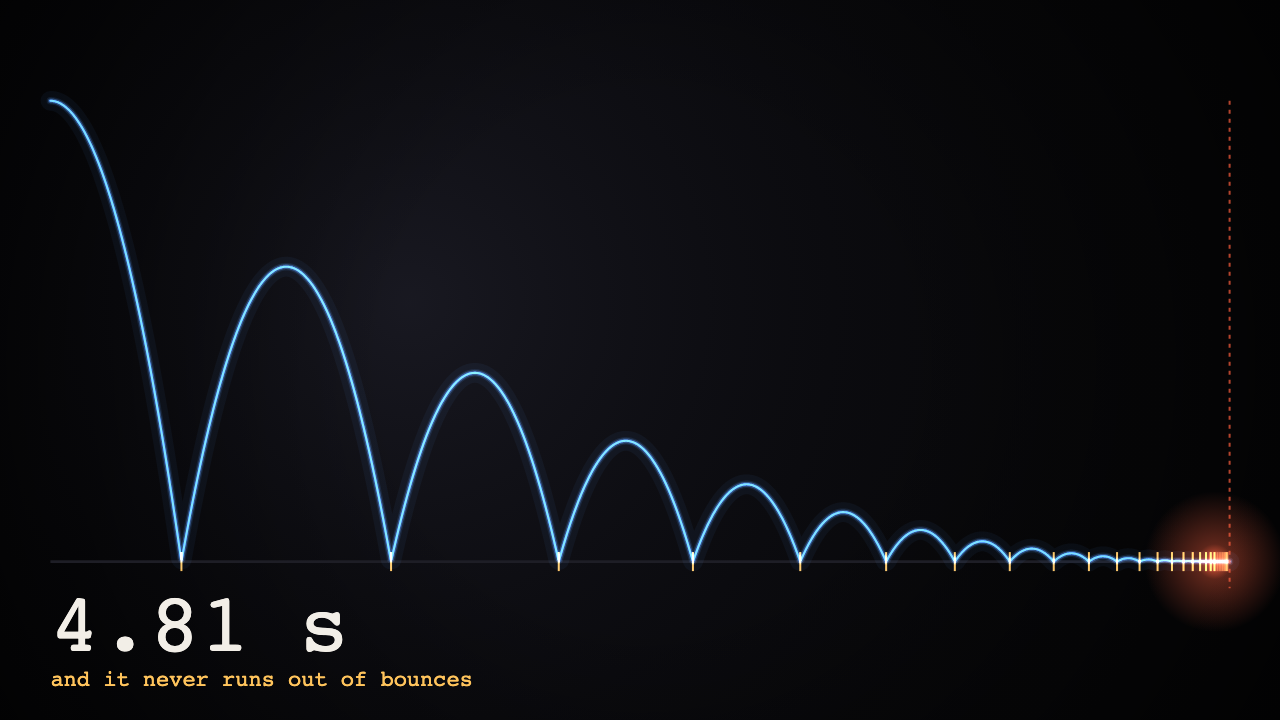
A dropped ball never quite stops bouncing, and stops after 4.81 seconds. The rattle at the end is the tail of a series you can hear converging.
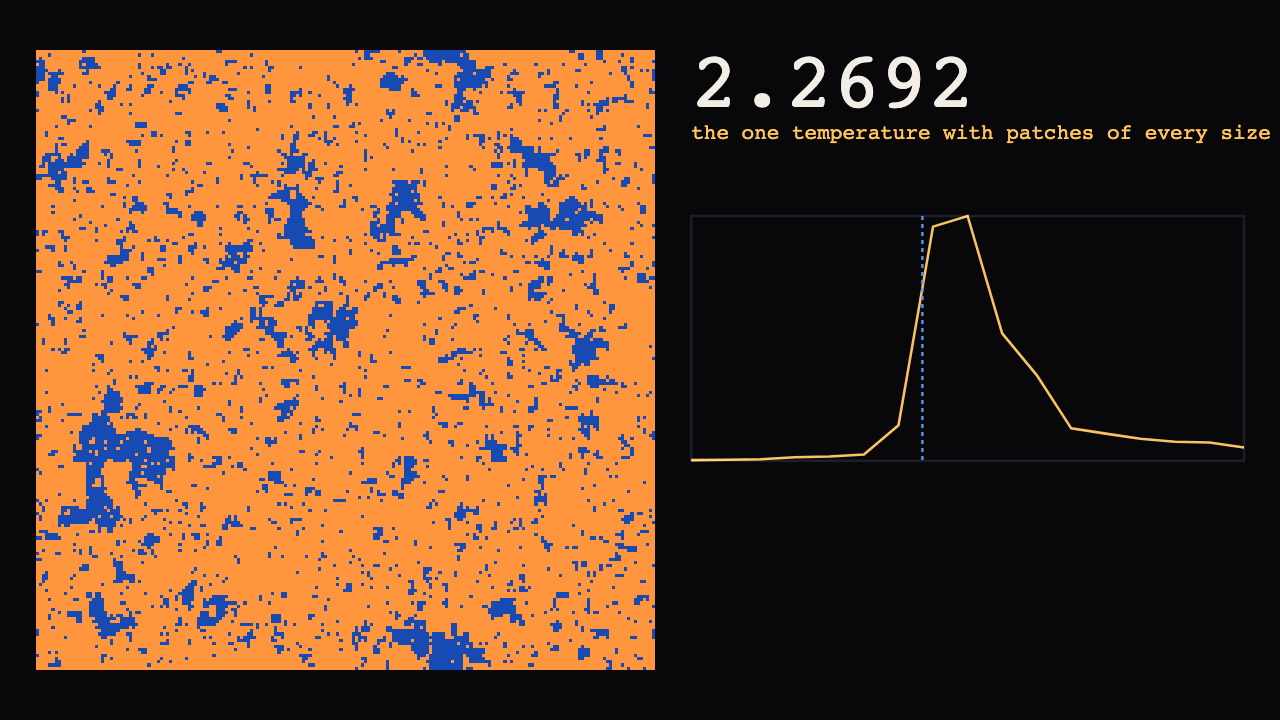
A sheet of magnets is either lined up or it is noise, except at one temperature, where it fills with patches of every size at once. Onsager worked that temperature out exactly in 1944 and the sheet finds it back.
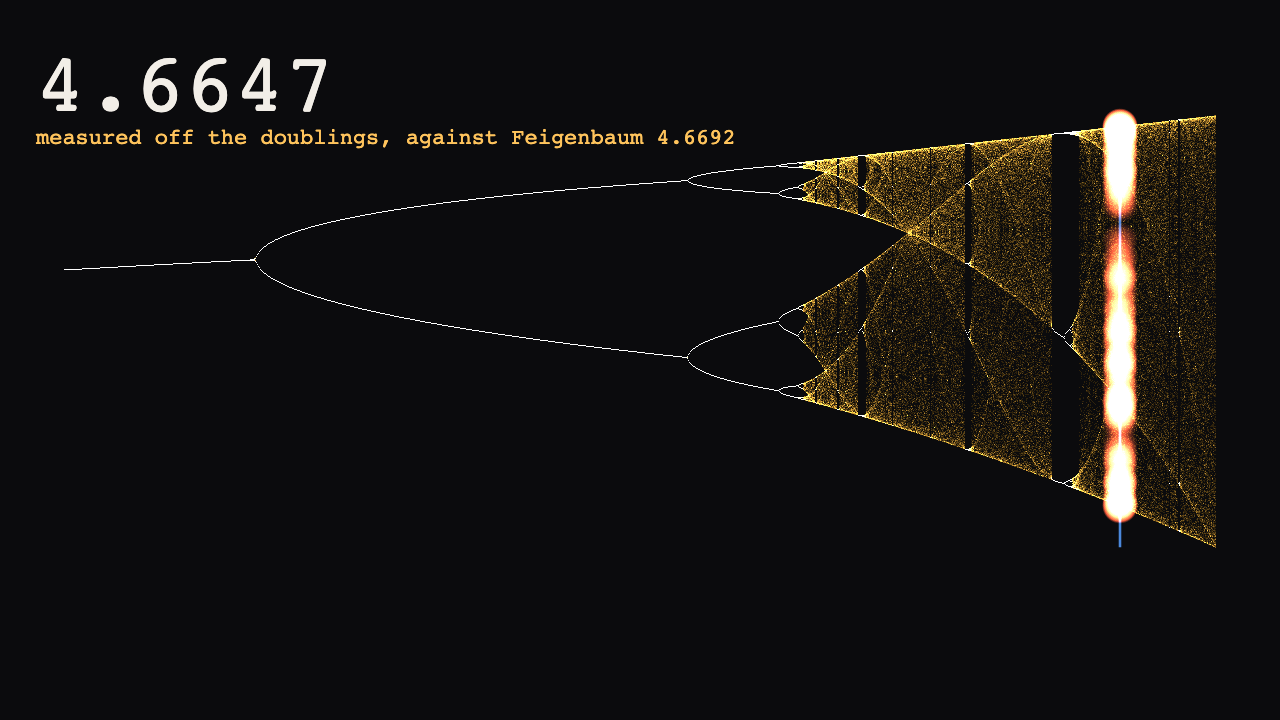
Open a tap slowly and the drips are even. Open it more and they pair up, then go to four, then eight, and the doublings arrive faster each time at a rate that is the same in every system that does this.
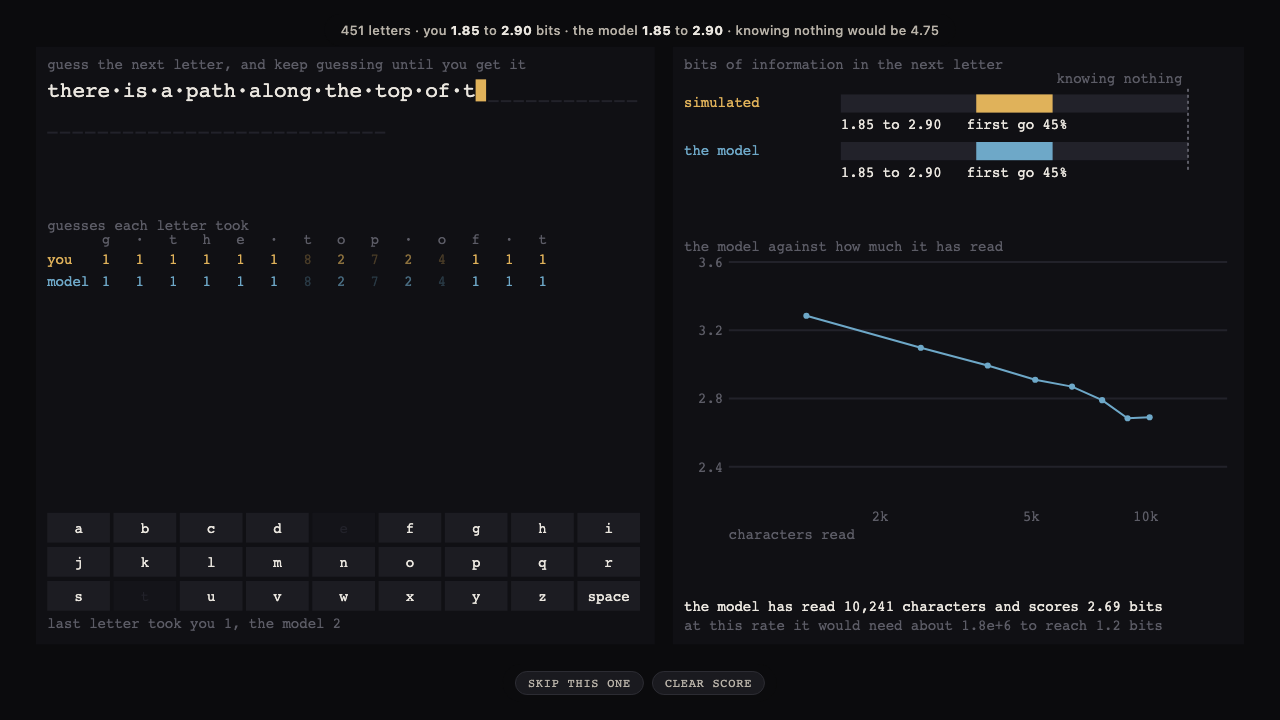
Guess the next letter of a sentence until you get it. How far down your guesses the answer sits measures how much English you already know, in bits, and you will beat the machine.
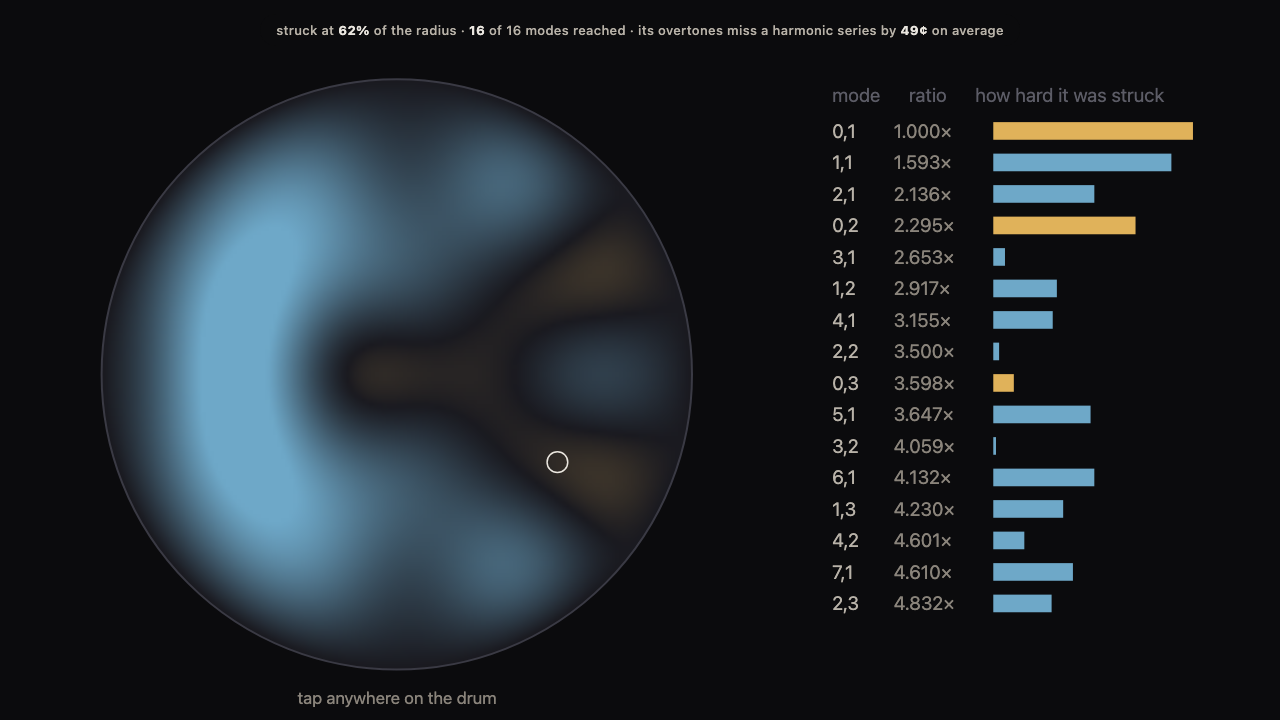
Tap a membrane anywhere and watch which of its modes you reached. Hit the centre and you can only reach three of sixteen.
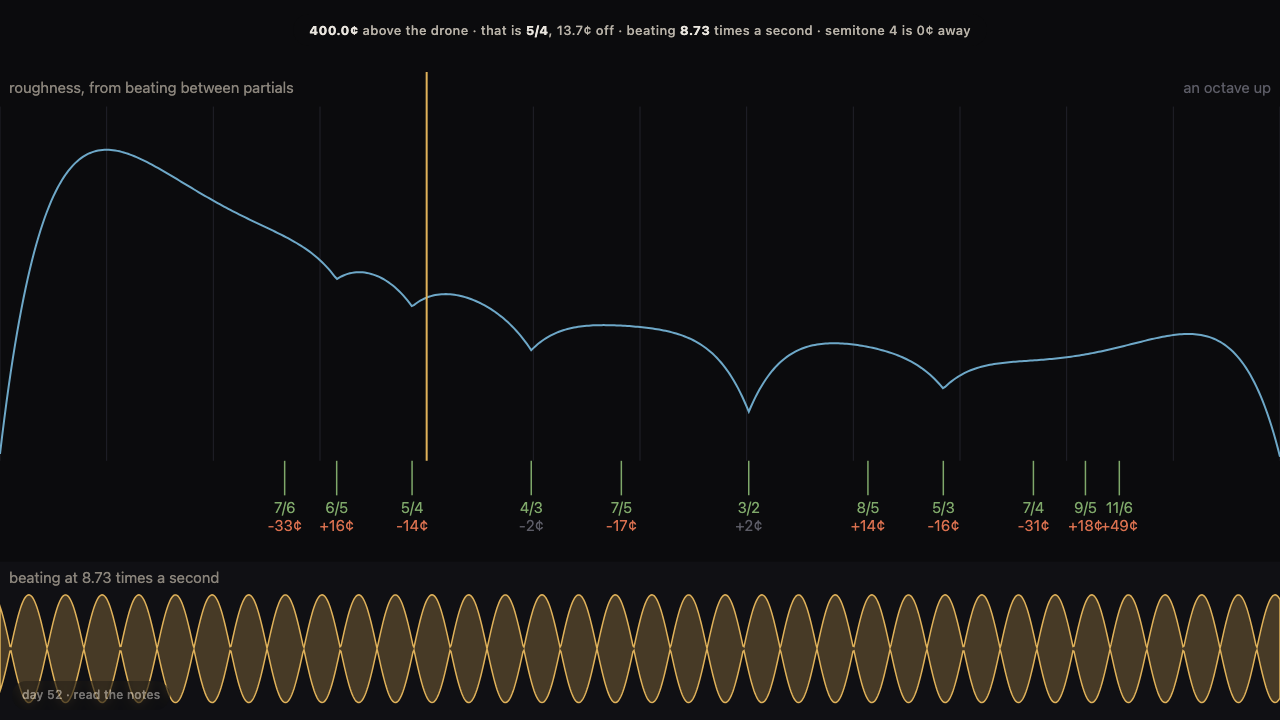
Slide one note against another and hunt for the places the wobble disappears. They turn out to be the intervals music already uses.
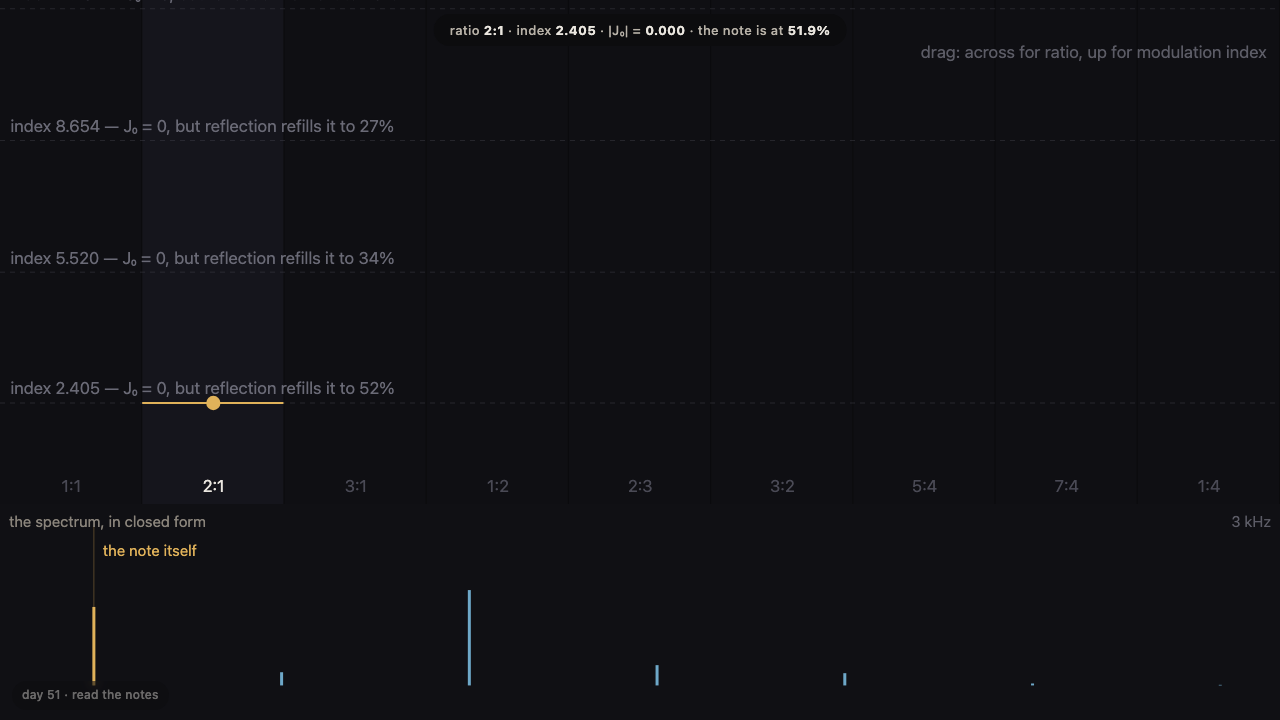
Drag one number and the note you are listening to disappears while the sound gets louder. Bessel functions say exactly where.
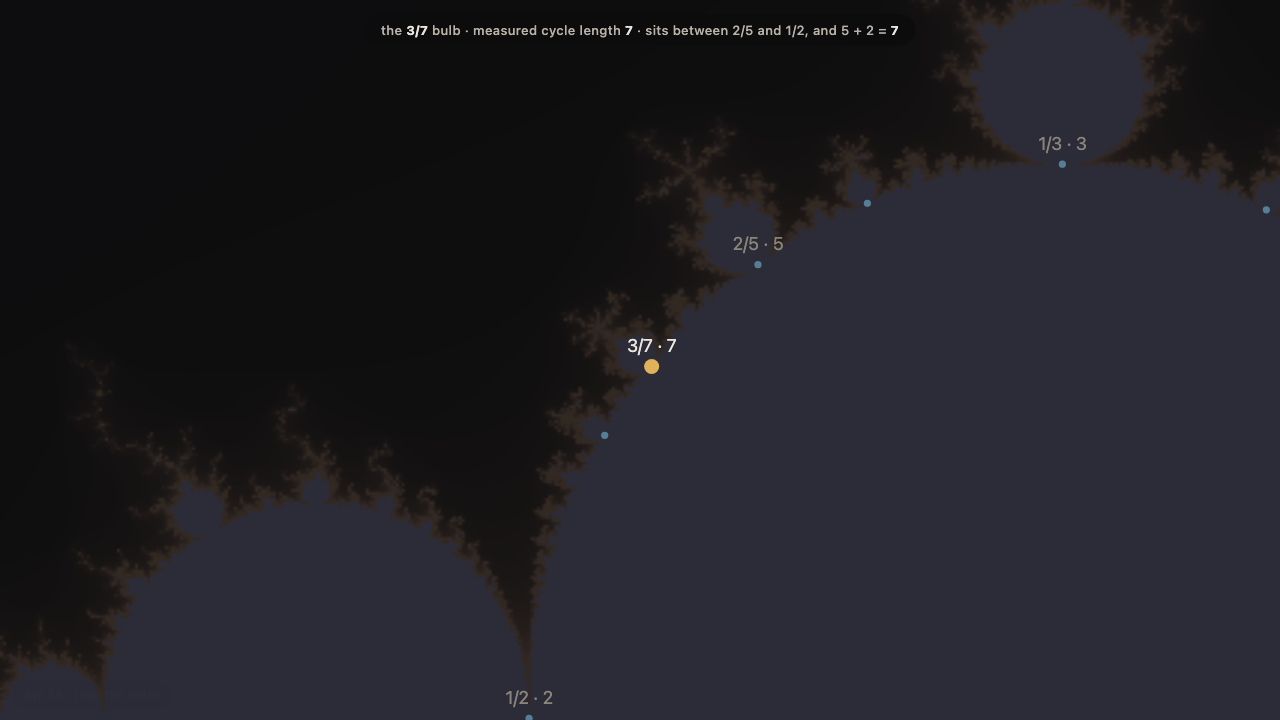
Every bulb on the Mandelbrot set repeats with a period equal to the denominator of where it is attached, and between any two bulbs sits their Farey mediant.
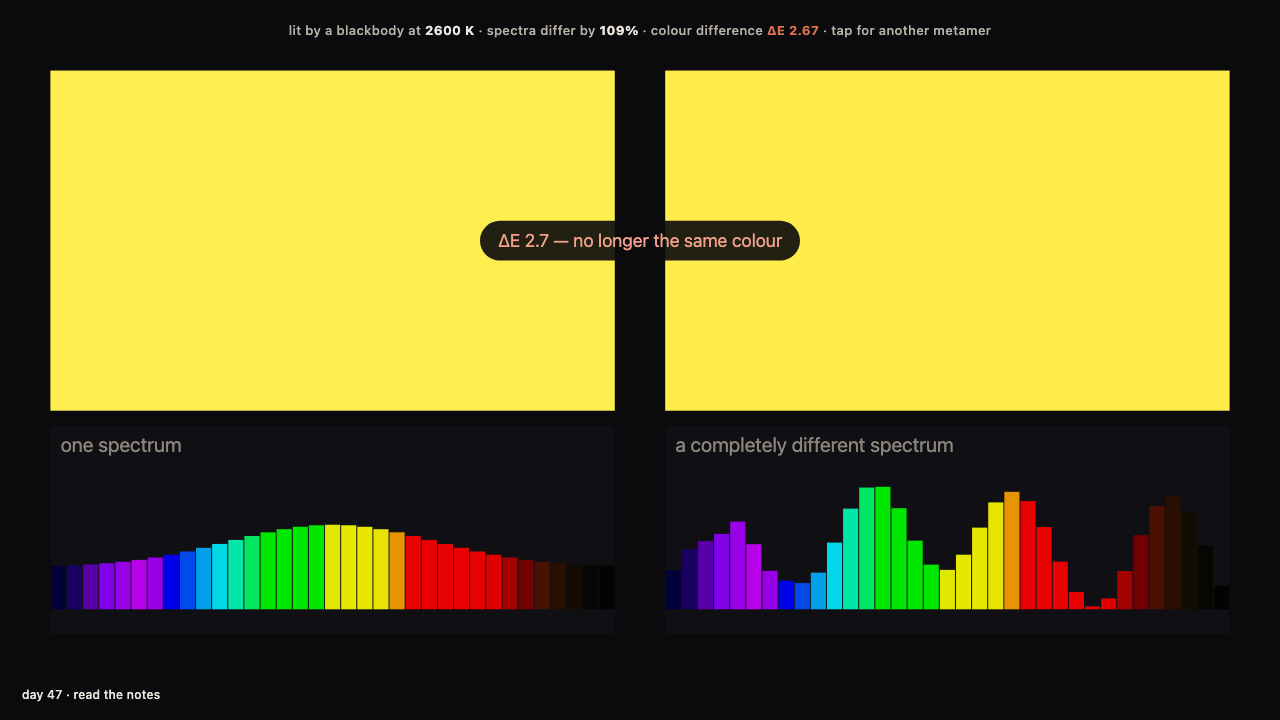
Two spectra with nothing in common that are the same colour, until you change the light.
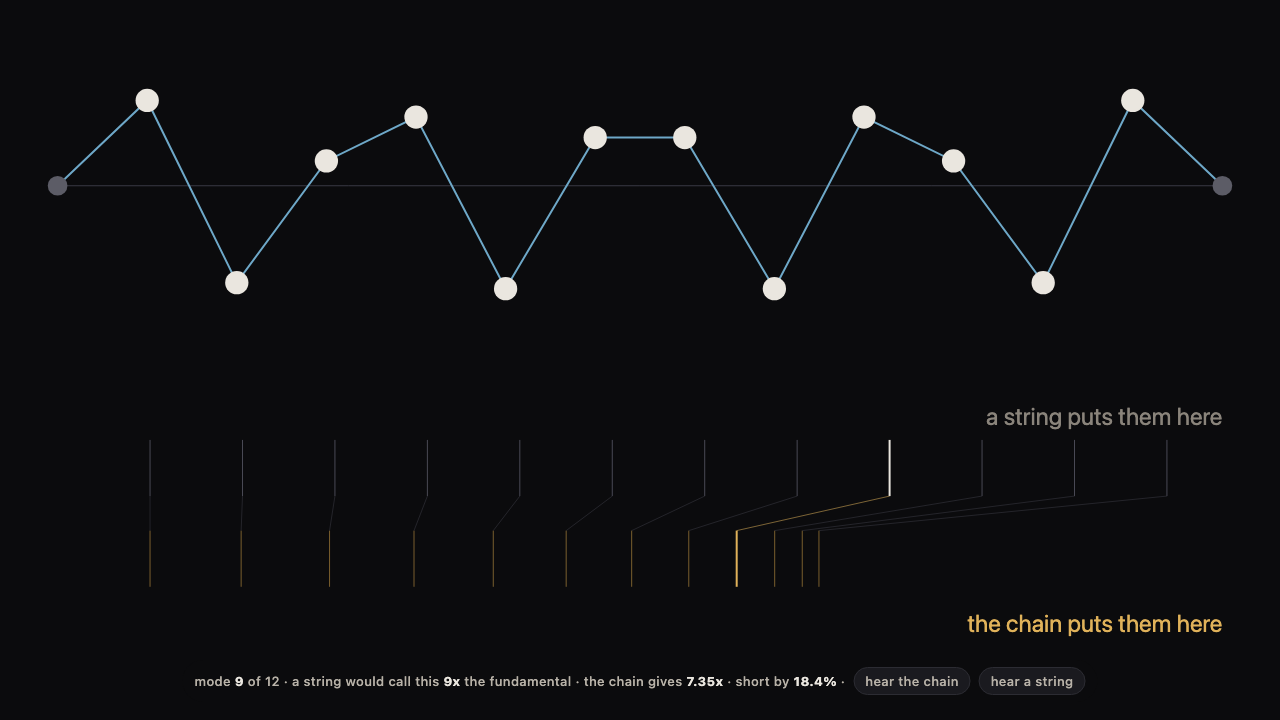
Twelve masses on springs. The first few modes are the harmonics you would expect. The last few are nowhere near.
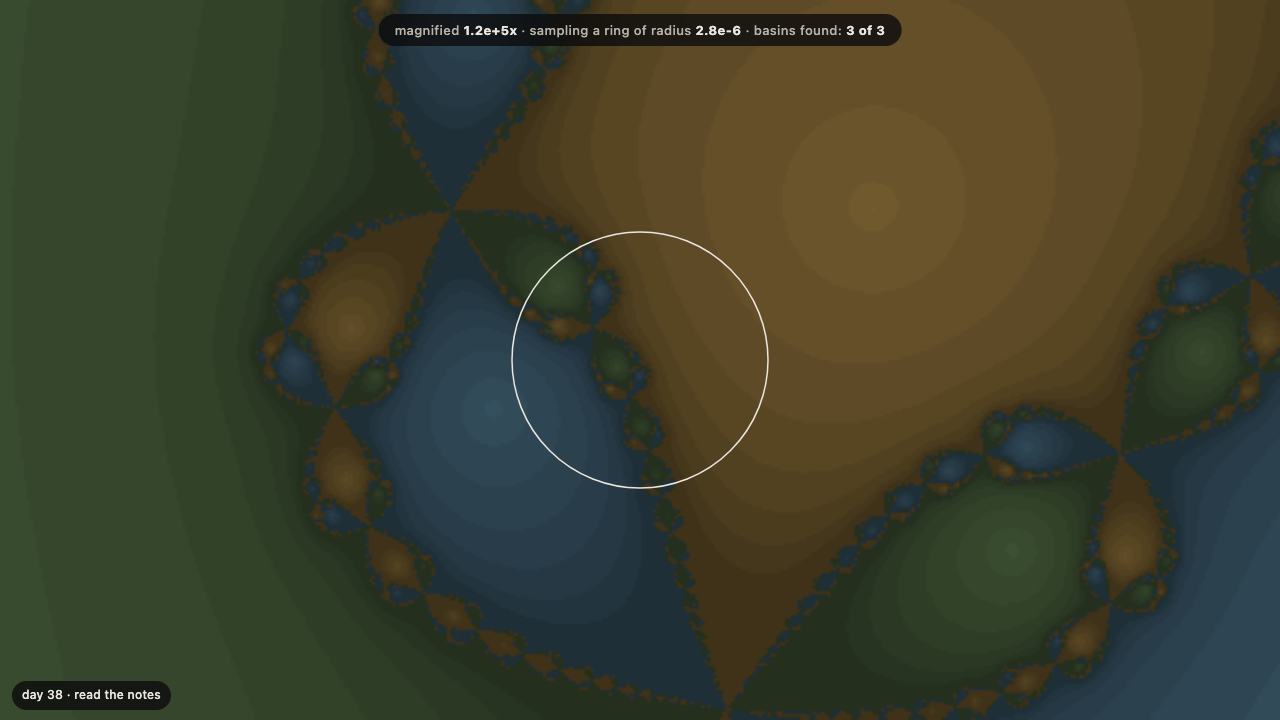
Newton's method on z³ − 1 has three basins. Pick any point on any boundary between them and all three are arbitrarily close.
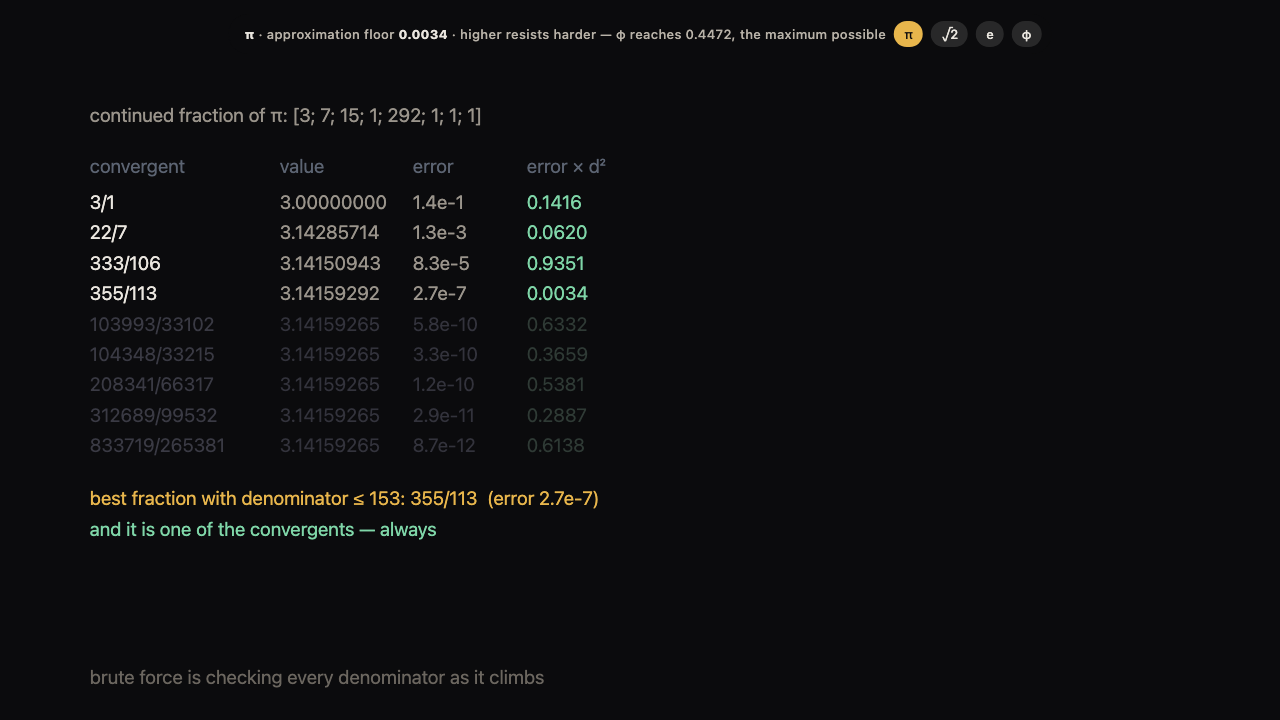
22/7 is not just close to π. Nothing with a smaller denominator is closer, and there is a machine that finds such fractions.
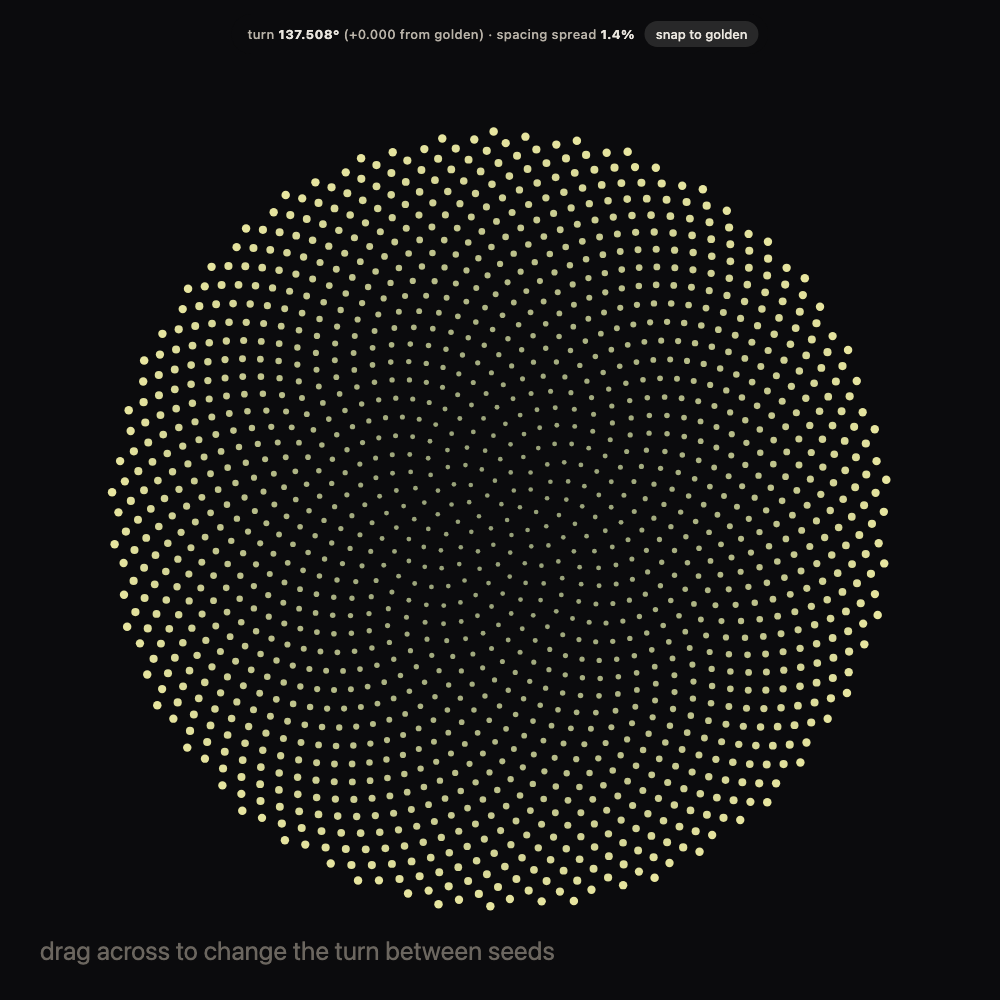
Turn 137.507° between seeds and they pack perfectly. Turn 137.3° and it falls apart.