How Far Ahead You Can See
Eight copies of the same system, started a billionth apart. They move as one and then they do not, and the moment they stop agreeing is a number. A thousand times more precision buys 2.6 more seconds.
19 projects
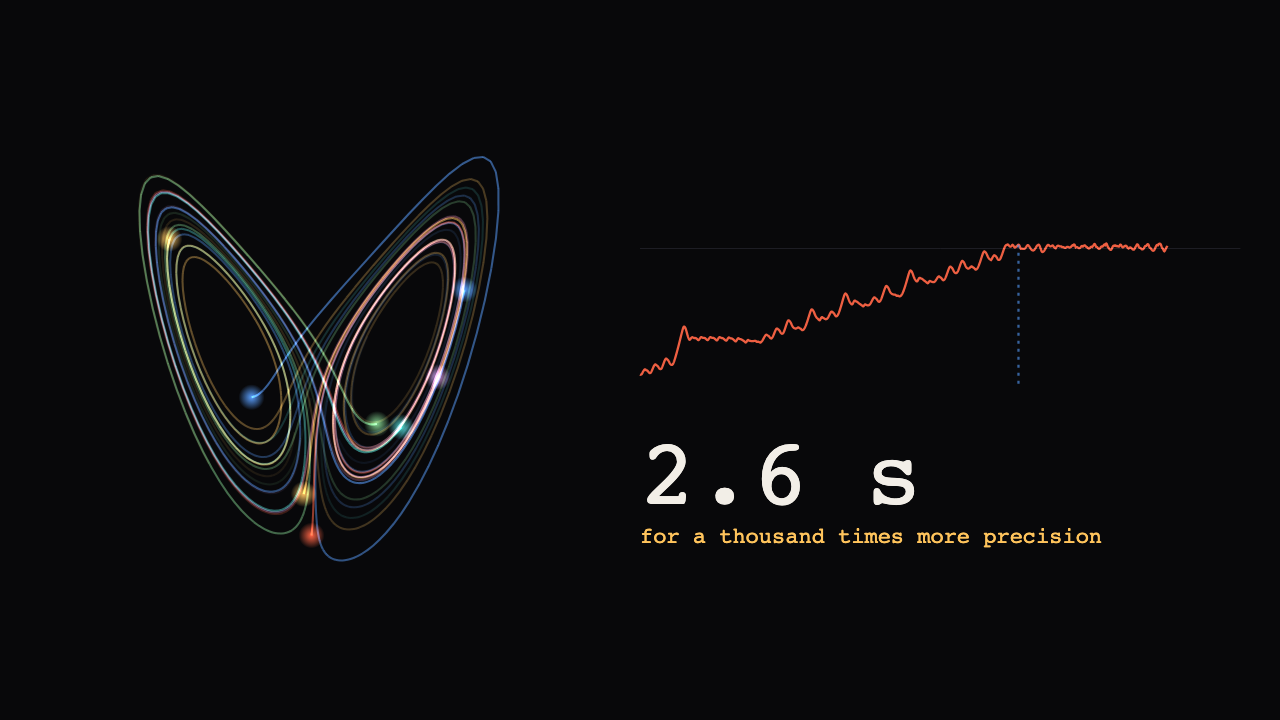
Eight copies of the same system, started a billionth apart. They move as one and then they do not, and the moment they stop agreeing is a number. A thousand times more precision buys 2.6 more seconds.
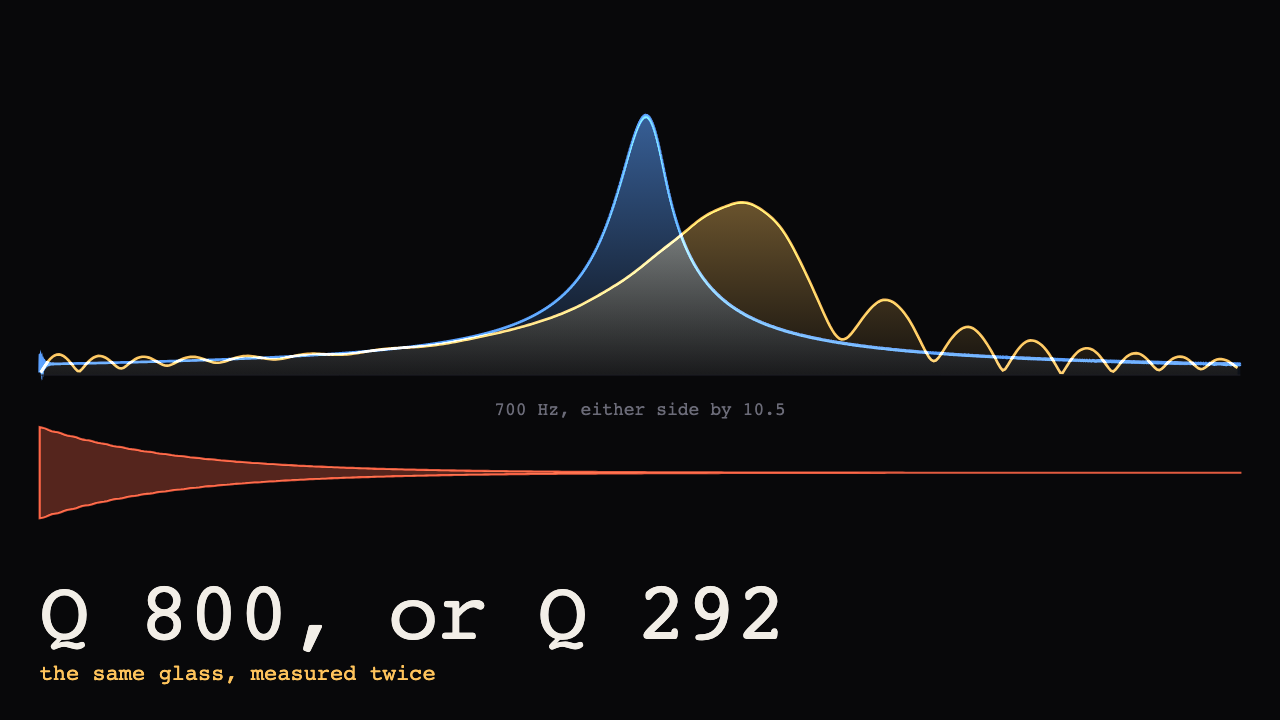
How long a glass rings and how narrowly it listens are the same number. Measure it both ways and they agree, unless you sweep past it too fast, and then one of them is 64% wrong.
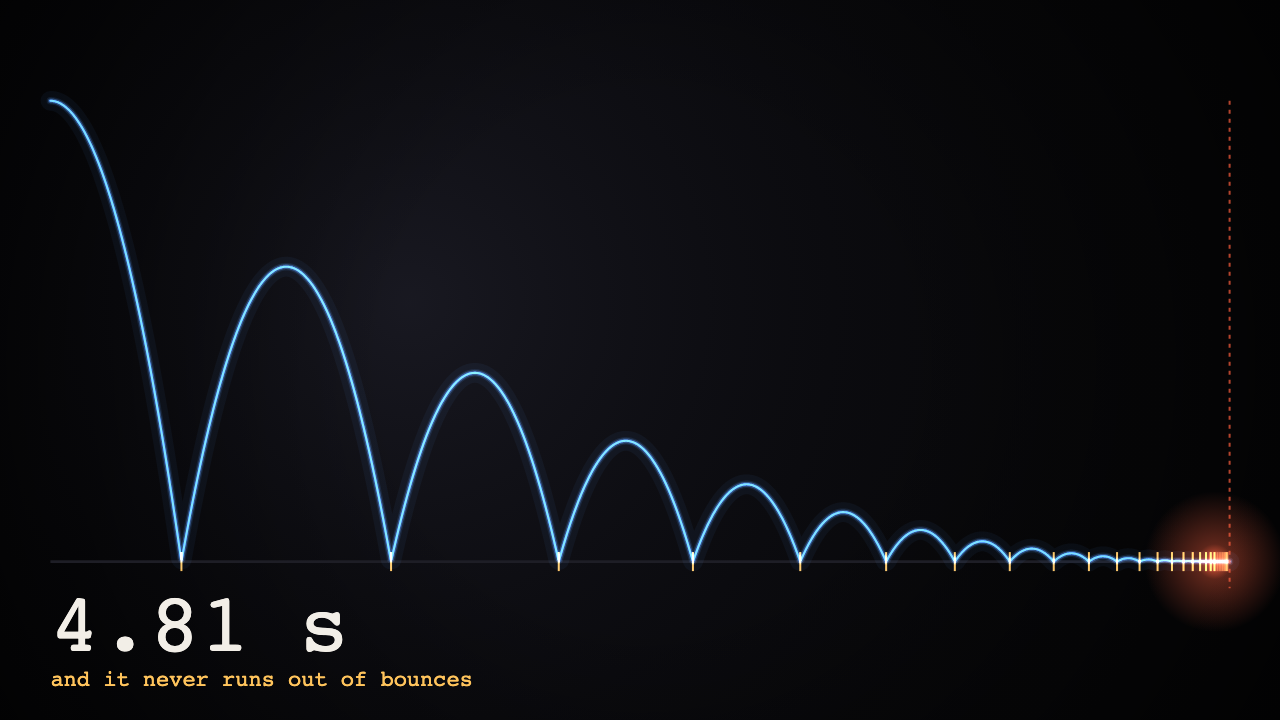
A dropped ball never quite stops bouncing, and stops after 4.81 seconds. The rattle at the end is the tail of a series you can hear converging.
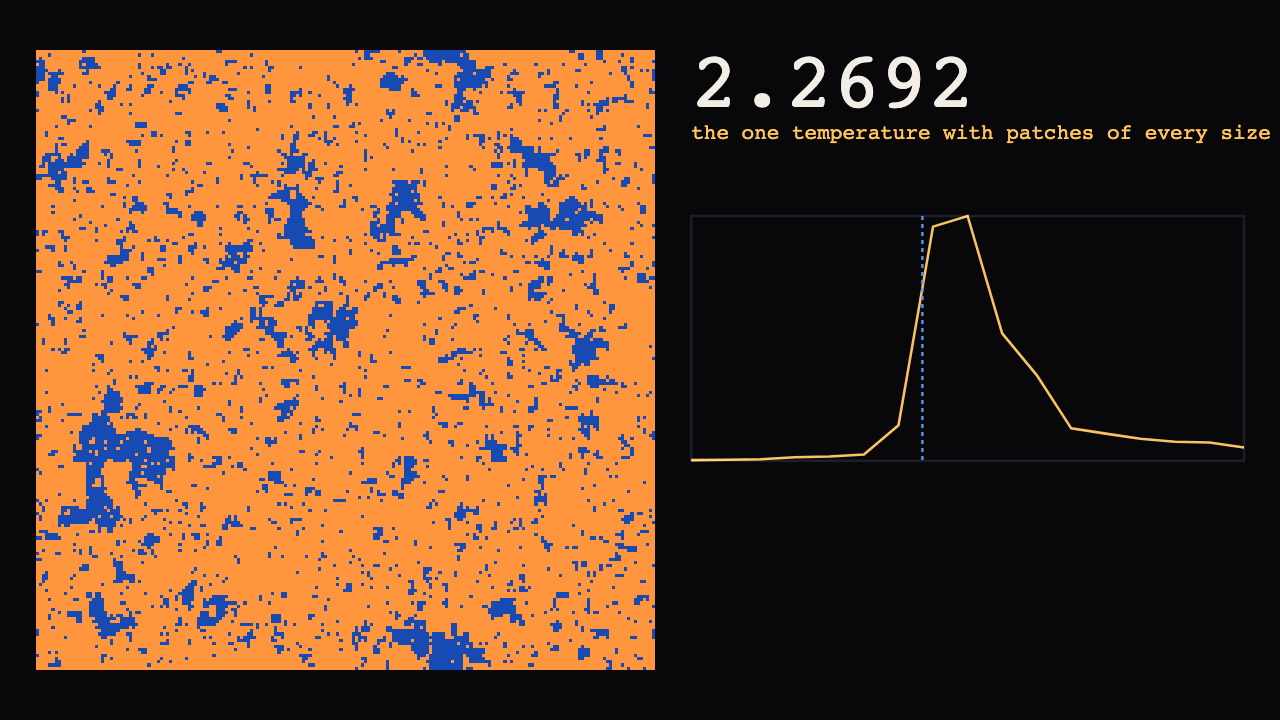
A sheet of magnets is either lined up or it is noise, except at one temperature, where it fills with patches of every size at once. Onsager worked that temperature out exactly in 1944 and the sheet finds it back.
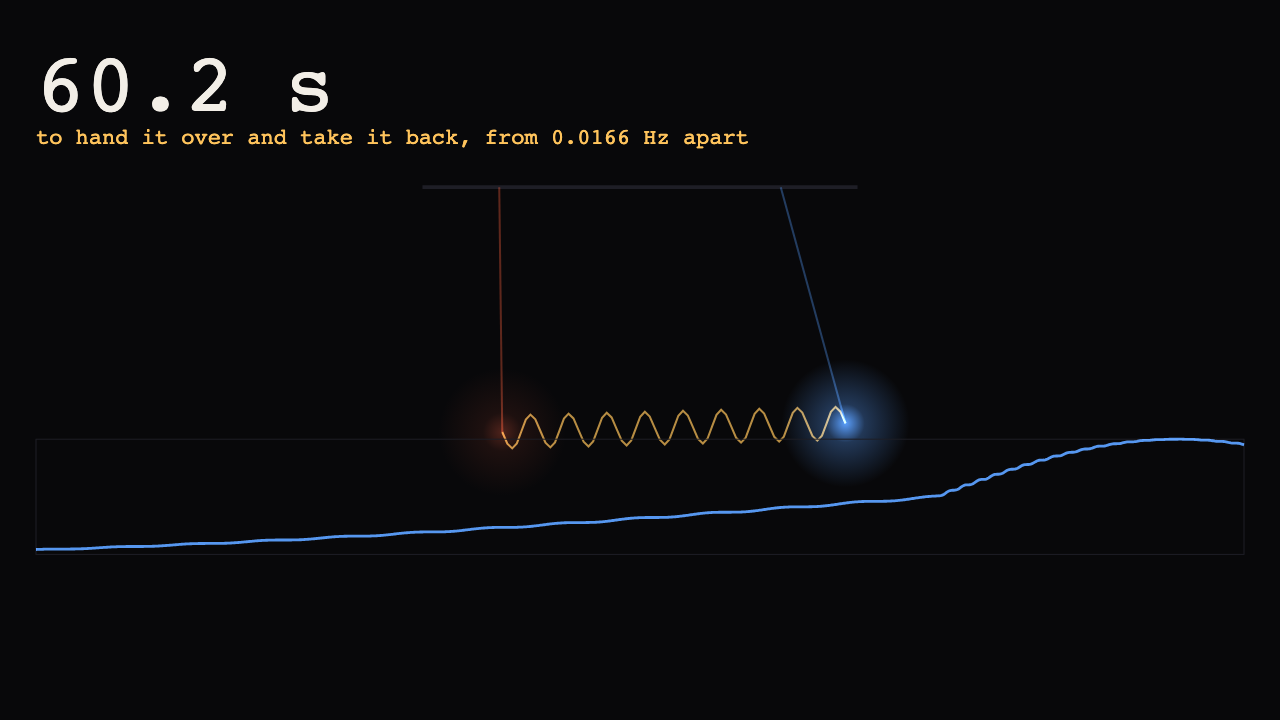
Two pendulums joined by a weak spring. Start one and it stops dead a minute later with the other one swinging, then takes it all back. The clock is the difference between two frequencies a hundredth of a hertz apart.
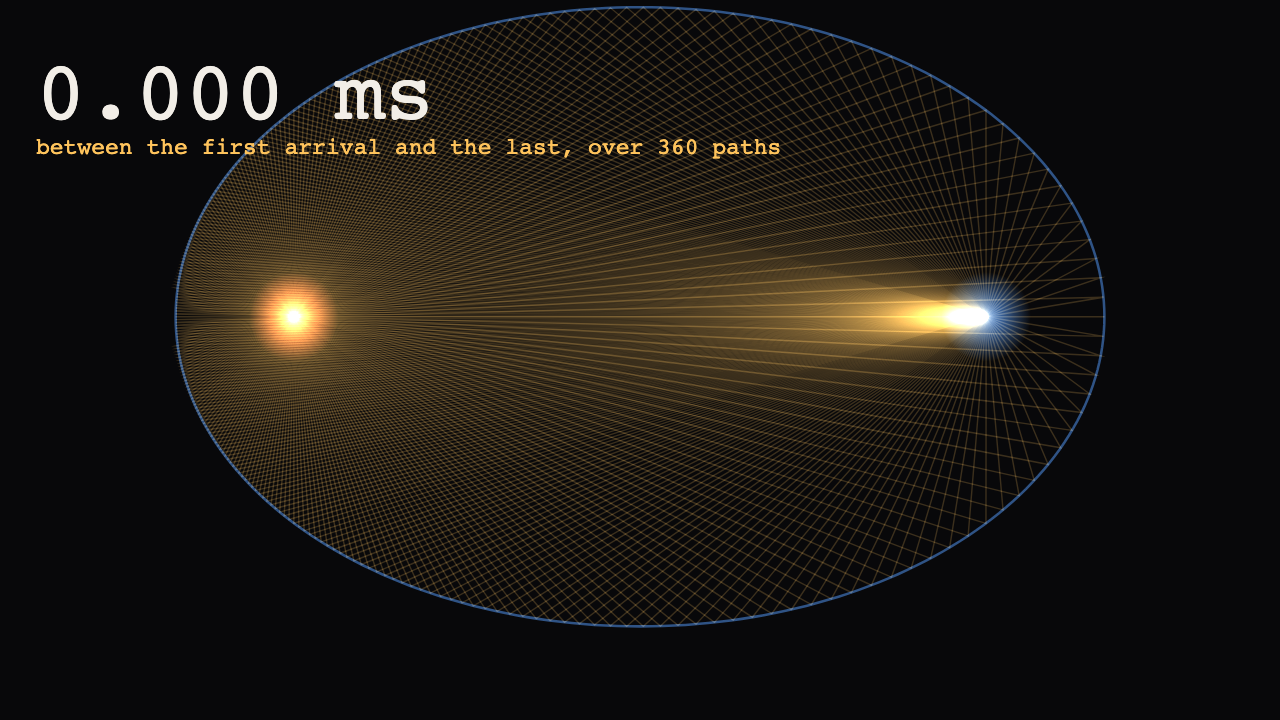
Sound leaves one focus of an ellipse in every direction, bounces once, and every single copy arrives at the other focus having travelled exactly the same distance. Step five centimetres off it and half the effect is gone.
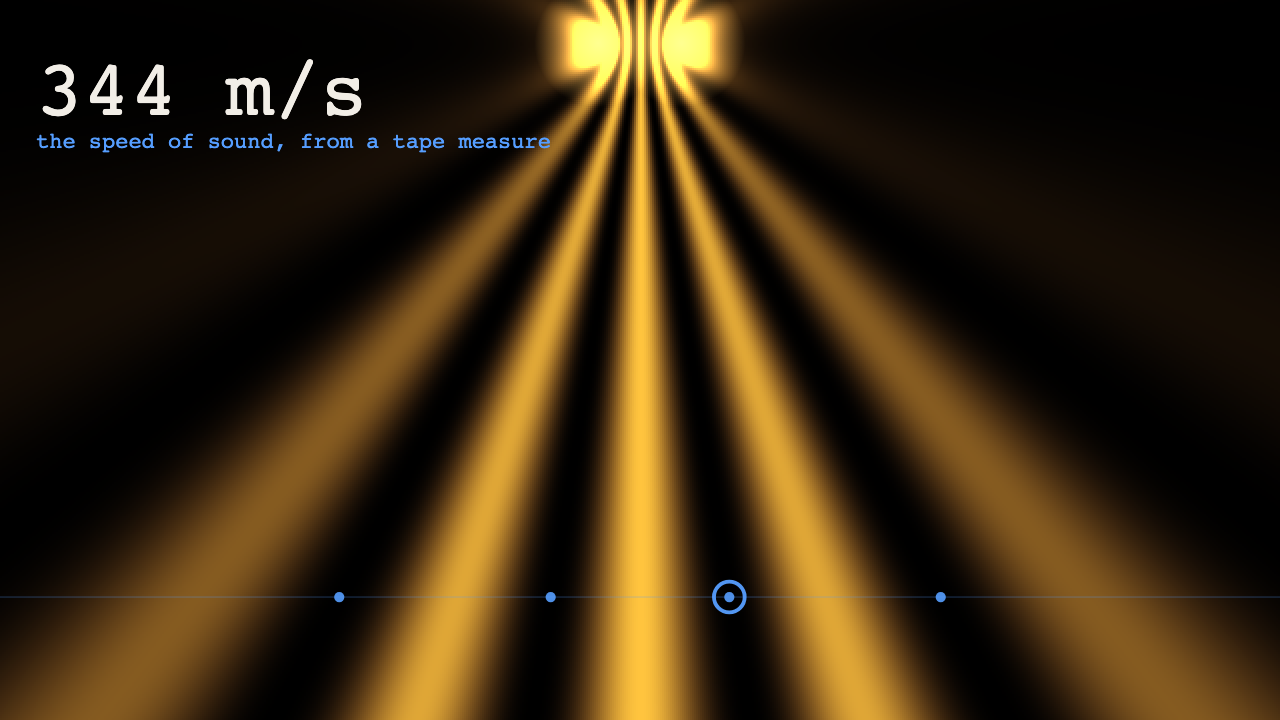
Two speakers playing the same note fill a room with fixed lines of silence. Pace out the gaps between them and you have measured the speed of sound without timing anything.
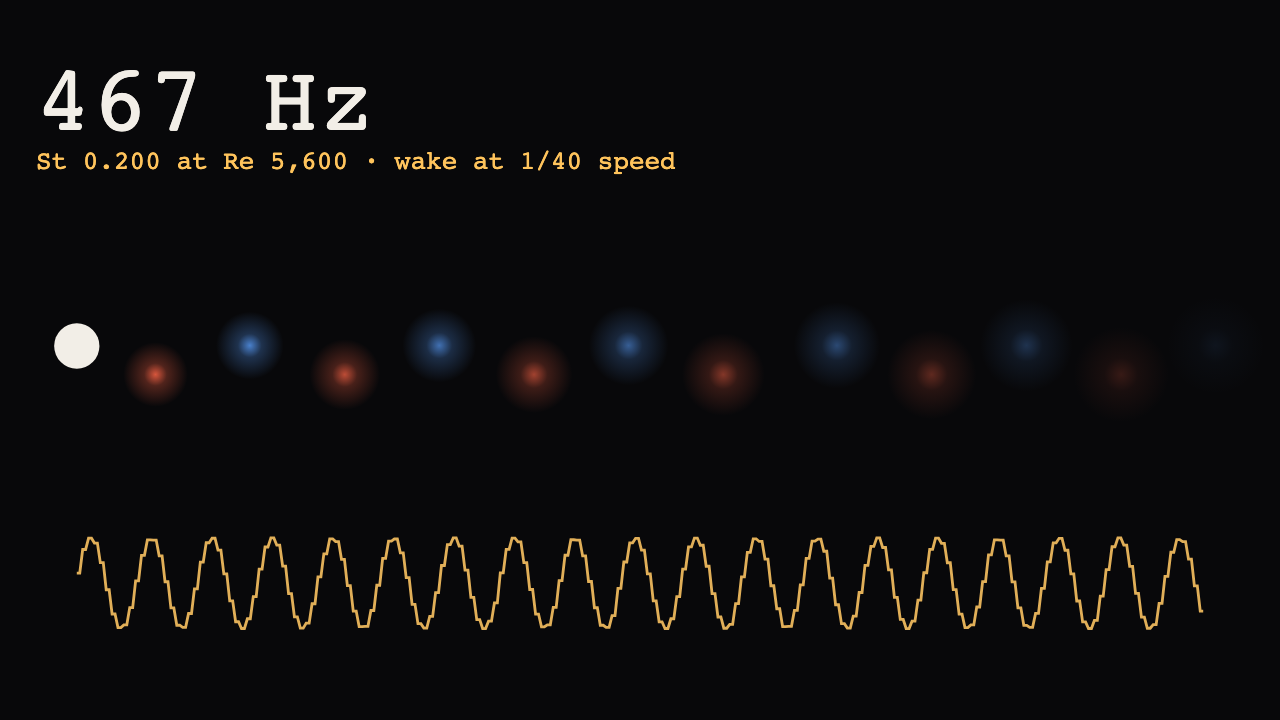
Air will not stay attached to the back of a wire. It peels off alternate sides, kicks the wire as it goes, and the rate it does that at barely changes across four decades of flow.
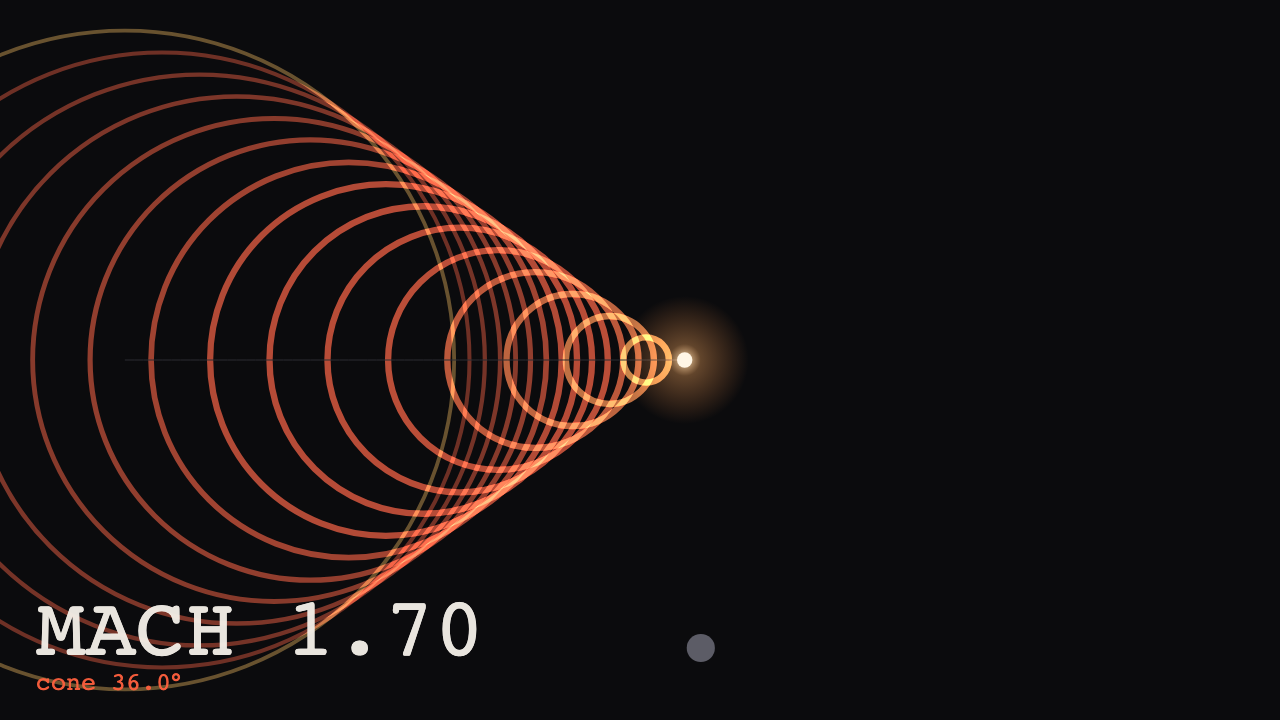
Drag a source about and its sound leaves from where it was, not where it is. Push it past the speed of sound and the waves pile onto a cone that nothing in the code draws.
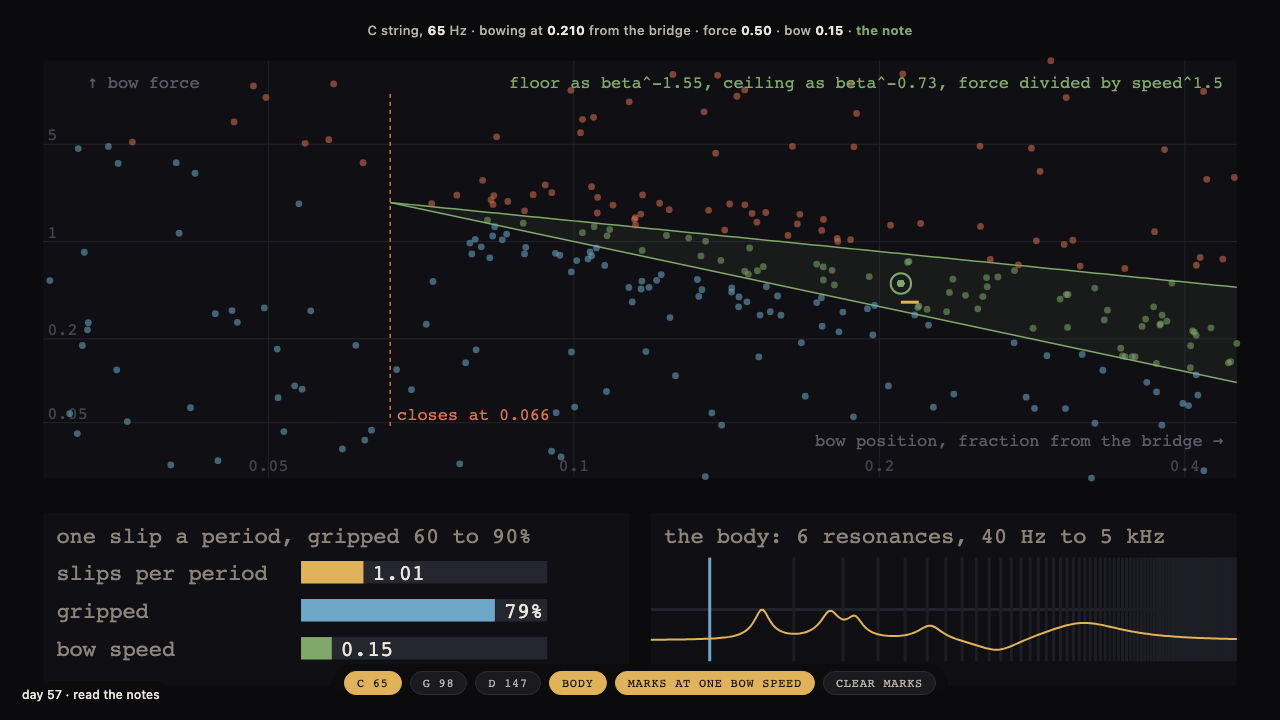
A bowed string will only speak inside a wedge of bow force and bow position. Two boundaries, two different power laws, and the gap between them closes near the bridge.
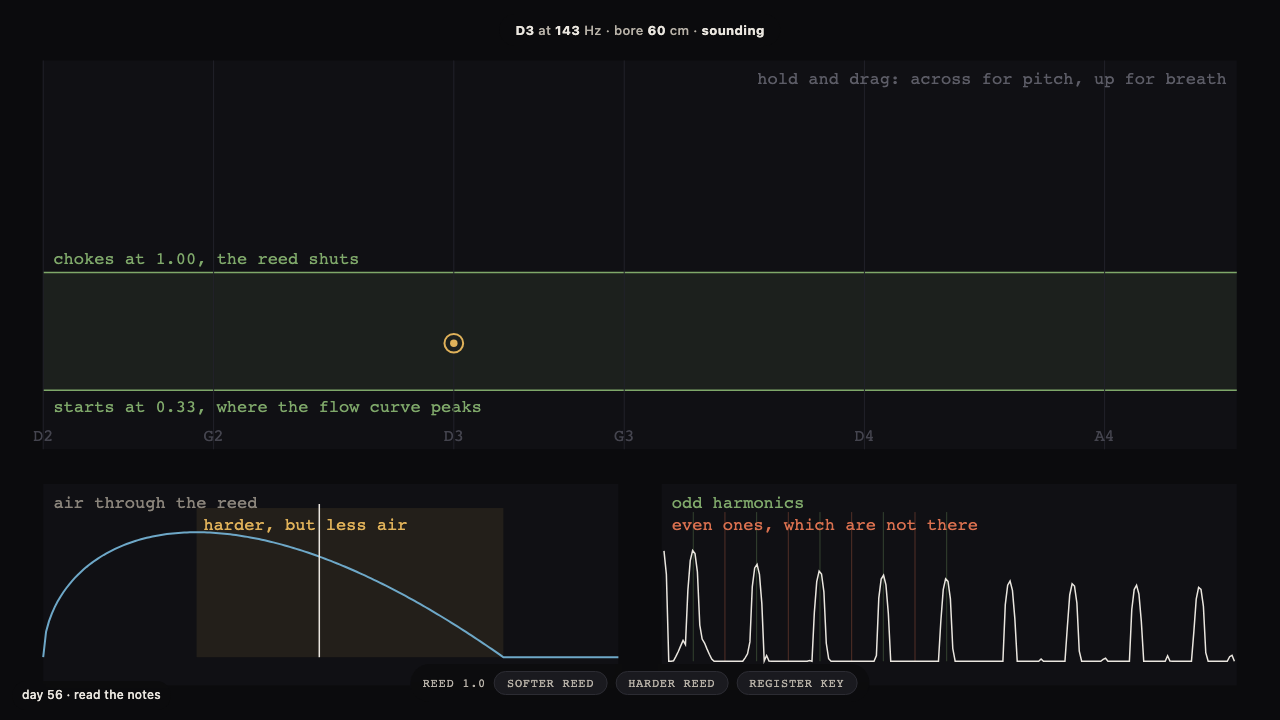
A clarinet with no oscillator in it. A tube and a flap of cane, and the note is what the loop between them settles on.
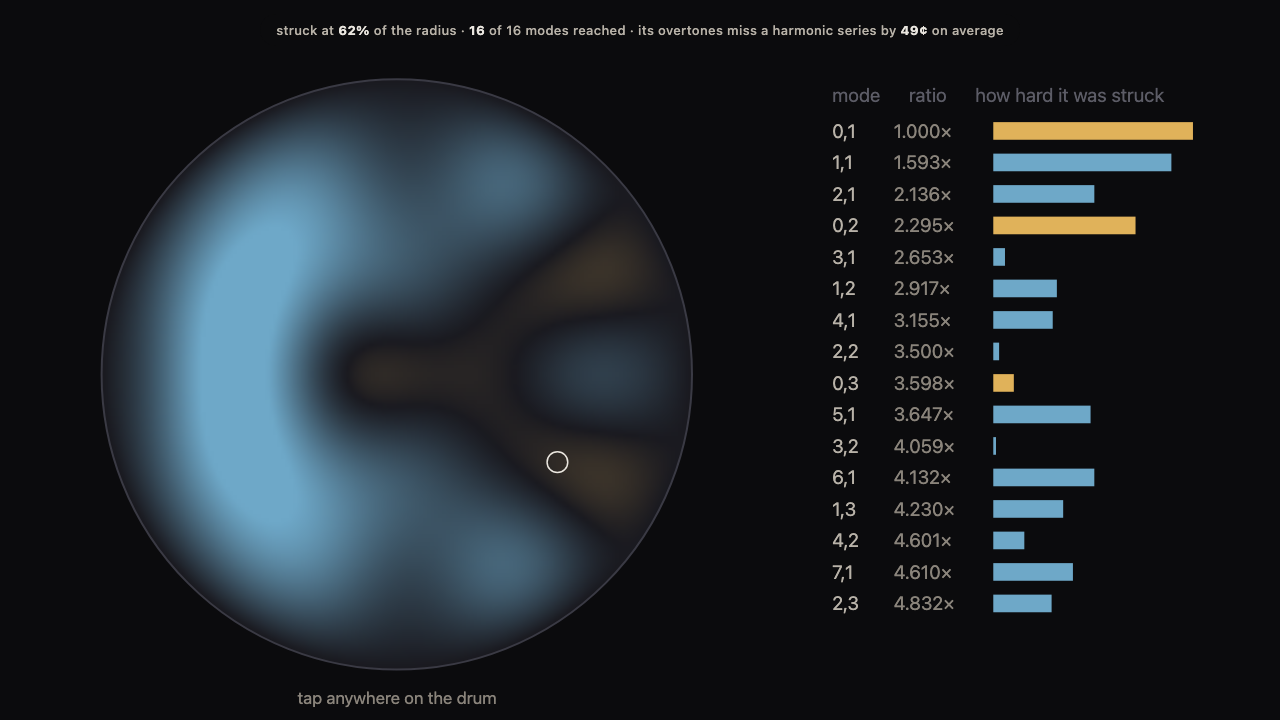
Tap a membrane anywhere and watch which of its modes you reached. Hit the centre and you can only reach three of sixteen.
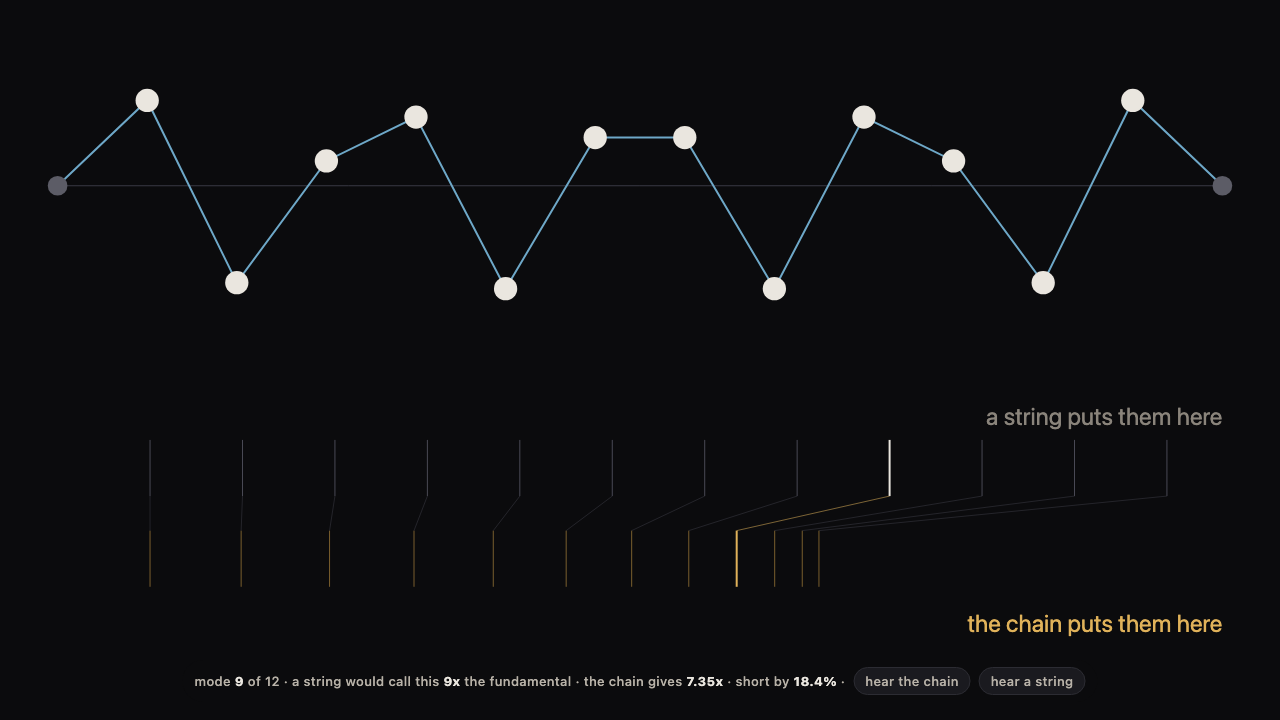
Twelve masses on springs. The first few modes are the harmonics you would expect. The last few are nowhere near.
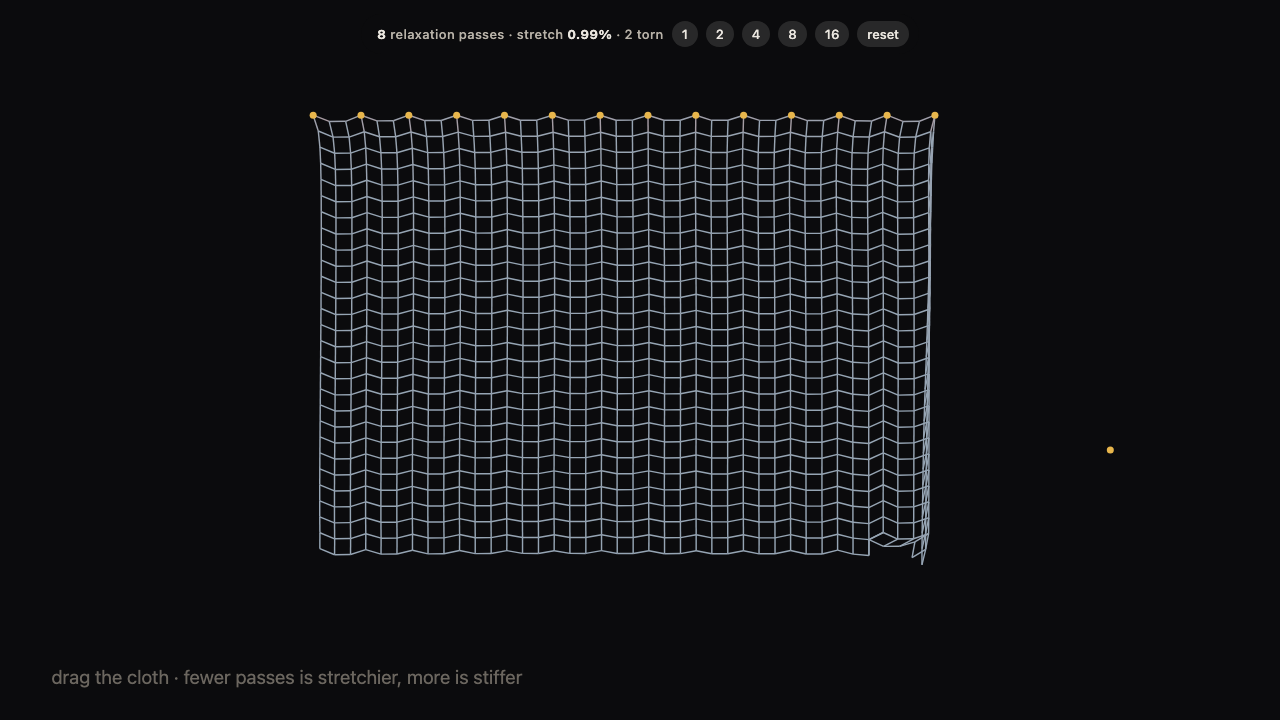
No springs, no stiffness, no forces between the threads. Just moving the links back to the right length, over and over.
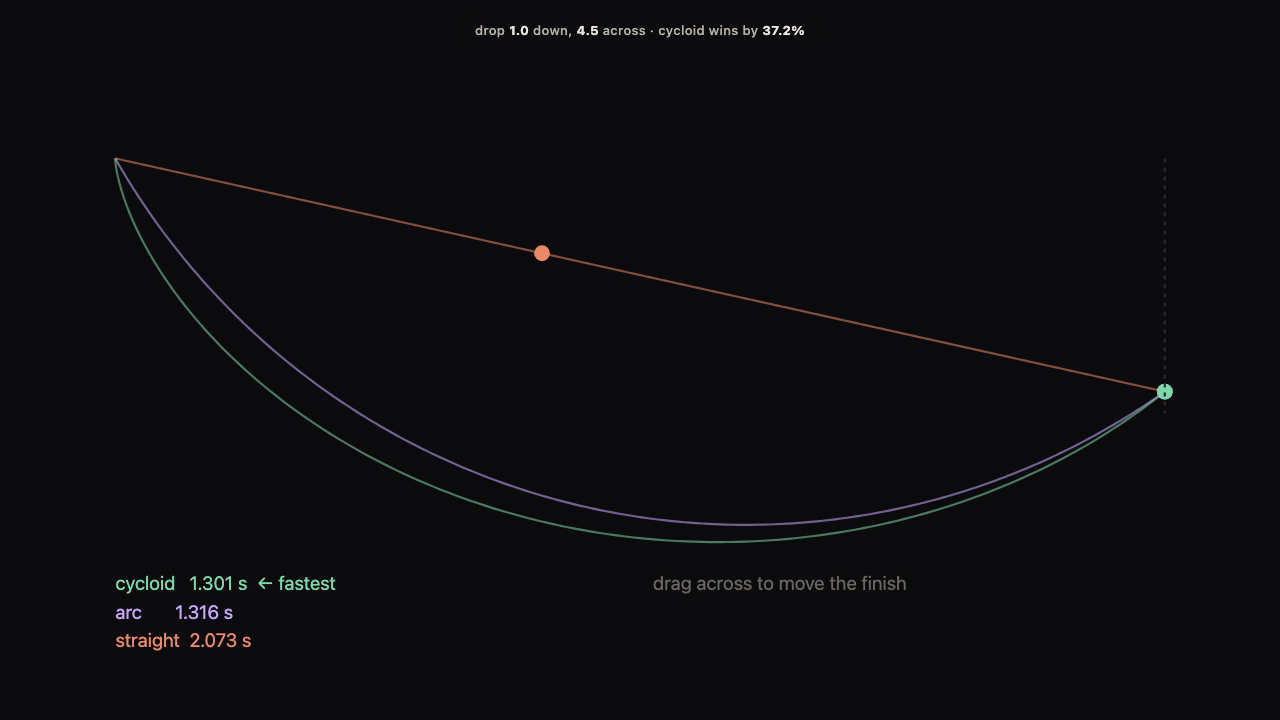
Three beads, three ramps, same start and finish. The straight one loses badly.
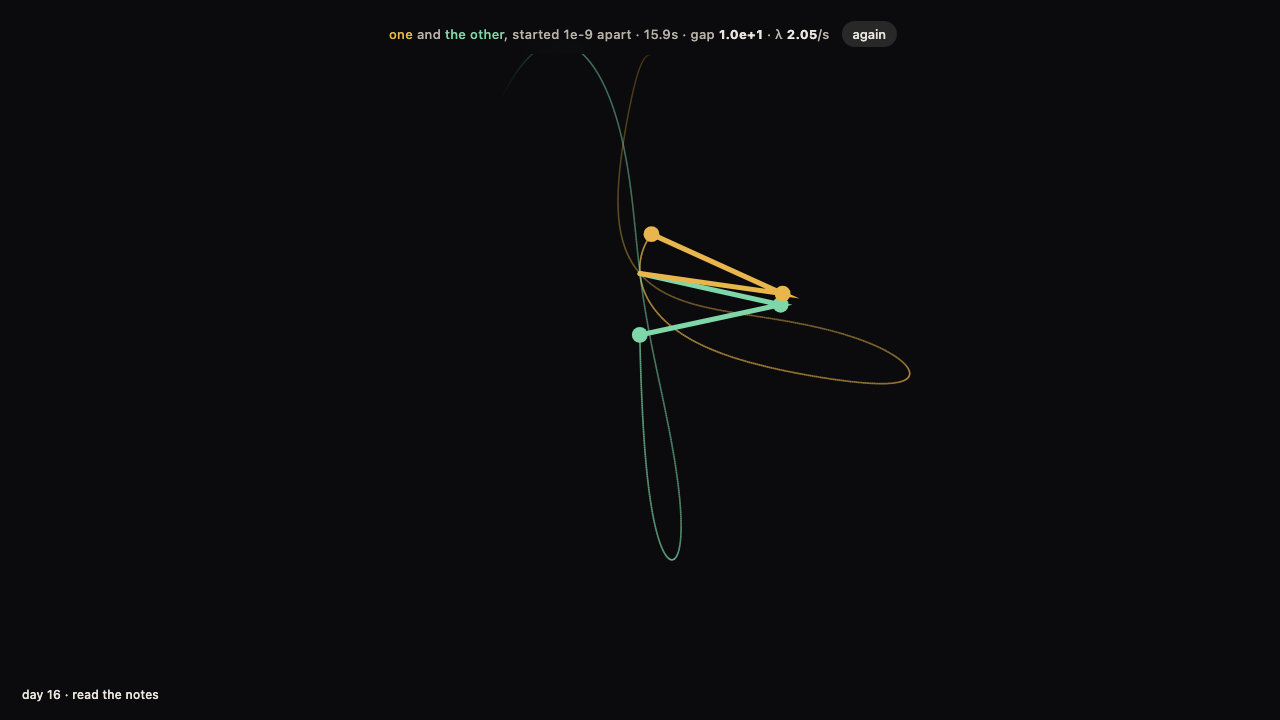
Two identical pendulums, started a billionth of a radian apart. Watch how long identical lasts.
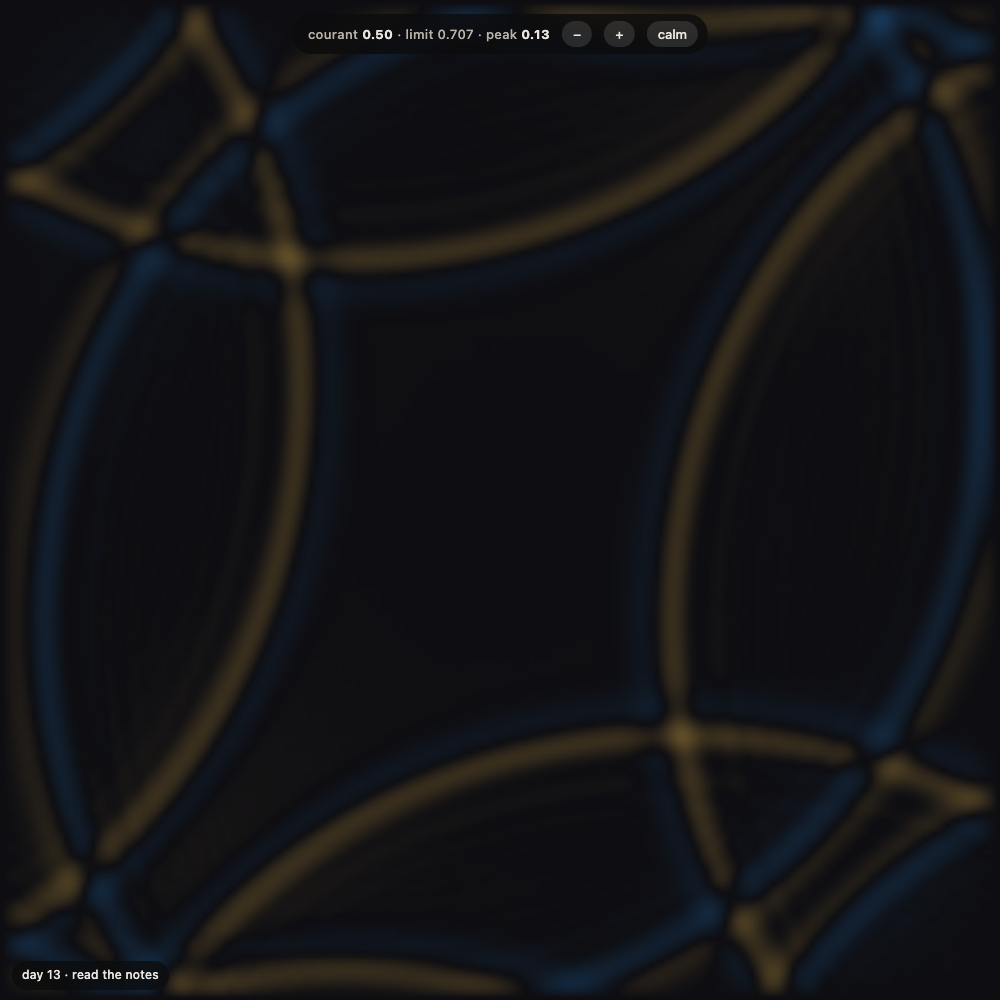
Tap the pool. Three lines of stencil, one number that decides whether physics happens or the whole thing detonates.
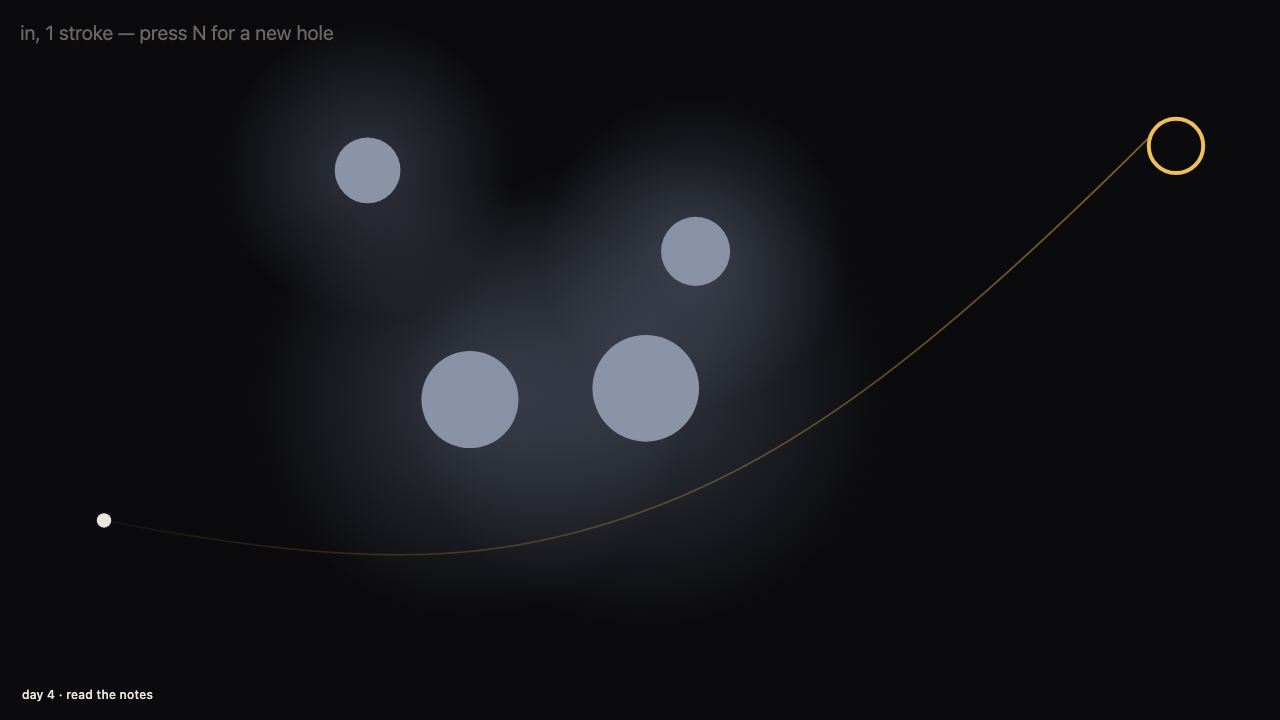
Drag to launch, slingshot around the planets, sink it. Every hole is proven solvable before you see it.
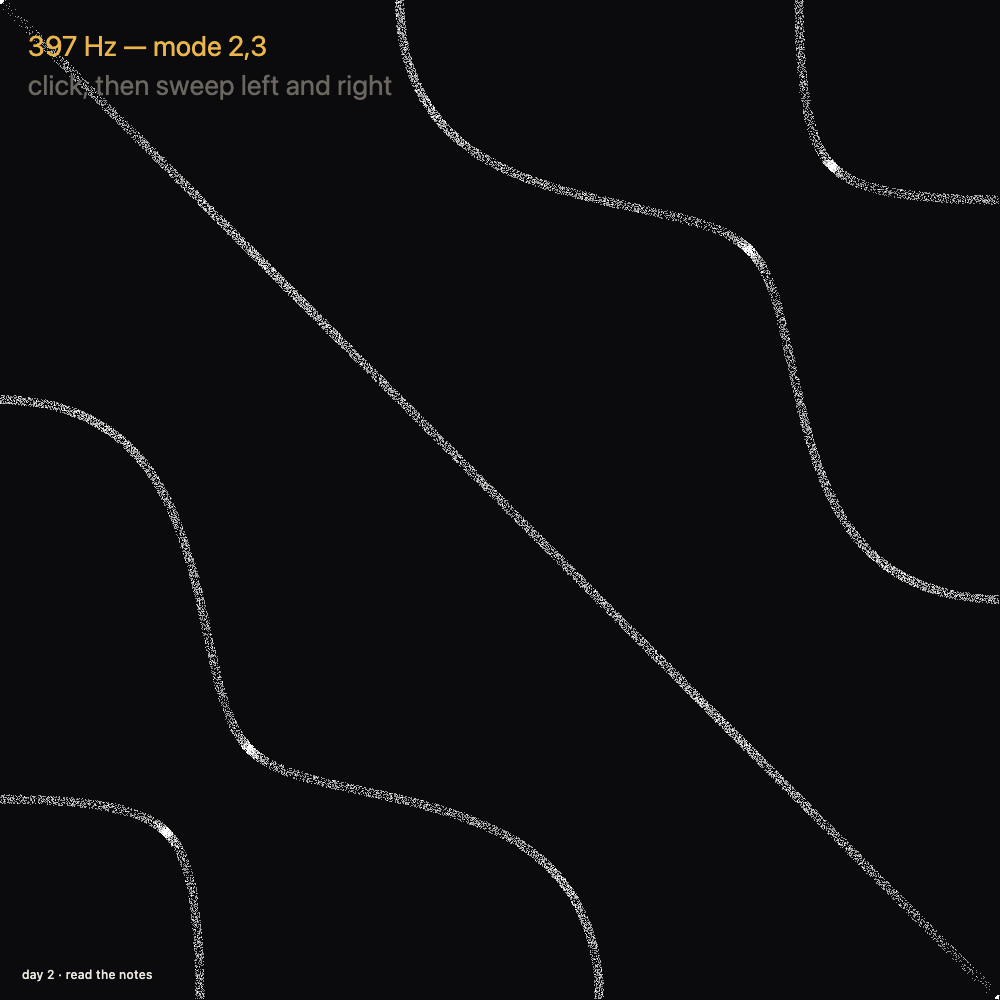
Sand on a vibrating plate draws the shape of a standing wave. Sweep for a resonance and watch it assemble.