How Far Ahead You Can See
Eight copies of the same system, started a billionth apart. They move as one and then they do not, and the moment they stop agreeing is a number. A thousand times more precision buys 2.6 more seconds.
17 projects
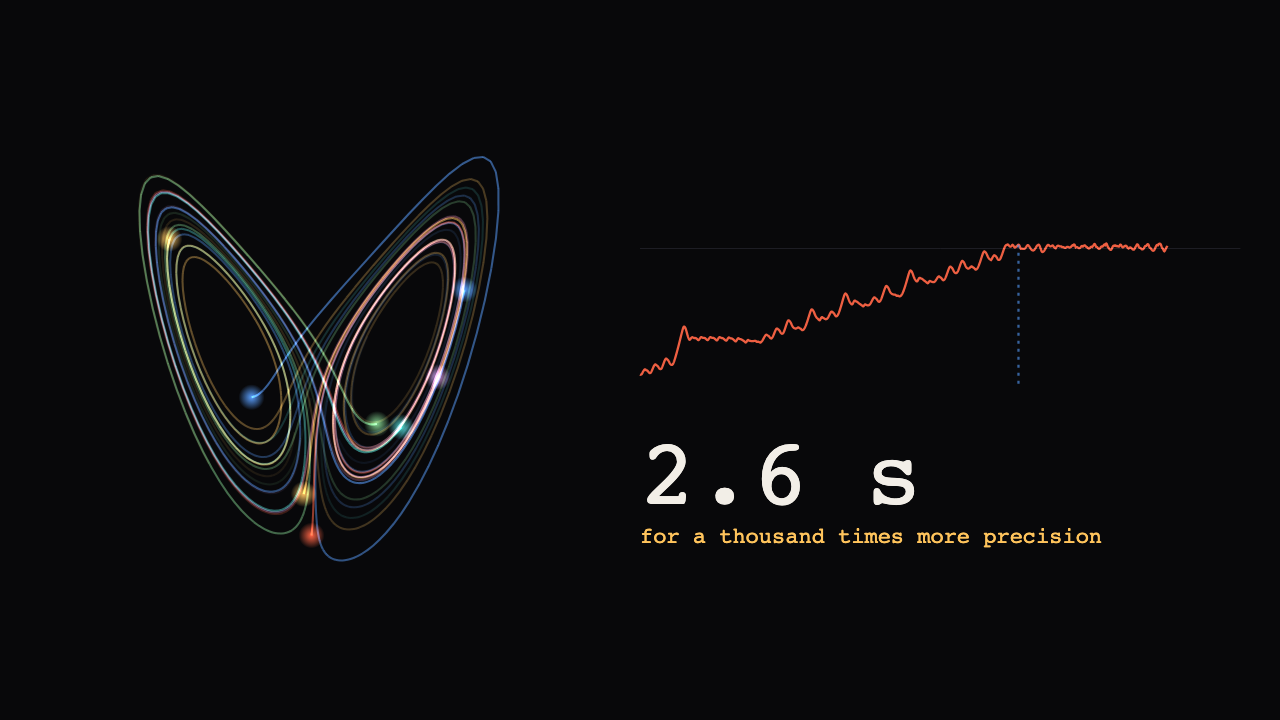
Eight copies of the same system, started a billionth apart. They move as one and then they do not, and the moment they stop agreeing is a number. A thousand times more precision buys 2.6 more seconds.
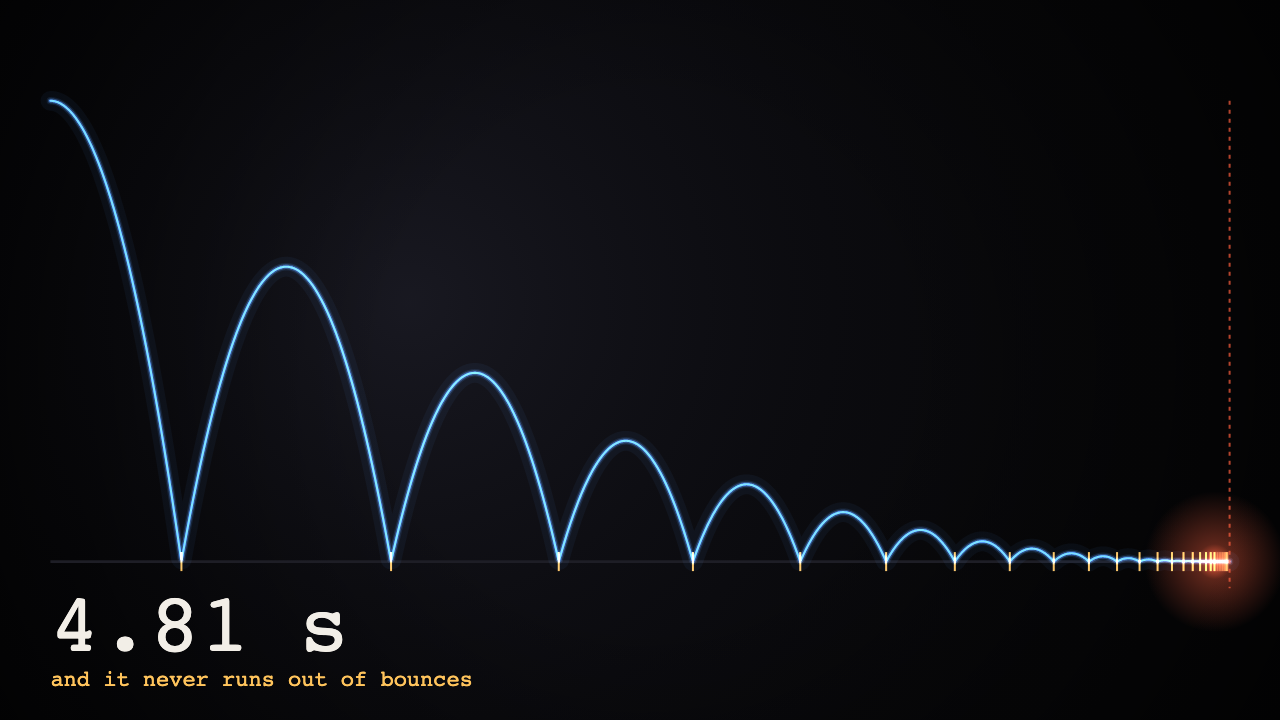
A dropped ball never quite stops bouncing, and stops after 4.81 seconds. The rattle at the end is the tail of a series you can hear converging.
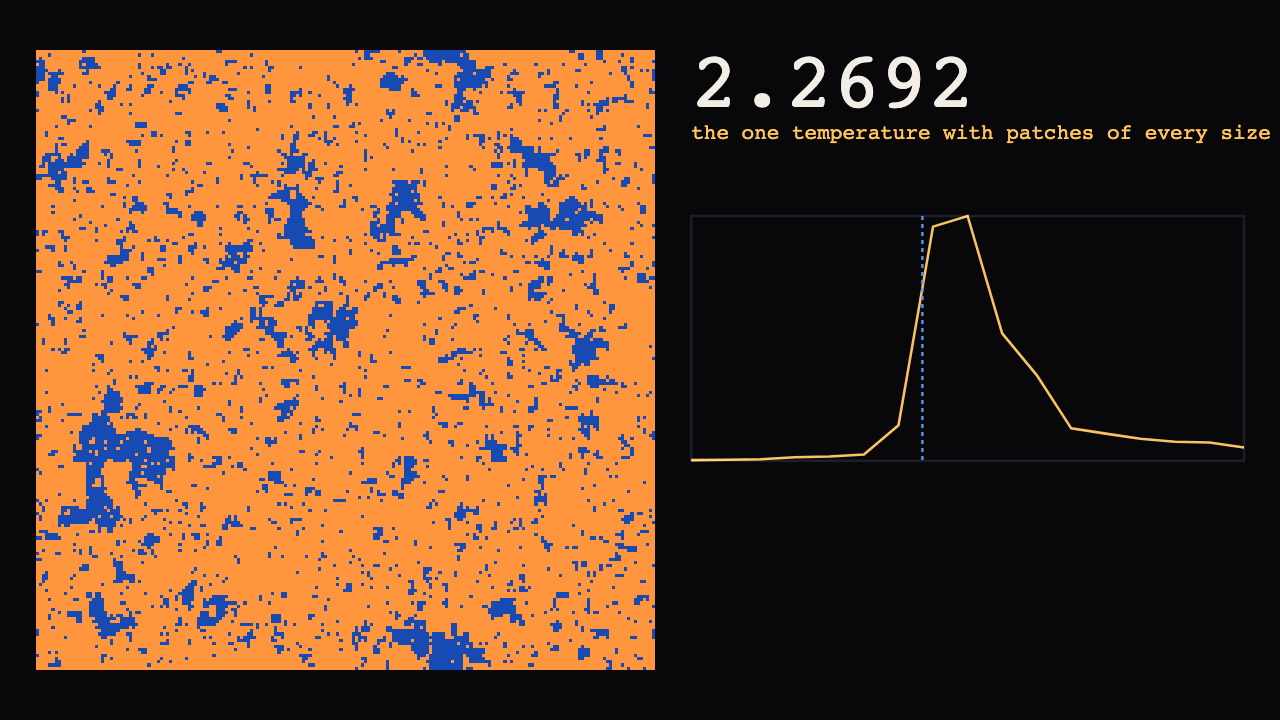
A sheet of magnets is either lined up or it is noise, except at one temperature, where it fills with patches of every size at once. Onsager worked that temperature out exactly in 1944 and the sheet finds it back.
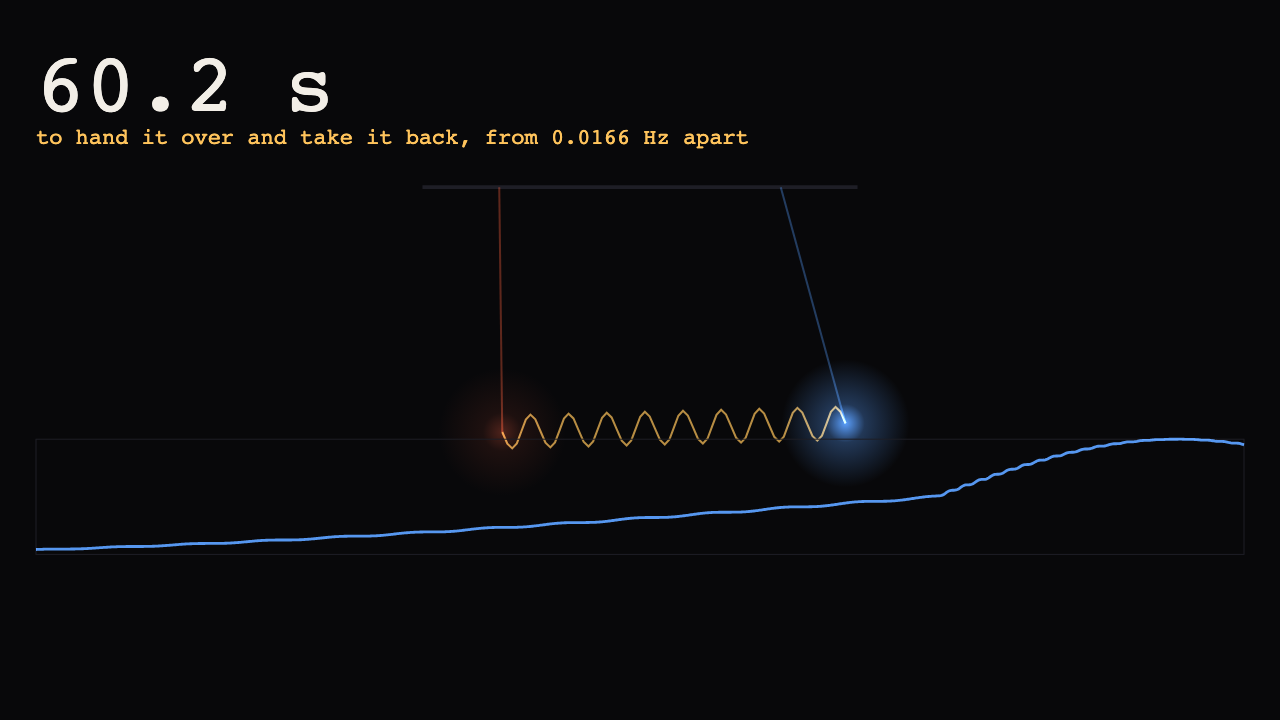
Two pendulums joined by a weak spring. Start one and it stops dead a minute later with the other one swinging, then takes it all back. The clock is the difference between two frequencies a hundredth of a hertz apart.
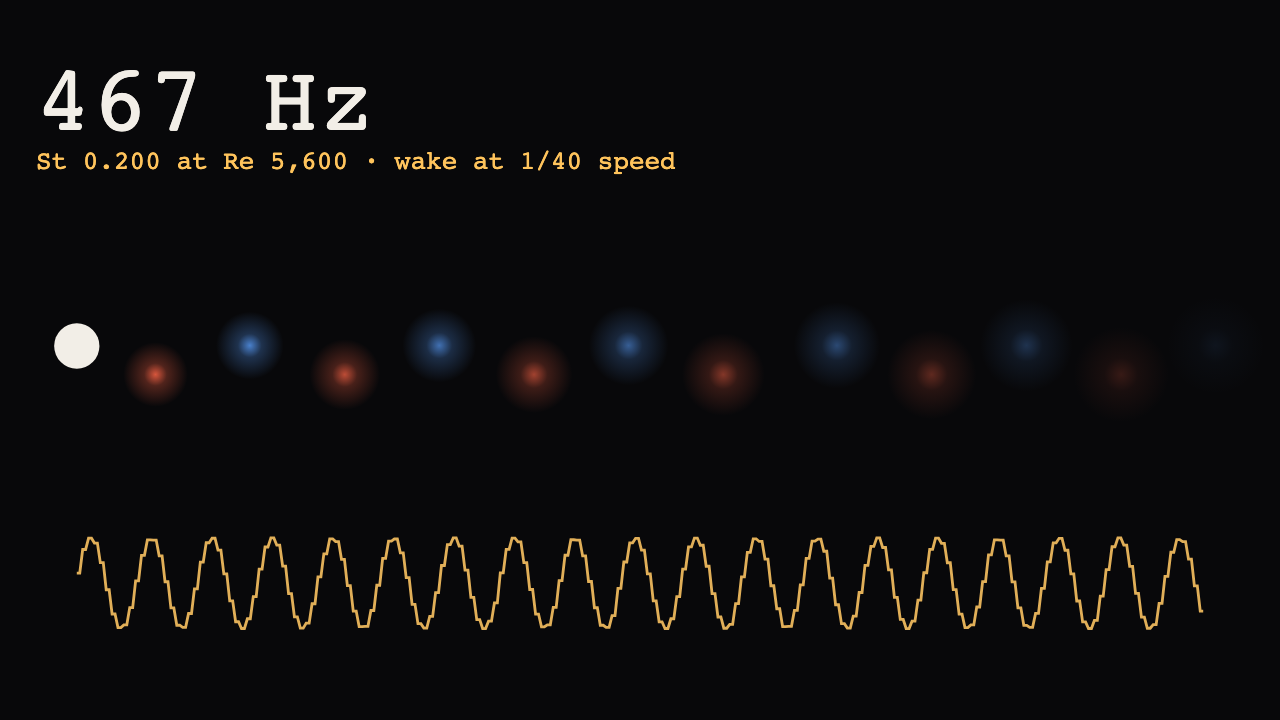
Air will not stay attached to the back of a wire. It peels off alternate sides, kicks the wire as it goes, and the rate it does that at barely changes across four decades of flow.
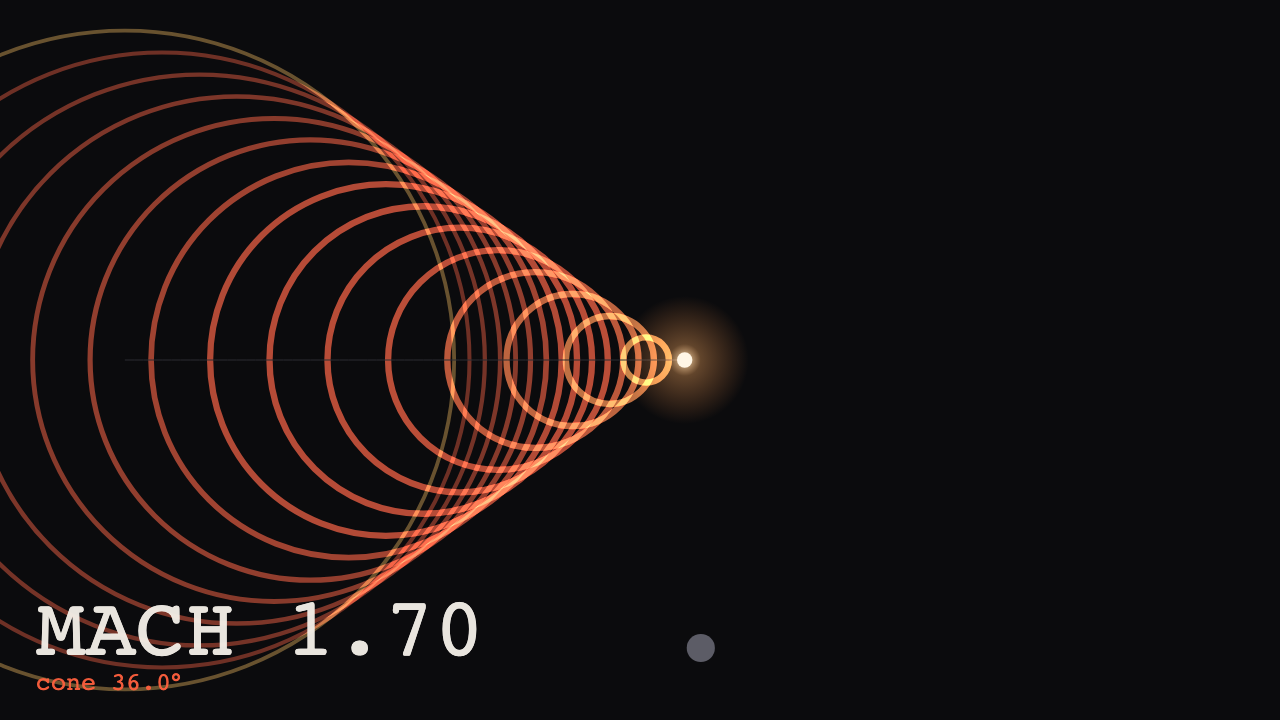
Drag a source about and its sound leaves from where it was, not where it is. Push it past the speed of sound and the waves pile onto a cone that nothing in the code draws.
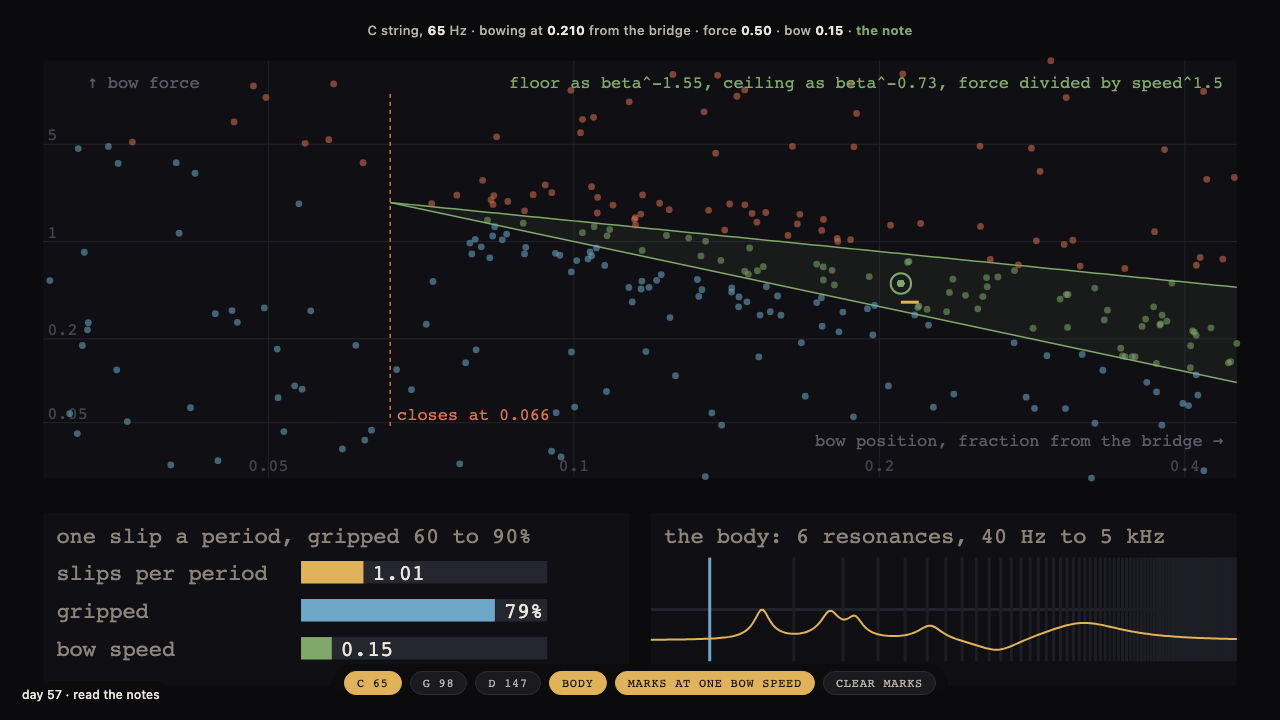
A bowed string will only speak inside a wedge of bow force and bow position. Two boundaries, two different power laws, and the gap between them closes near the bridge.
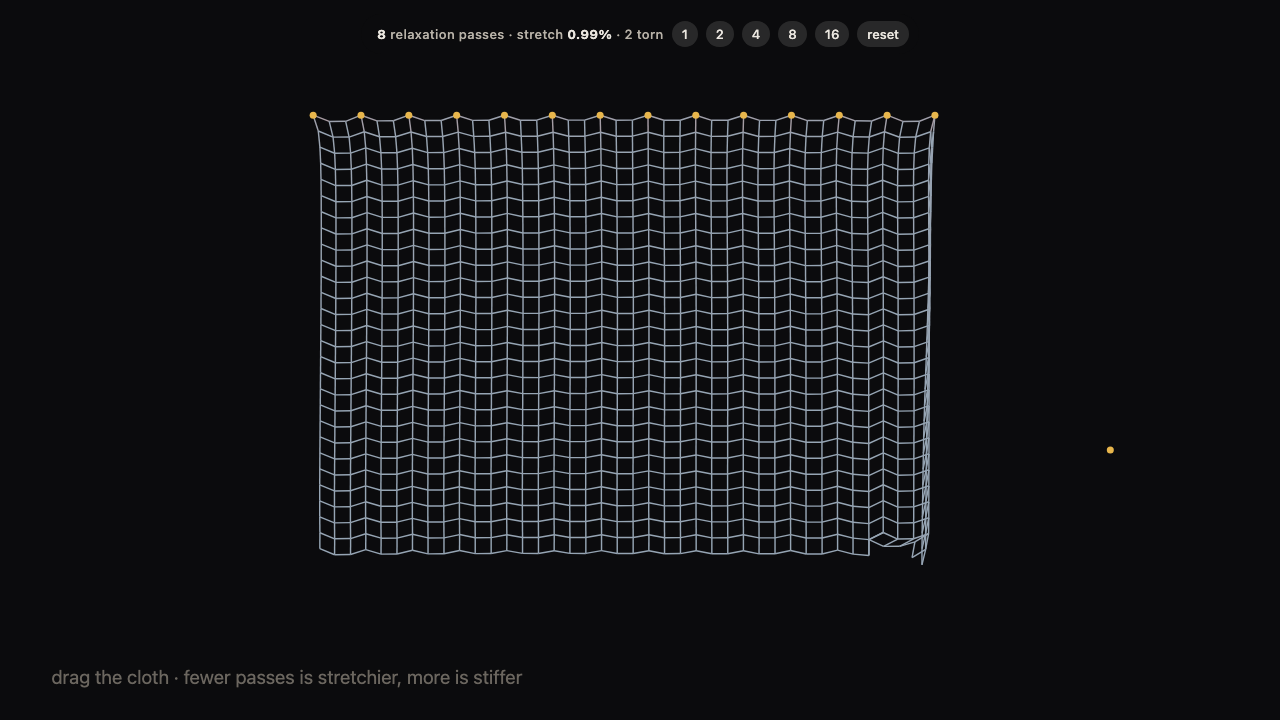
No springs, no stiffness, no forces between the threads. Just moving the links back to the right length, over and over.
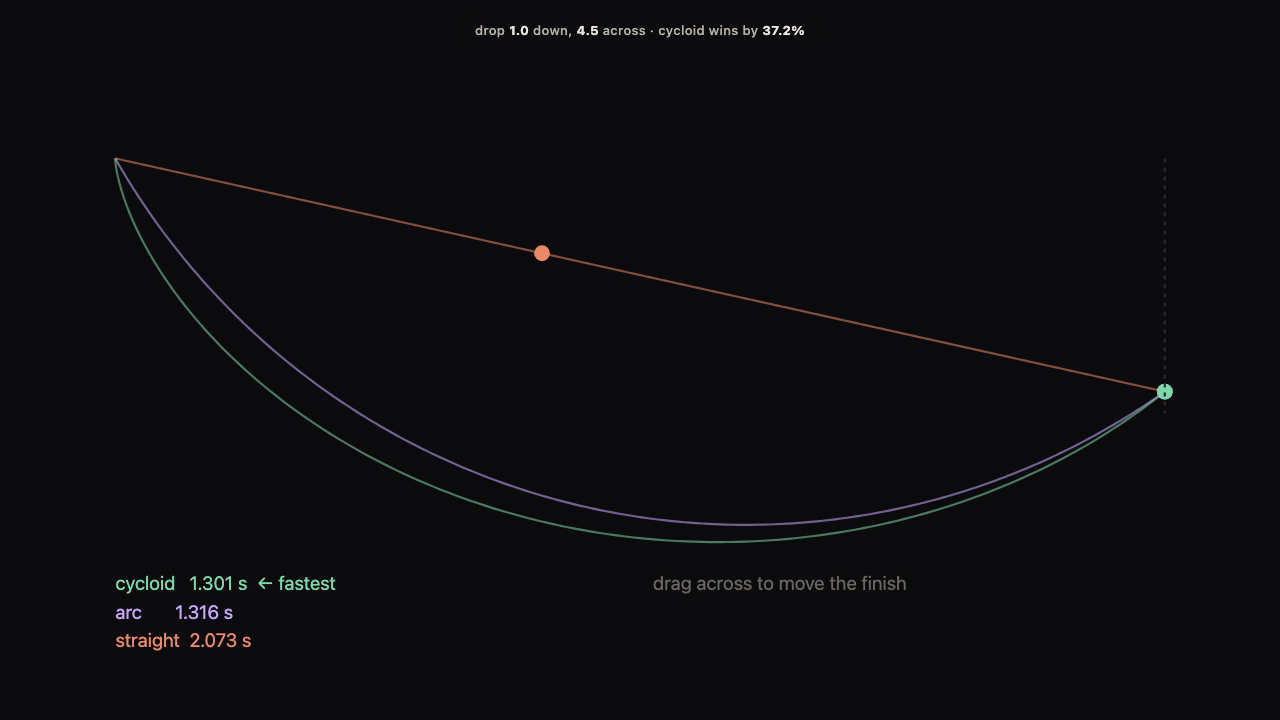
Three beads, three ramps, same start and finish. The straight one loses badly.
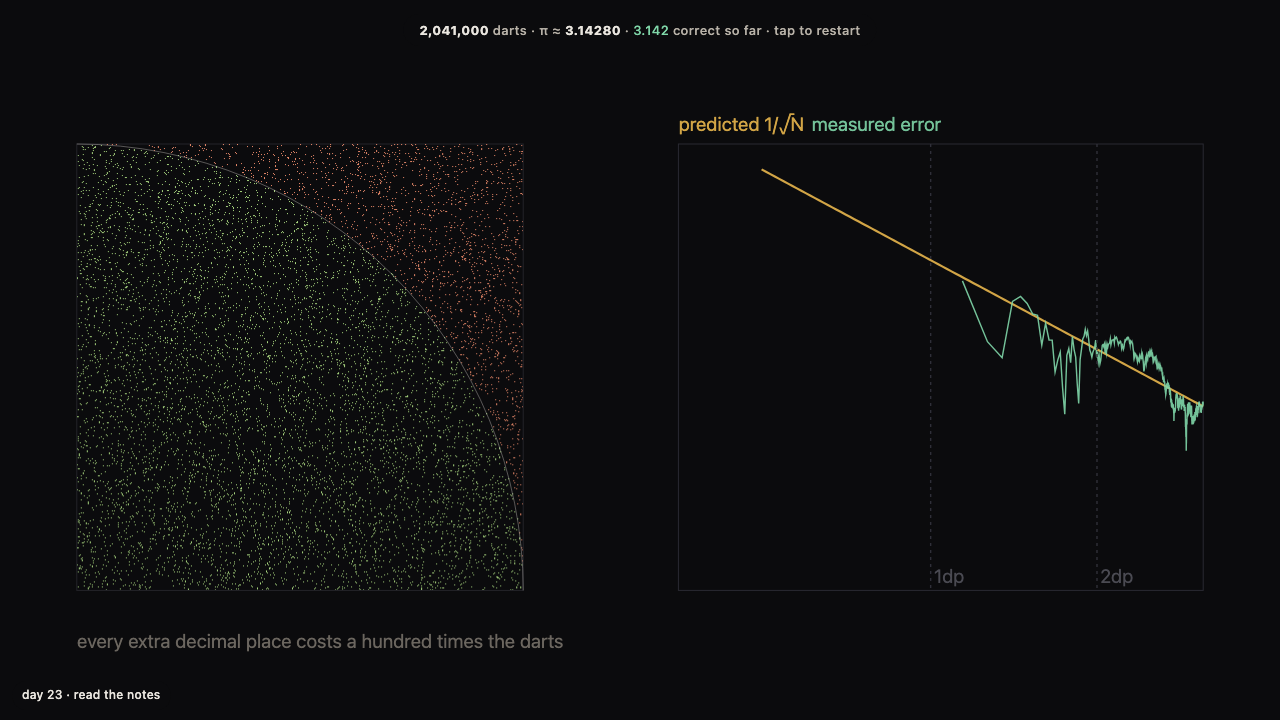
Throwing darts at a circle finds π in seconds, then spends the rest of eternity finding the next decimal place.
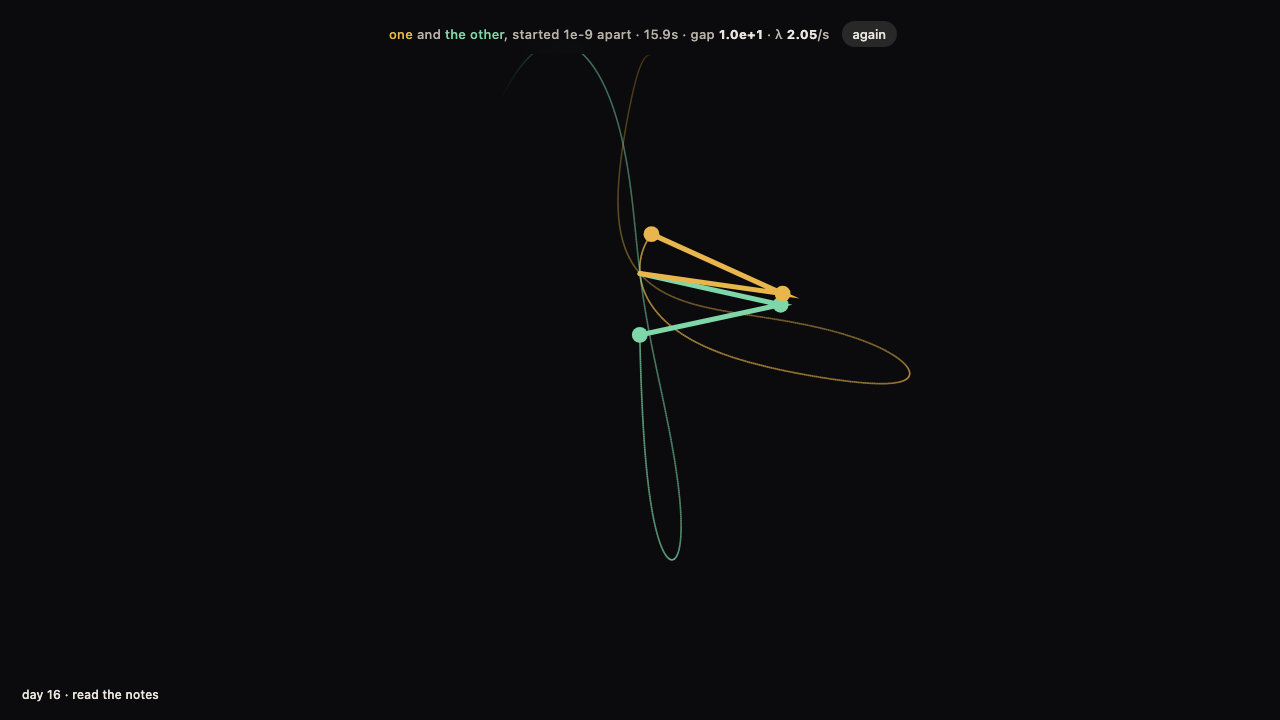
Two identical pendulums, started a billionth of a radian apart. Watch how long identical lasts.
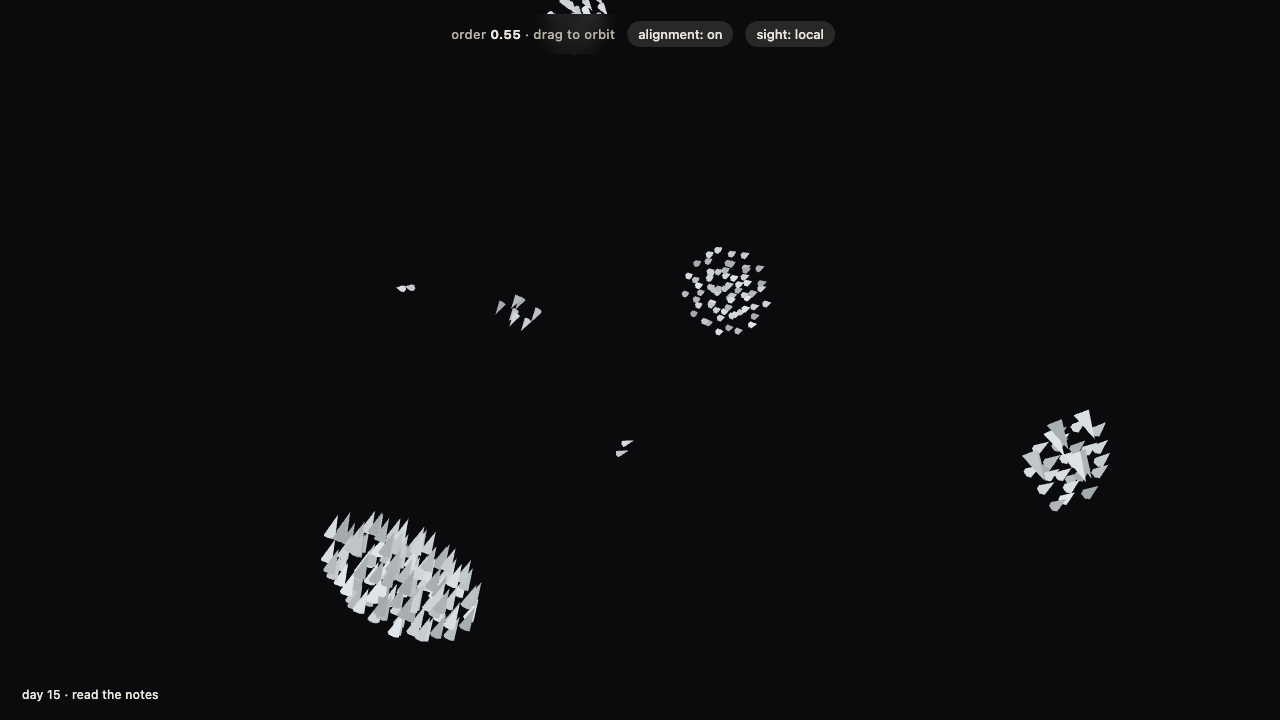
Three hundred birds, three local rules, no leader, and the order they reach is deliberately imperfect.
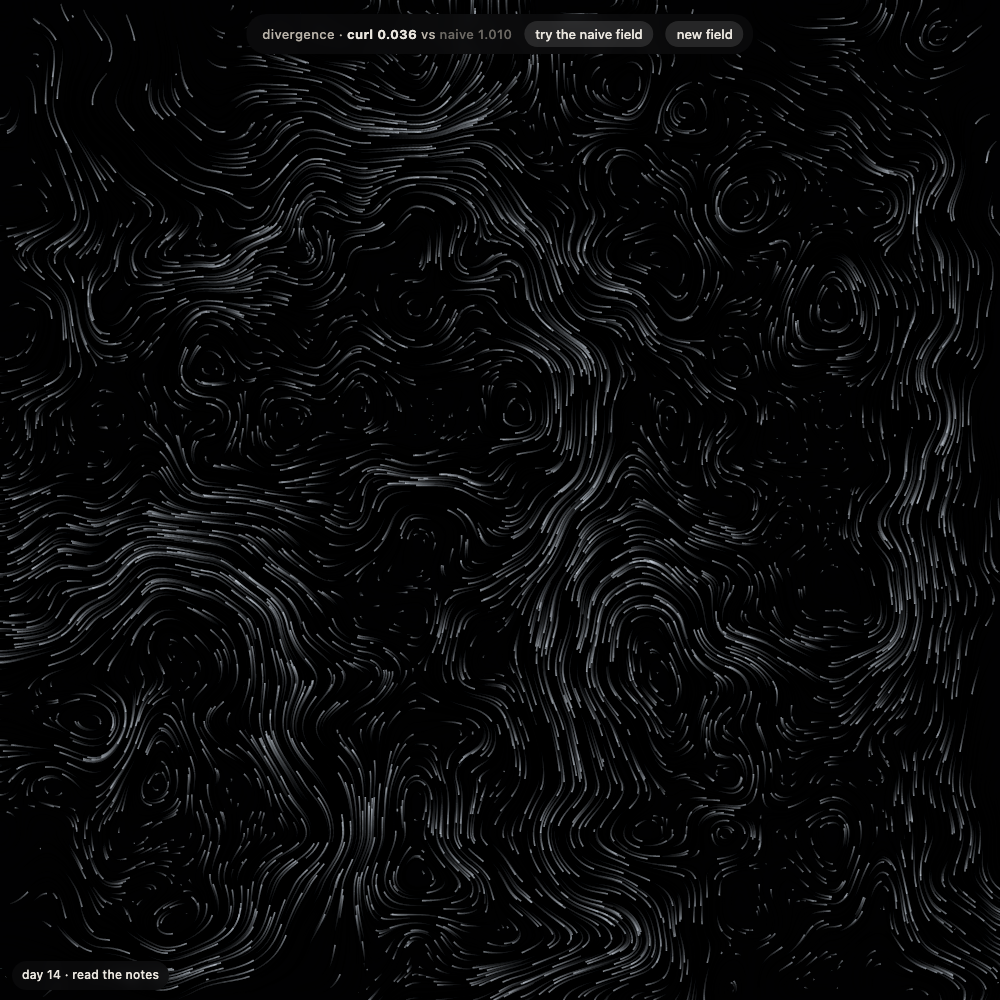
Four thousand particles drifting through a noise field, and the one operation that makes it look like fluid instead of sand.
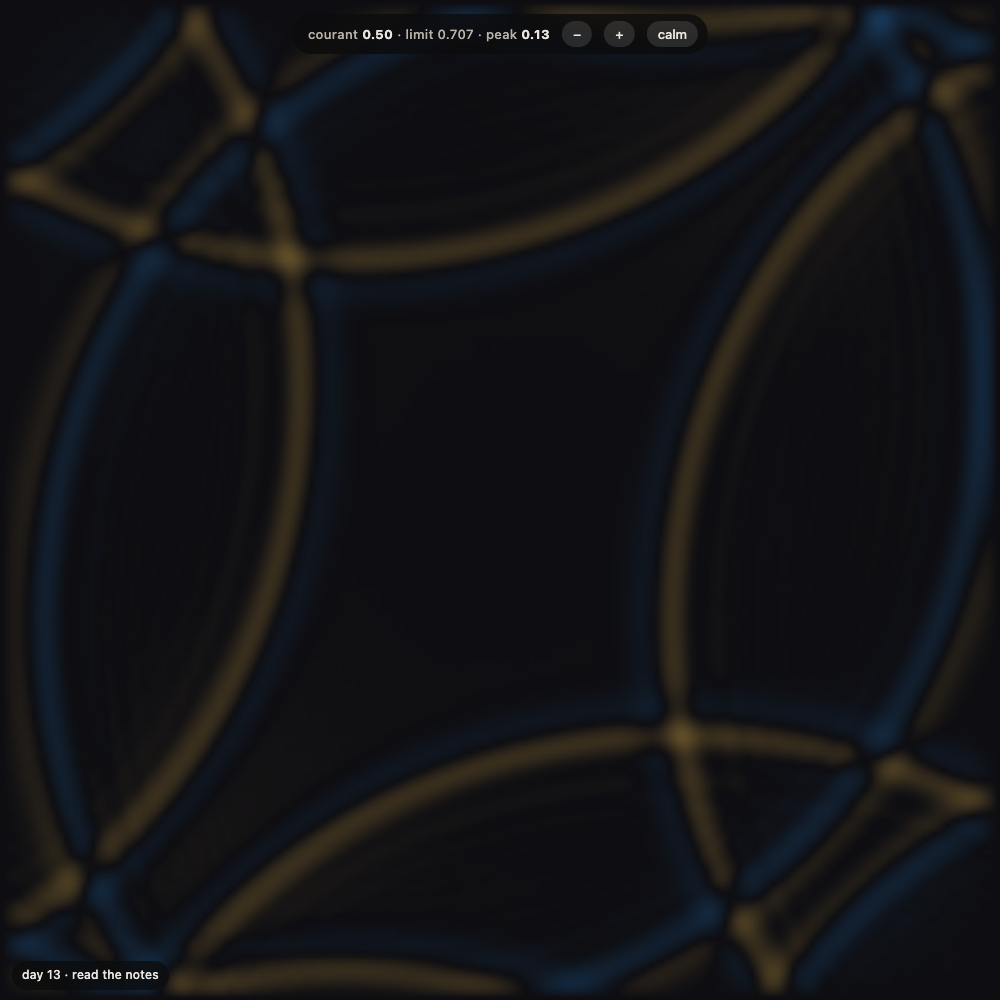
Tap the pool. Three lines of stencil, one number that decides whether physics happens or the whole thing detonates.
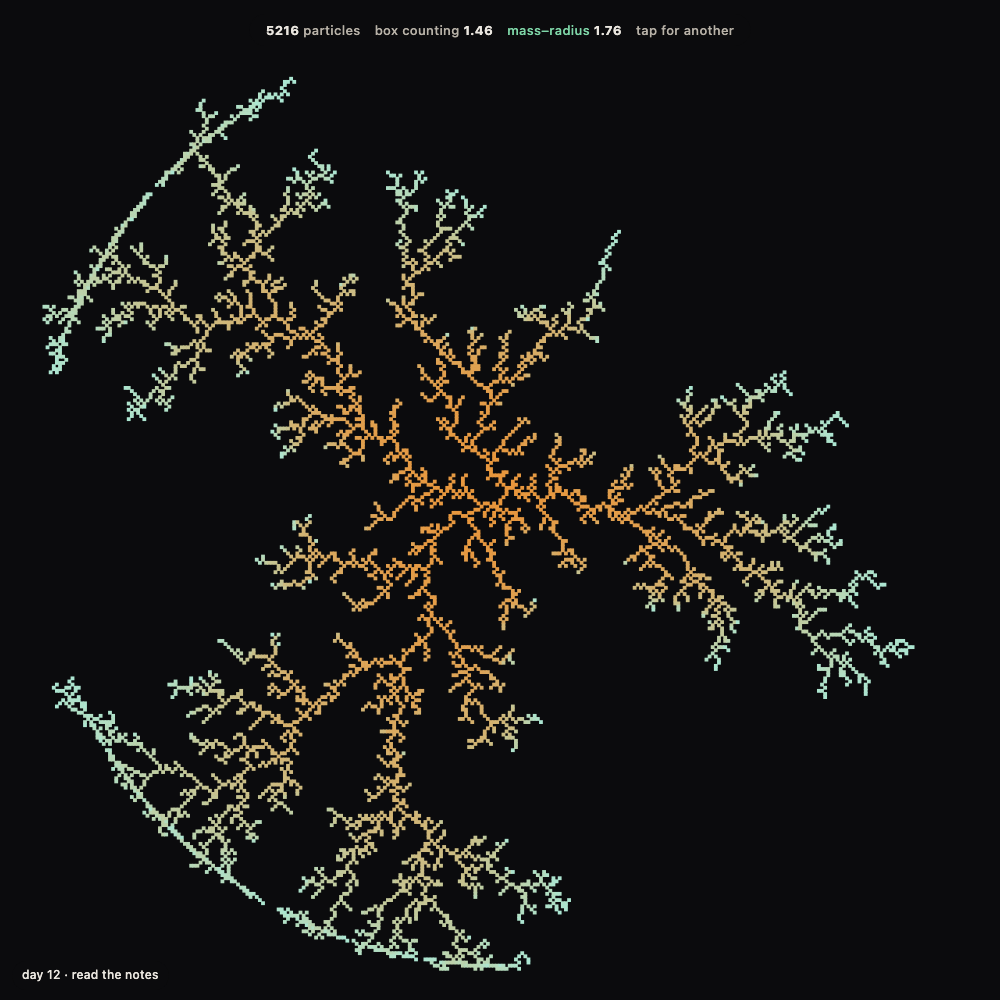
Particles wandering at random until they stick, growing frost, and two ways of measuring it that disagree by a quarter.
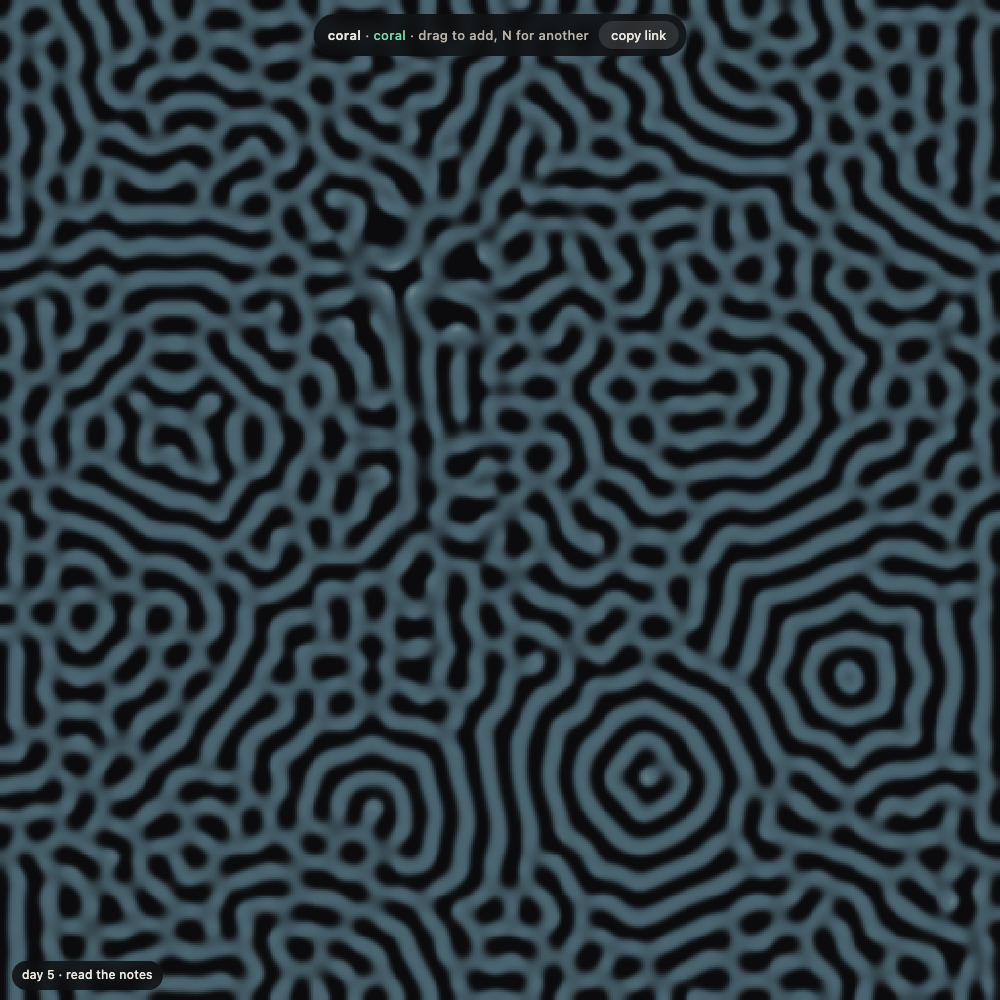
Two chemicals, one shader, and a seed in the URL, so every link grows a different organism.
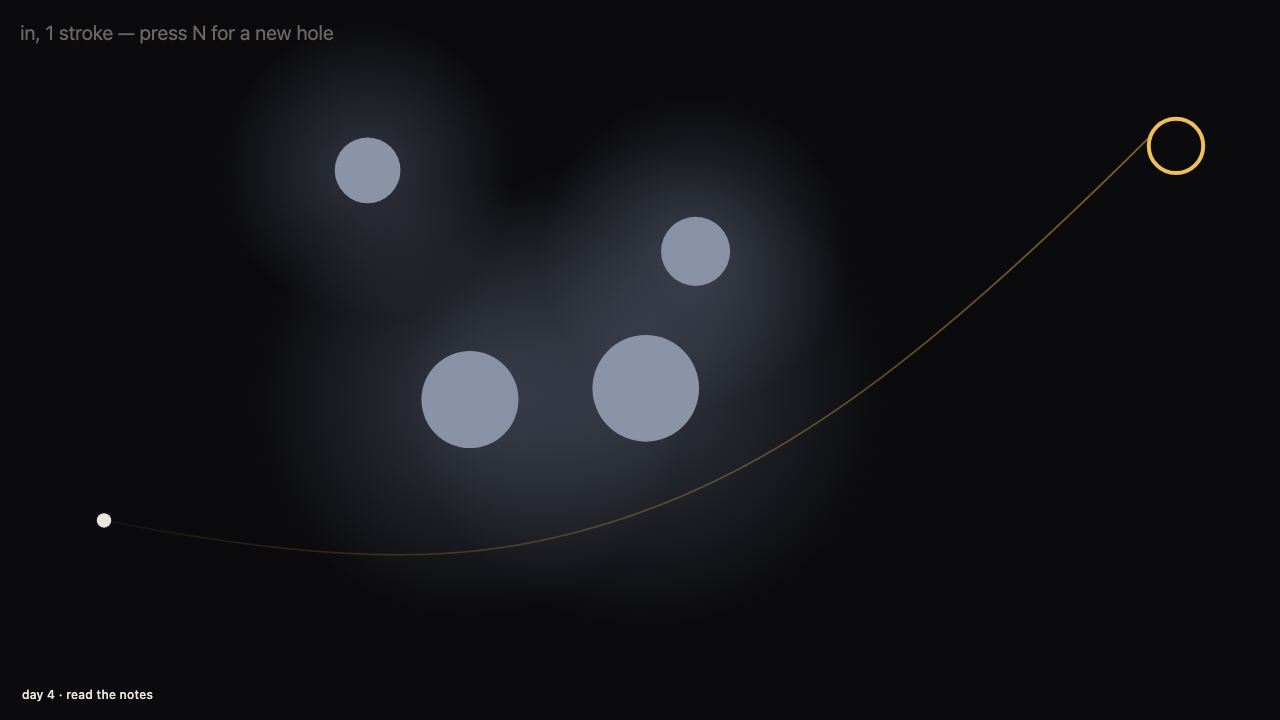
Drag to launch, slingshot around the planets, sink it. Every hole is proven solvable before you see it.