Outrun Your Own Sound
Drag a source about and its sound leaves from where it was, not where it is. Push it past the speed of sound and the waves pile onto a cone that nothing in the code draws.
9 projects
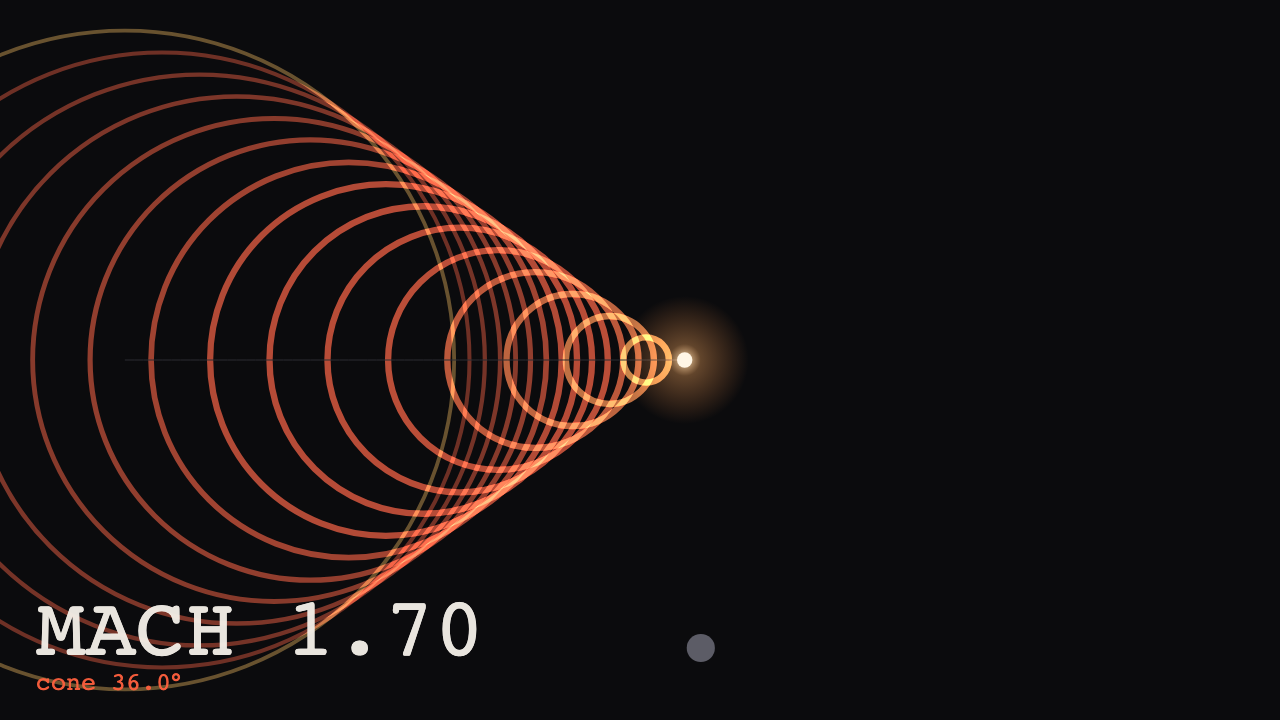
Drag a source about and its sound leaves from where it was, not where it is. Push it past the speed of sound and the waves pile onto a cone that nothing in the code draws.
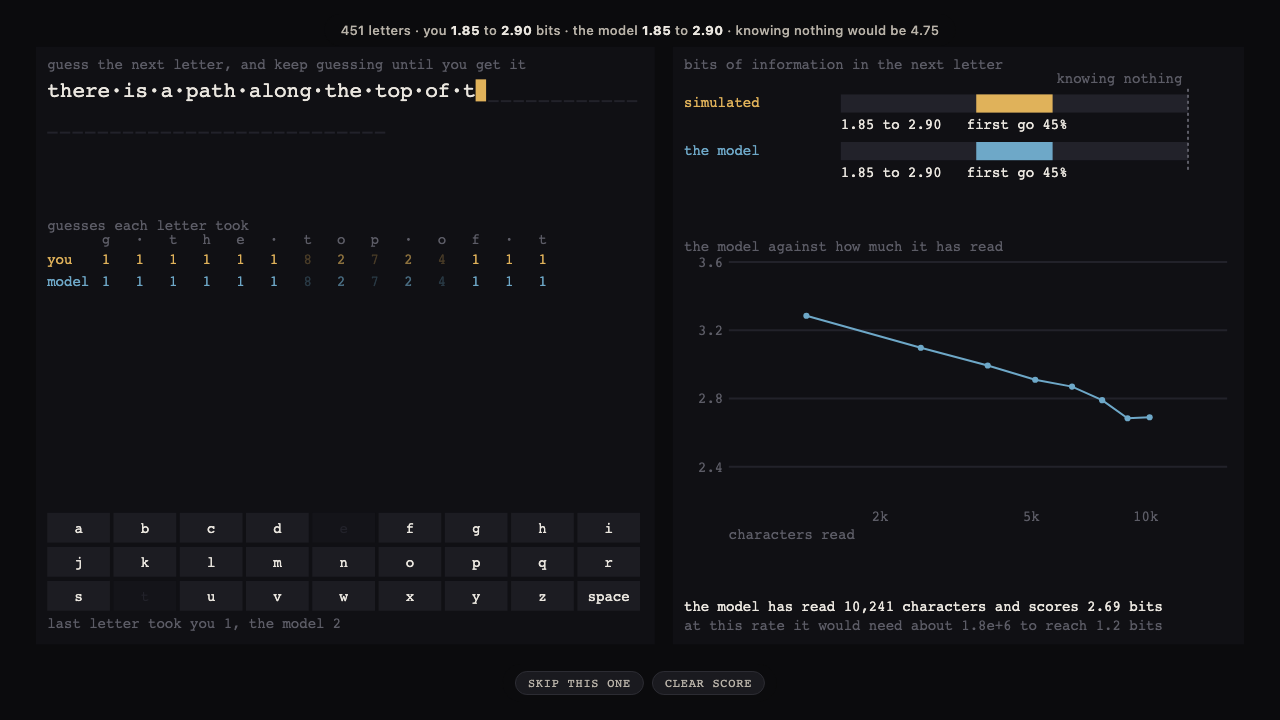
Guess the next letter of a sentence until you get it. How far down your guesses the answer sits measures how much English you already know, in bits, and you will beat the machine.
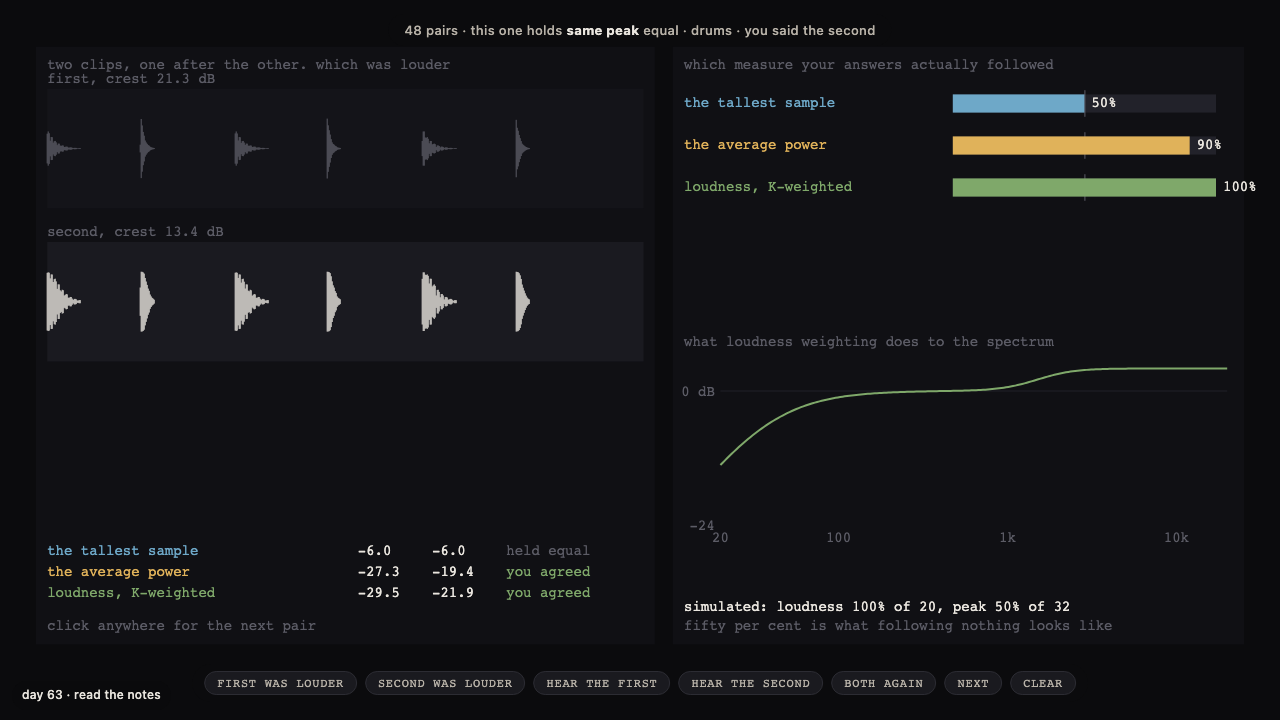
Two clips with identical peak levels, and one is obviously louder. Your answers reveal which of three measures you are actually following, and it is not the one on the meter.
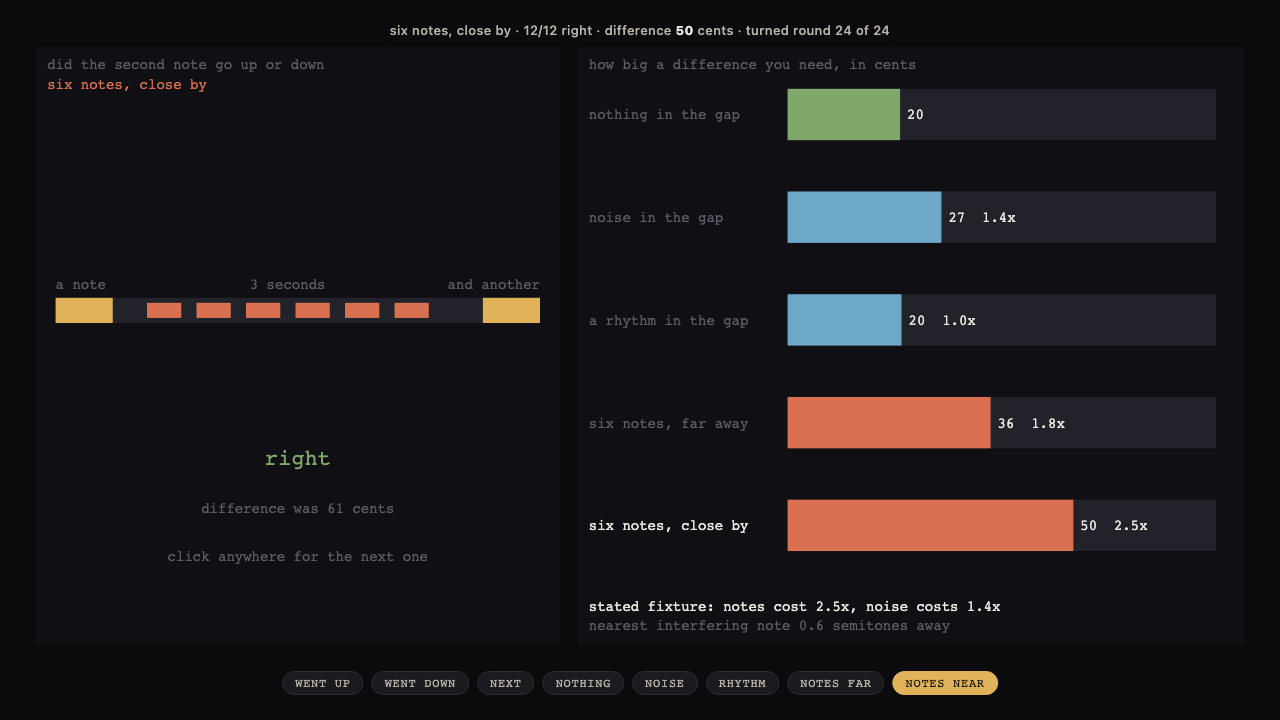
Hold a note in your head for three seconds and you can spot a twenty cent change. Put six other notes in the gap and it takes fifty. Fill it with noise instead and almost nothing happens.
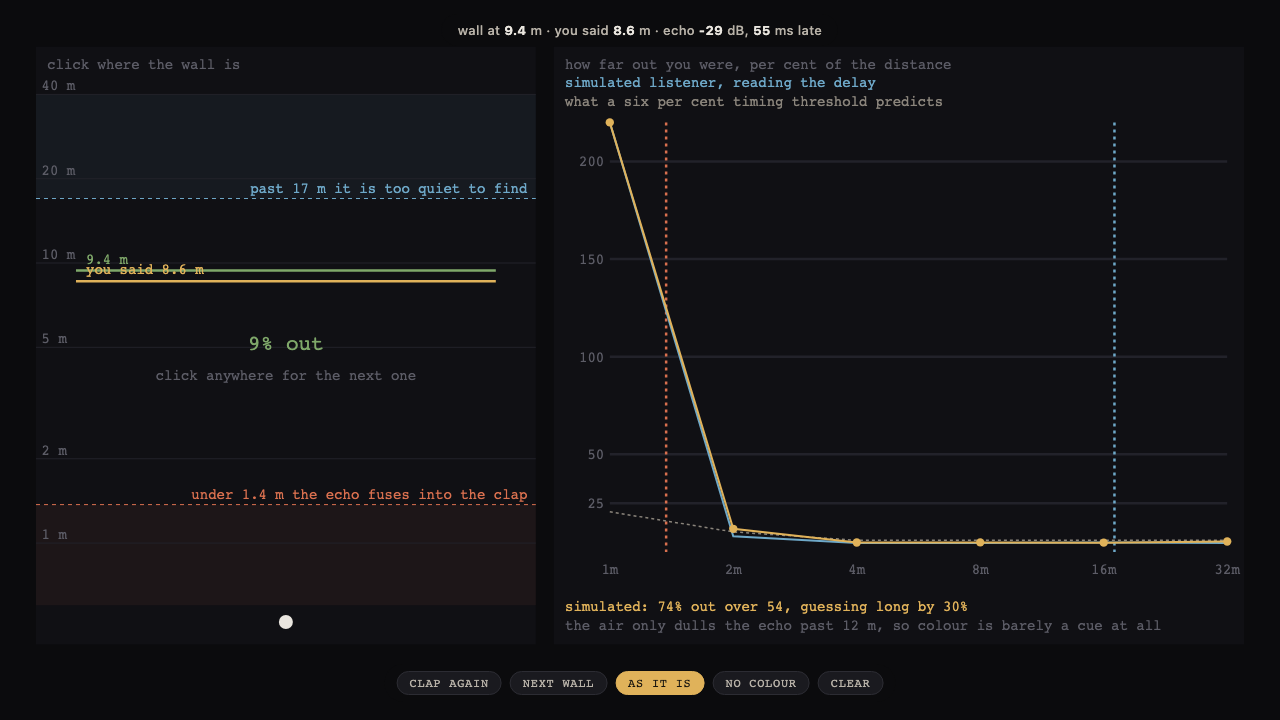
Clap, hear the echo, click the distance. You will be within about five per cent in a minute, and completely lost outside a band three and a half doublings wide.
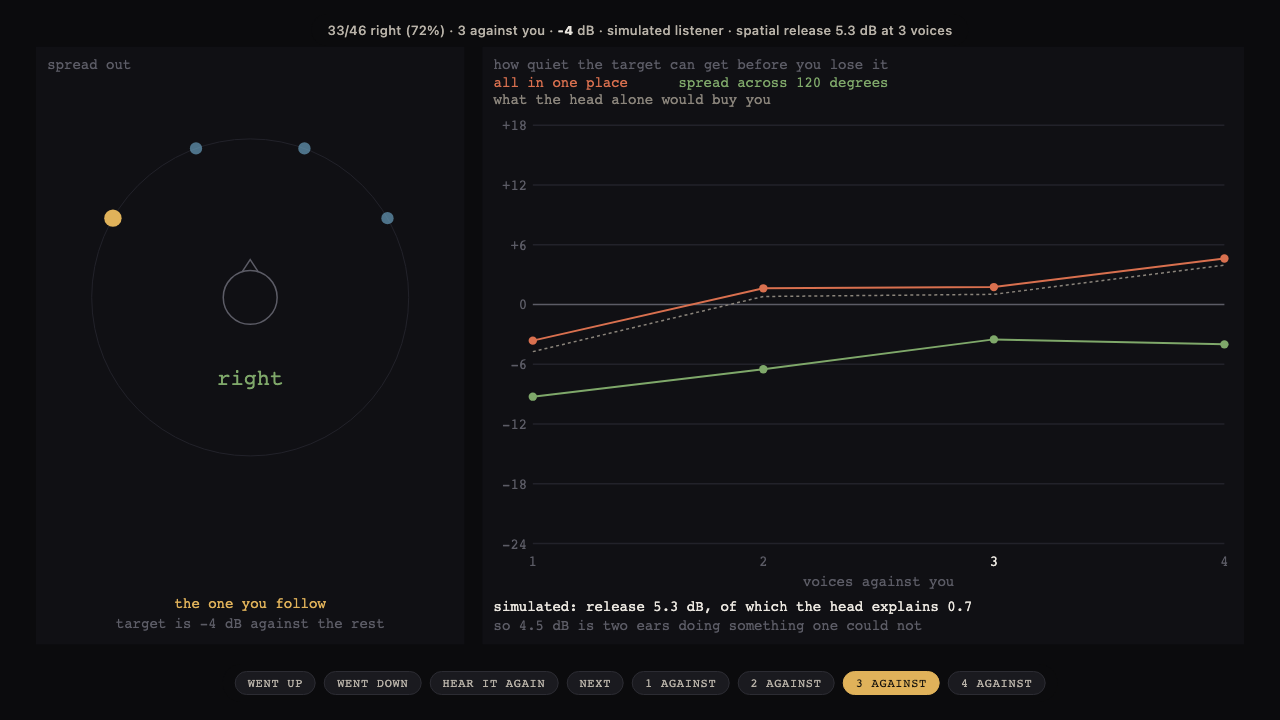
Two voices in different places are far easier to separate than two in the same place. The help has a size in decibels, and at this pitch almost none of it comes from your head being in the way.
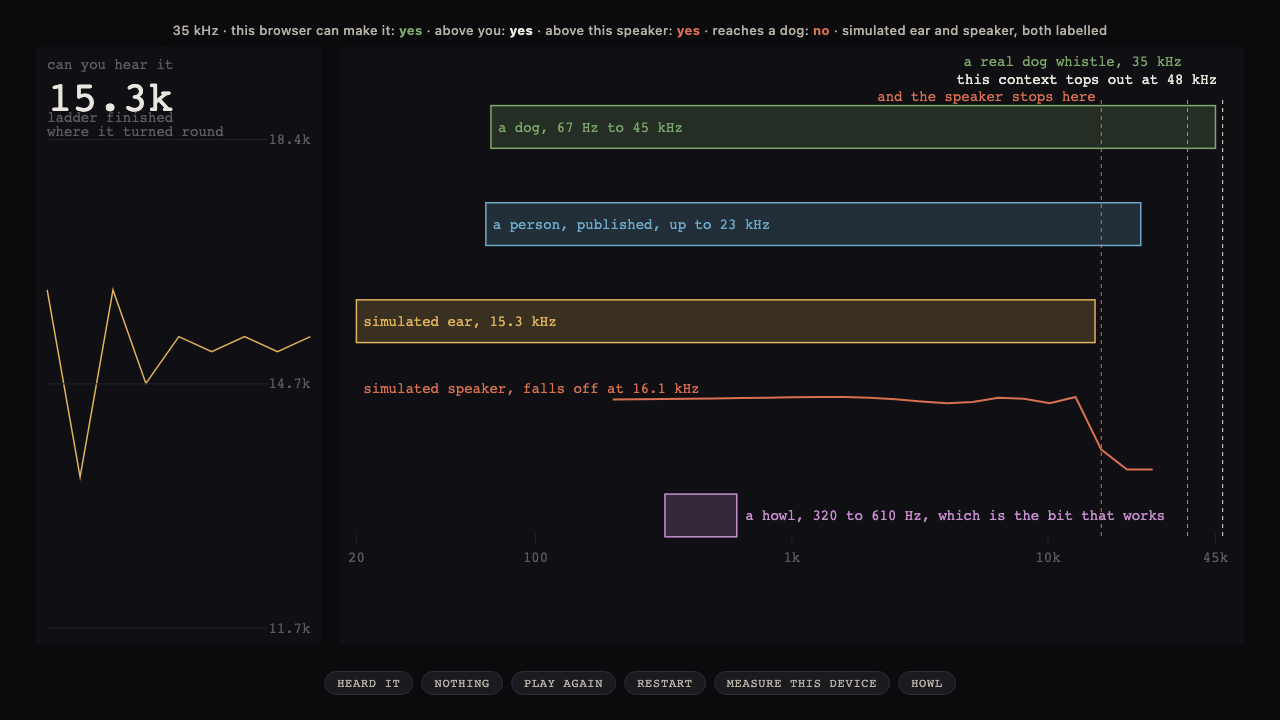
A browser will hand you a 96 kHz audio context and let you synthesise a 35 kHz dog whistle without complaint. Three ceilings stand between that and a dog, and the code only clears one of them.
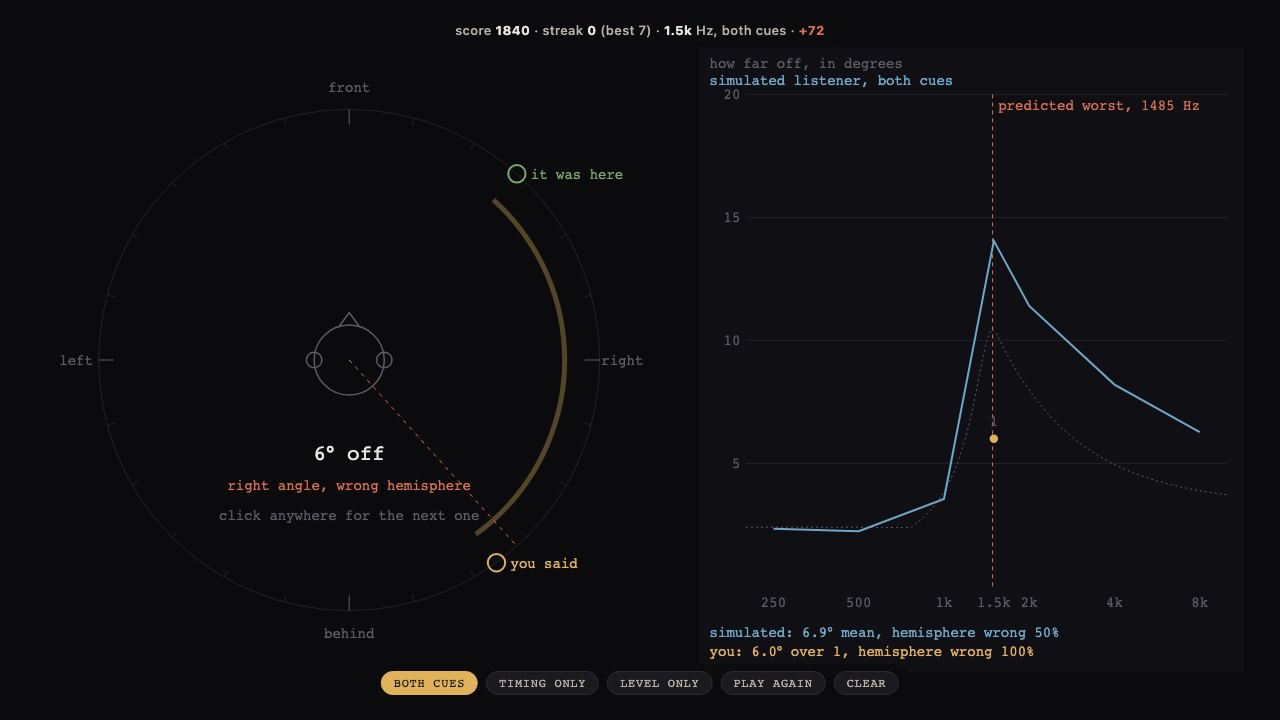
A shooting gallery for your ears. Switch off one cue at a time and the score tells you what that cue was worth, in degrees.
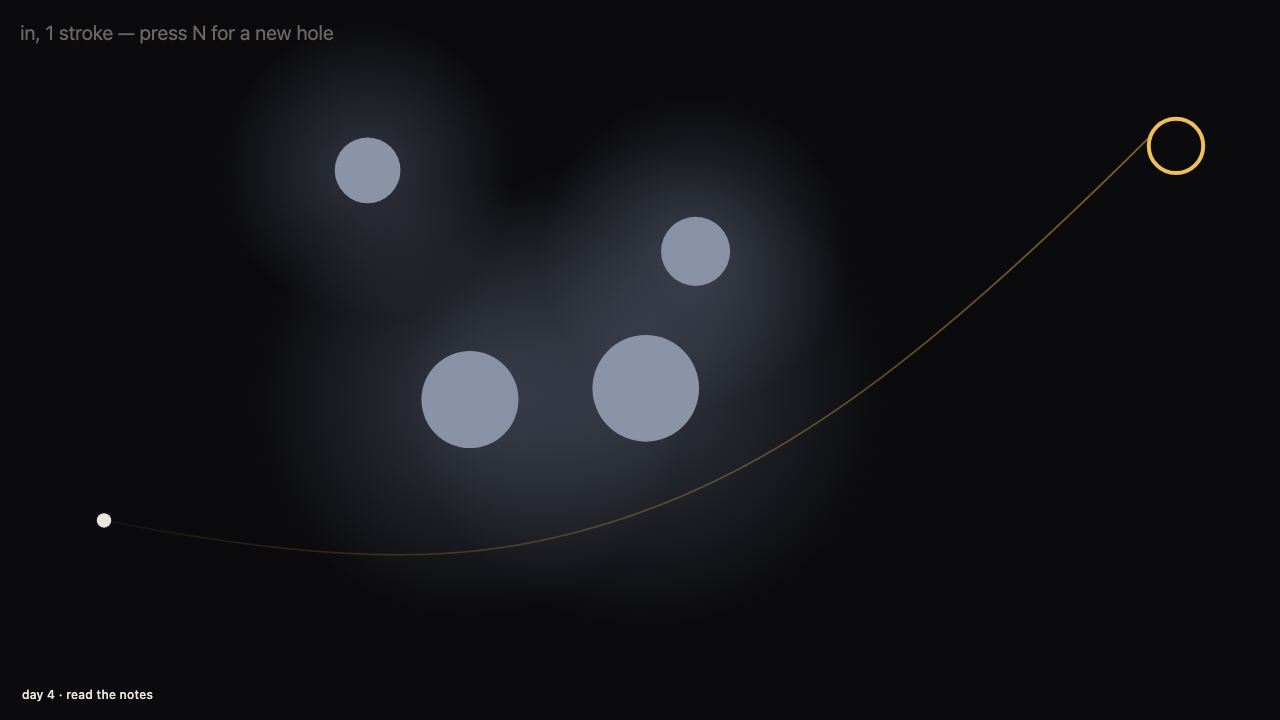
Drag to launch, slingshot around the planets, sink it. Every hole is proven solvable before you see it.