The Click Is Not the Note
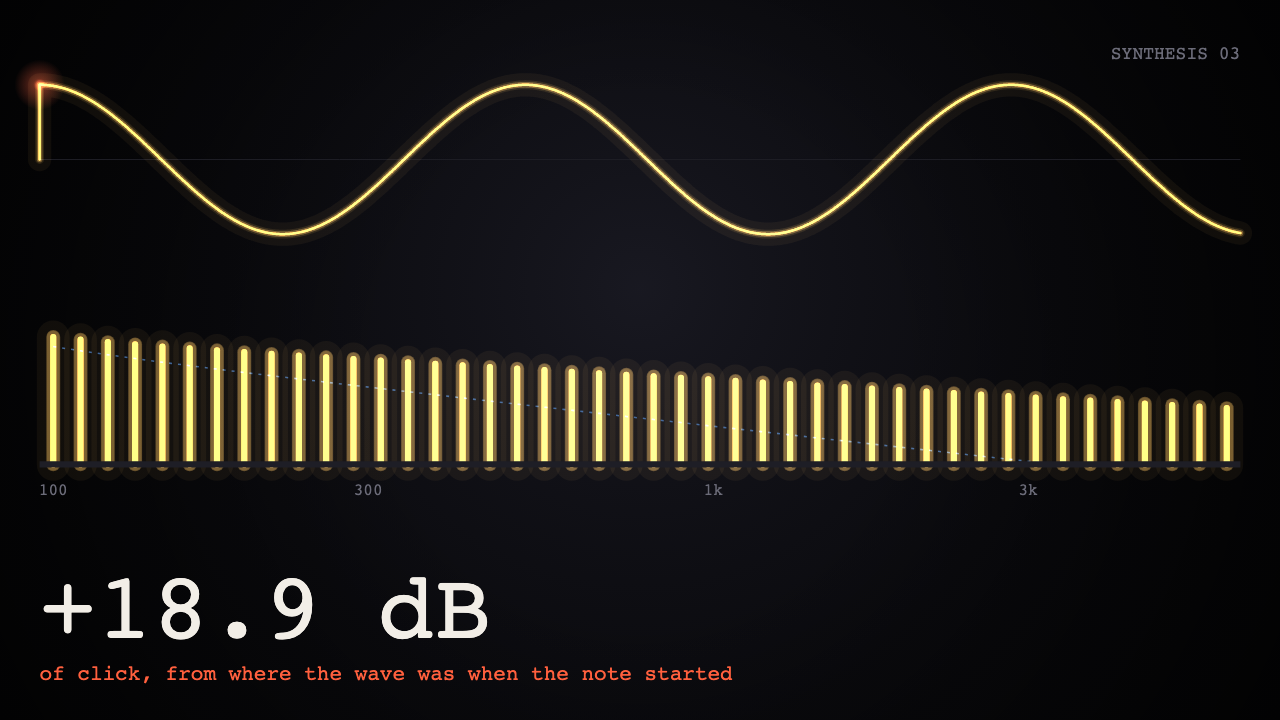
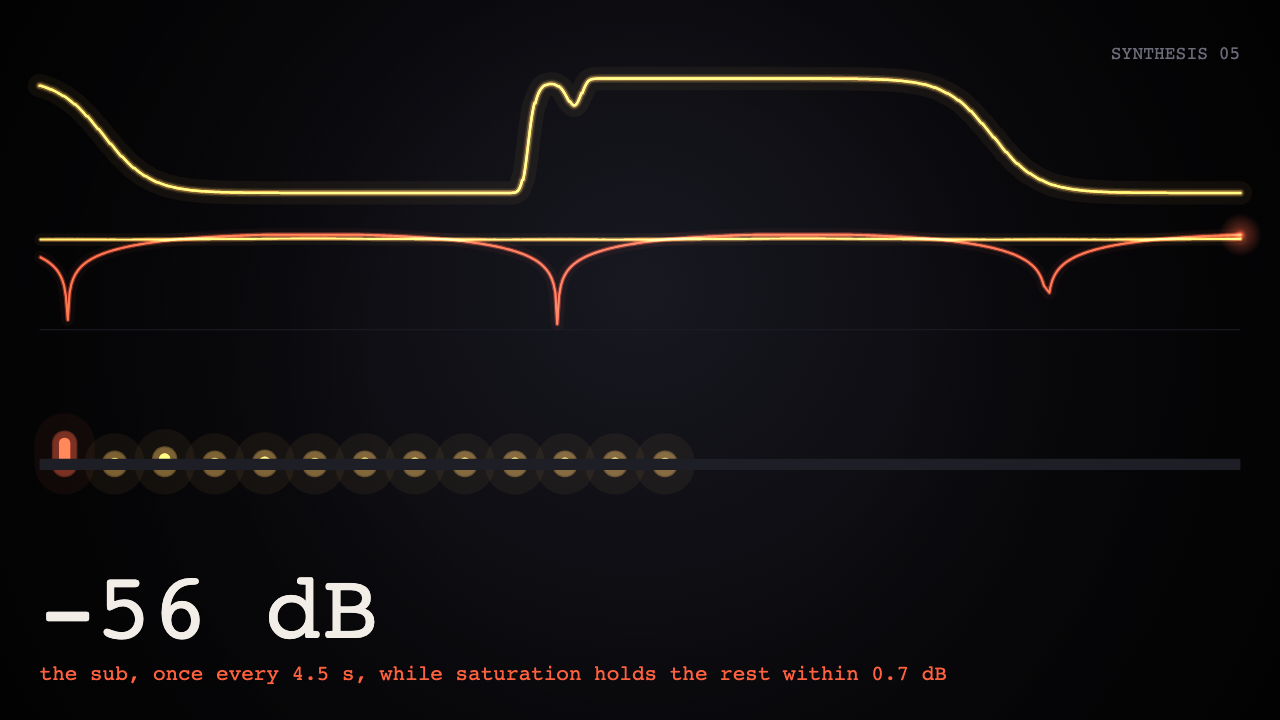
A pure 55 Hz sine has one frequency in it, and it still clicks when the note starts. How much depends on where the wave was at that instant, by 19 dB. The click is the envelope, and the attack is a filter on it.
Page 3 of 9

A pure 55 Hz sine has one frequency in it, and it still clicks when the note starts. How much depends on where the wave was at that instant, by 19 dB. The click is the envelope, and the attack is a filter on it.

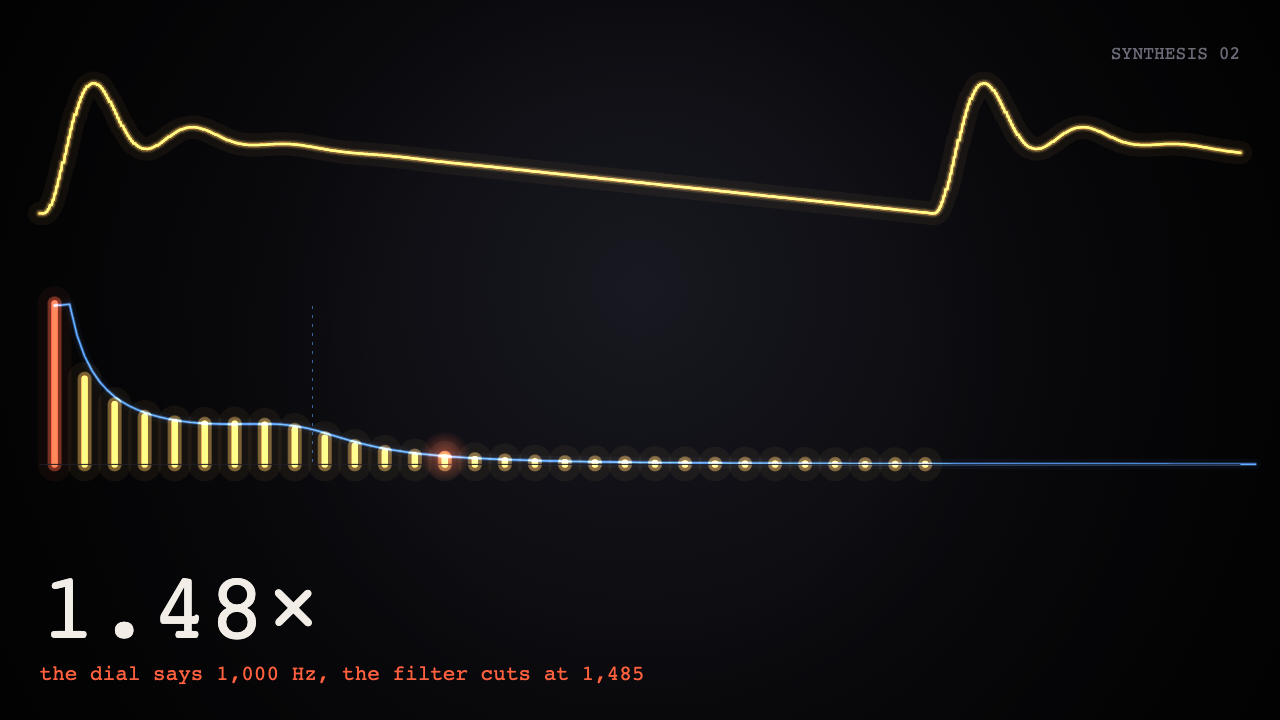
The cutoff dial on a synth is only telling the truth at one setting of the resonance dial. Turn the resonance to 2 and a cutoff reading 1,000 Hz cuts at 1,485. Measured off the filter, not the diagram.

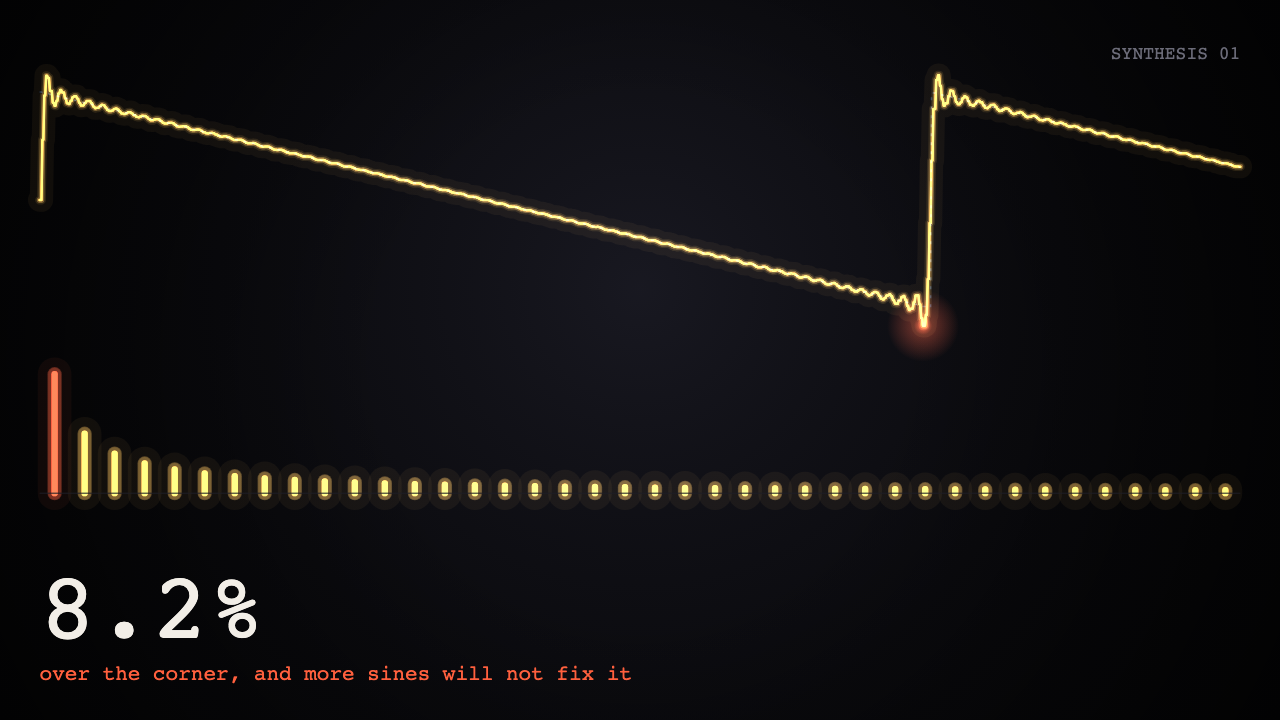
A sawtooth is not a thing a synth has, it is a stack of sine waves each 1/n as loud as the first. Build it one sine at a time and listen to it turn into the sound every bass patch starts from.

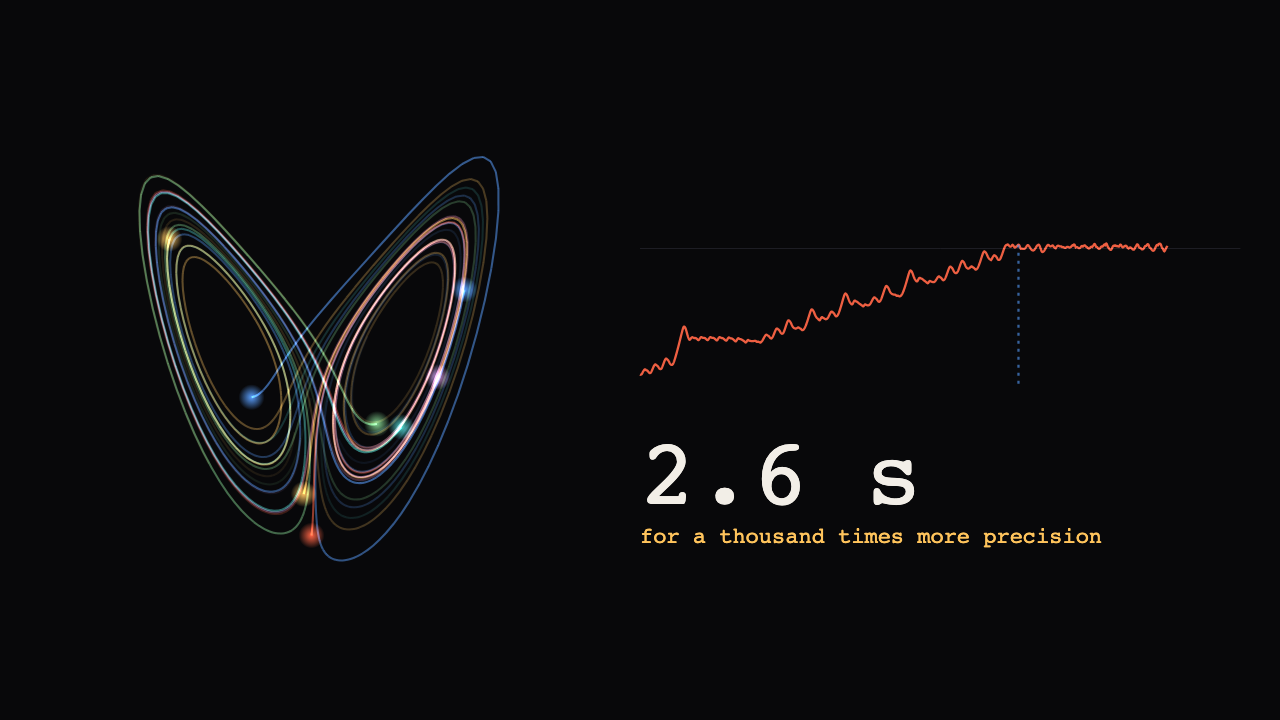
Eight copies of the same system, started a billionth apart. They move as one and then they do not, and the moment they stop agreeing is a number. A thousand times more precision buys 2.6 more seconds.

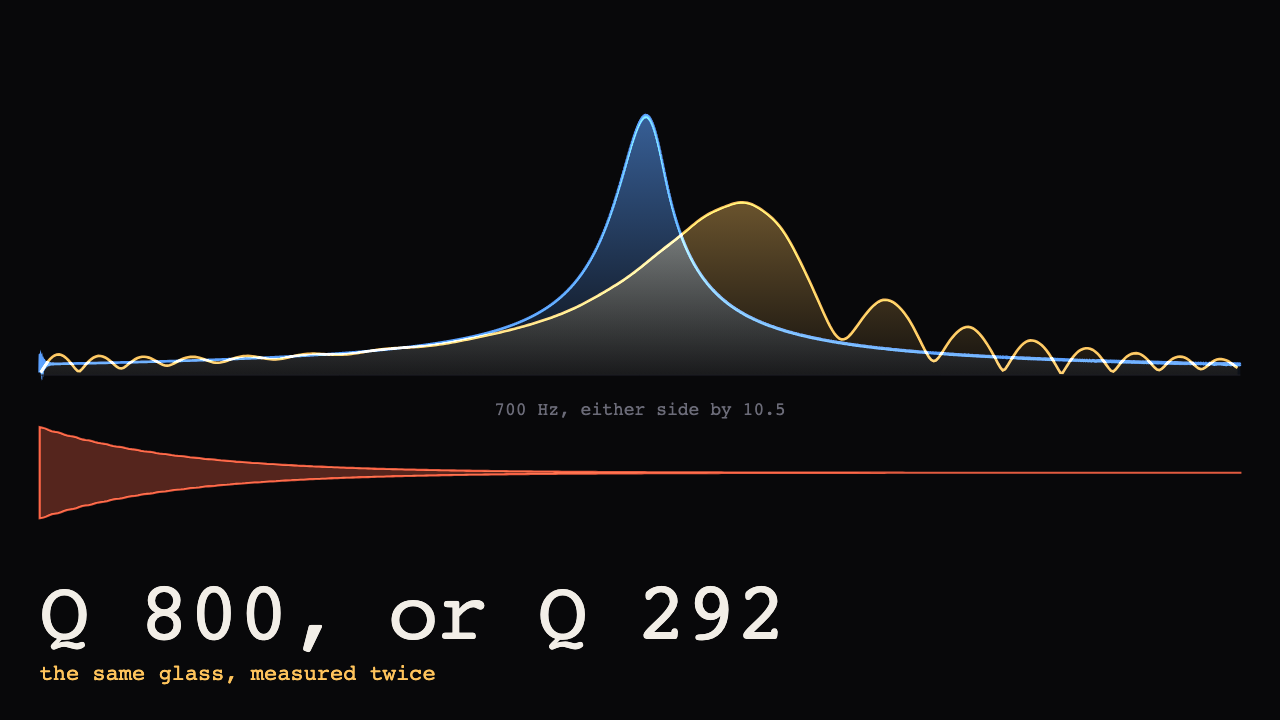
How long a glass rings and how narrowly it listens are the same number. Measure it both ways and they agree, unless you sweep past it too fast, and then one of them is 64% wrong.

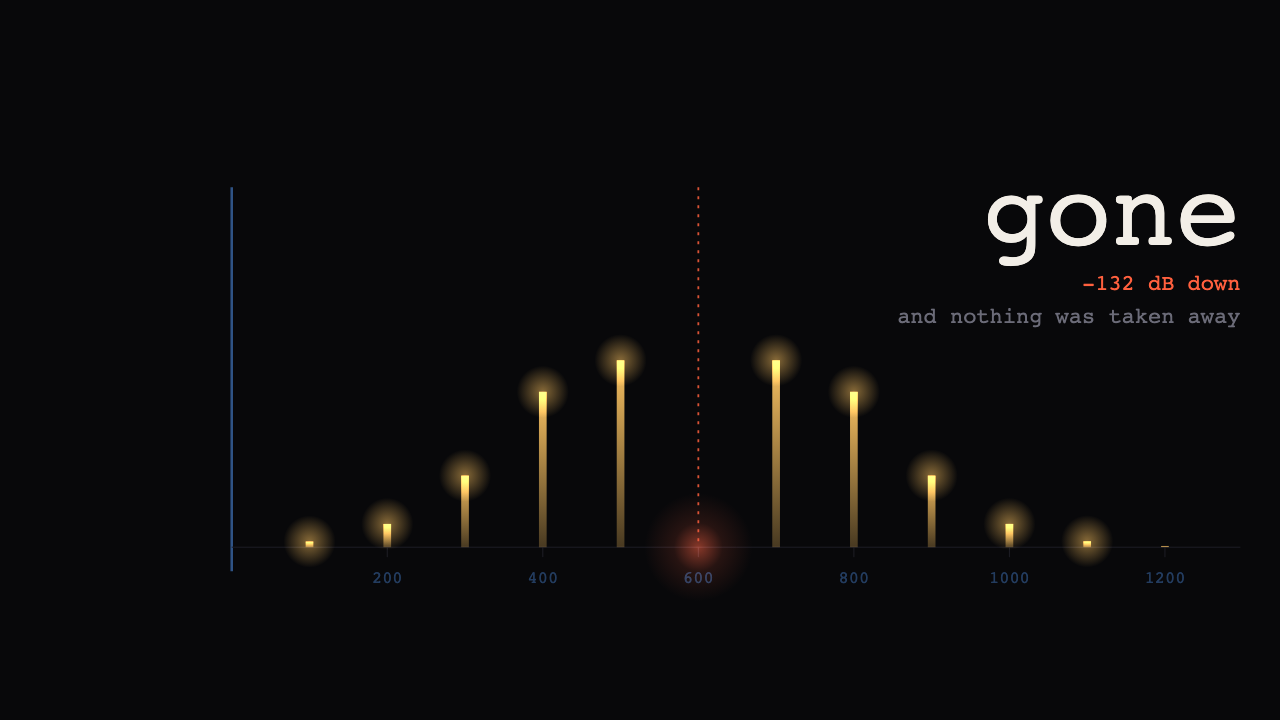
Wobble a note's pitch fast enough and it stops being a wobble and becomes a chord. Turn the depth to 2.405 and the note you started with is 132 dB down, while everything around it carries on.

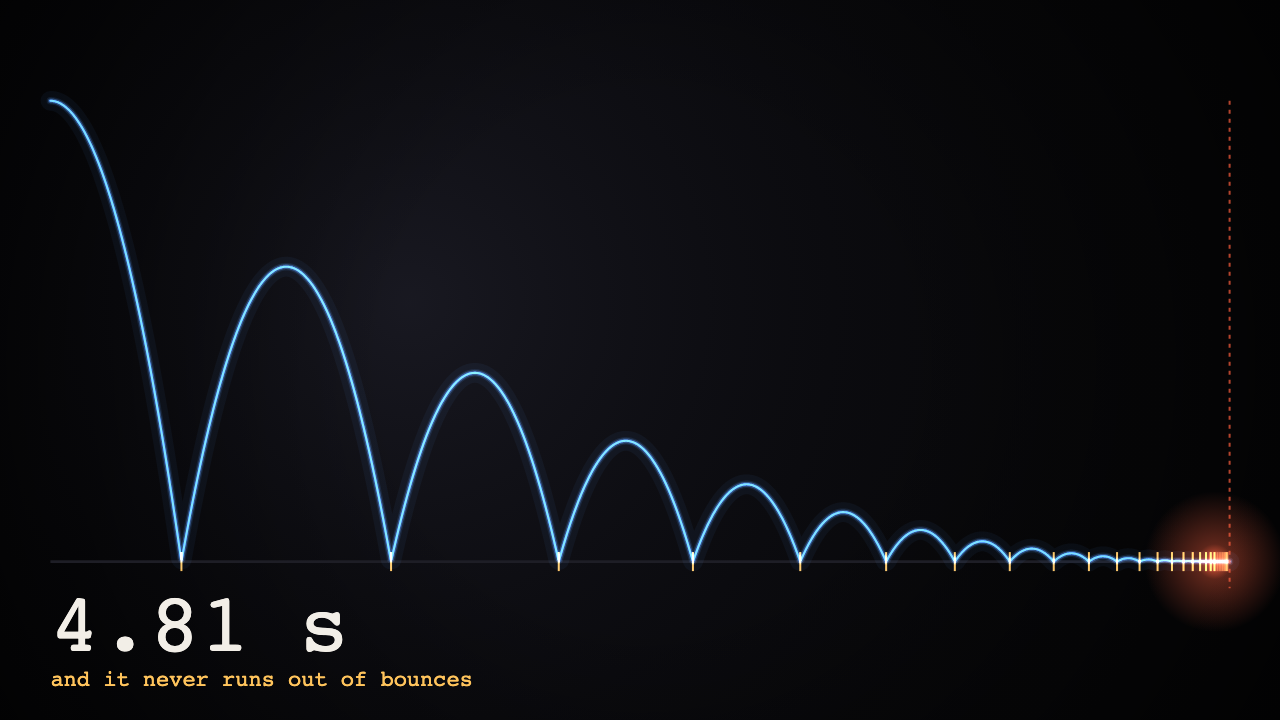
A dropped ball never quite stops bouncing, and stops after 4.81 seconds. The rattle at the end is the tail of a series you can hear converging.

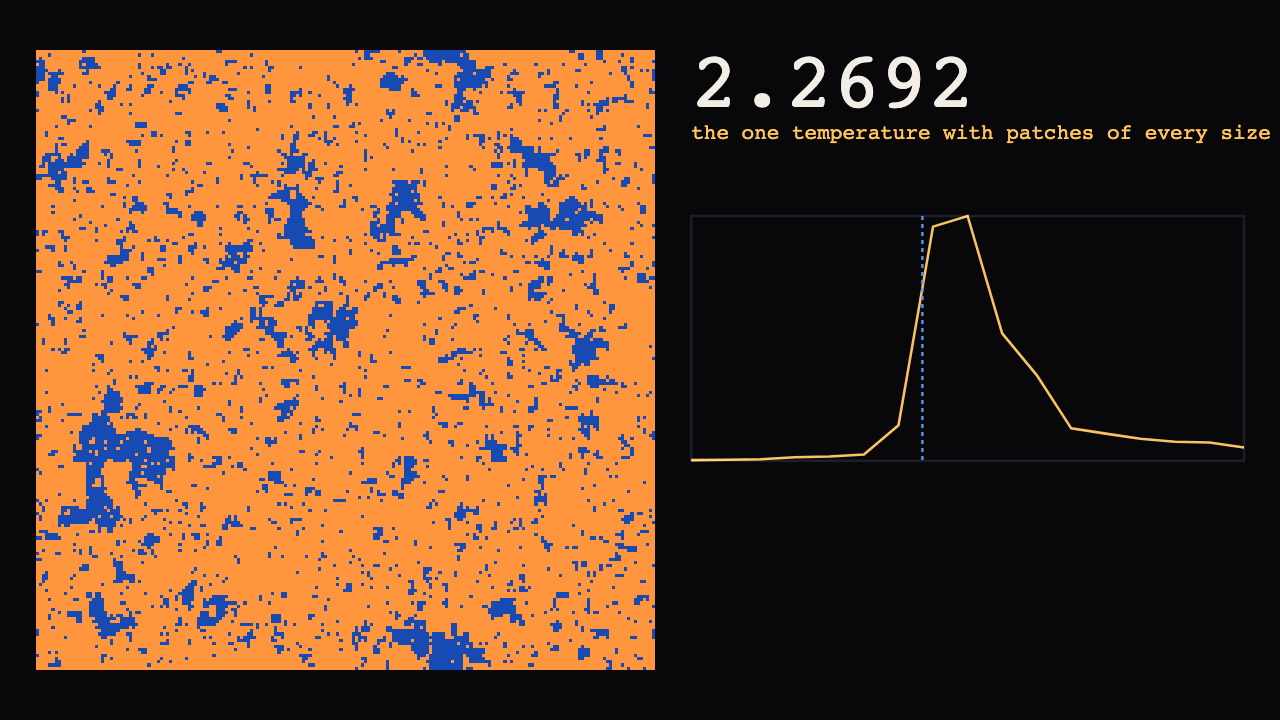
A sheet of magnets is either lined up or it is noise, except at one temperature, where it fills with patches of every size at once. Onsager worked that temperature out exactly in 1944 and the sheet finds it back.

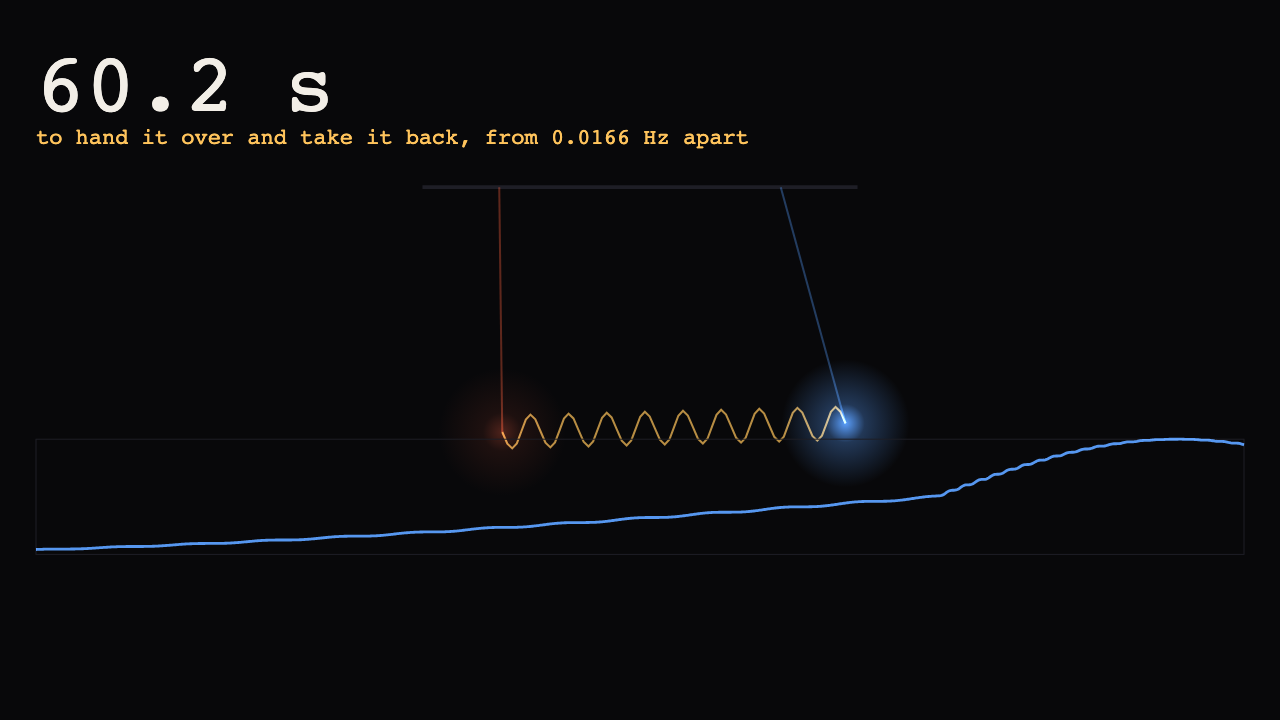
Two pendulums joined by a weak spring. Start one and it stops dead a minute later with the other one swinging, then takes it all back. The clock is the difference between two frequencies a hundredth of a hertz apart.

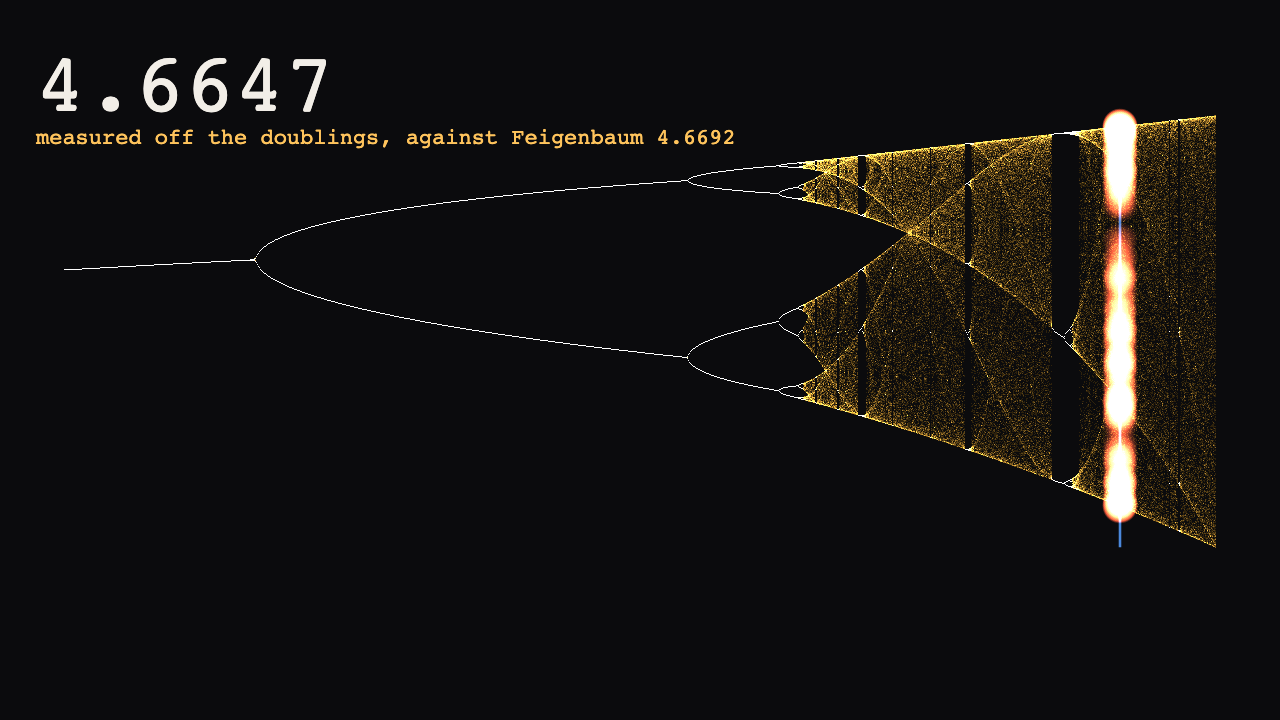
Open a tap slowly and the drips are even. Open it more and they pair up, then go to four, then eight, and the doublings arrive faster each time at a rate that is the same in every system that does this.

Sound leaves one focus of an ellipse in every direction, bounces once, and every single copy arrives at the other focus having travelled exactly the same distance. Step five centimetres off it and half the effect is gone.

Two speakers playing the same note fill a room with fixed lines of silence. Pace out the gaps between them and you have measured the speed of sound without timing anything.