Fair to Things You Have Forgotten
Pick six items uniformly from a stream of unknown length while holding only six. The items you threw away had exactly the same chance as the one in your hand.
Page 6 of 9
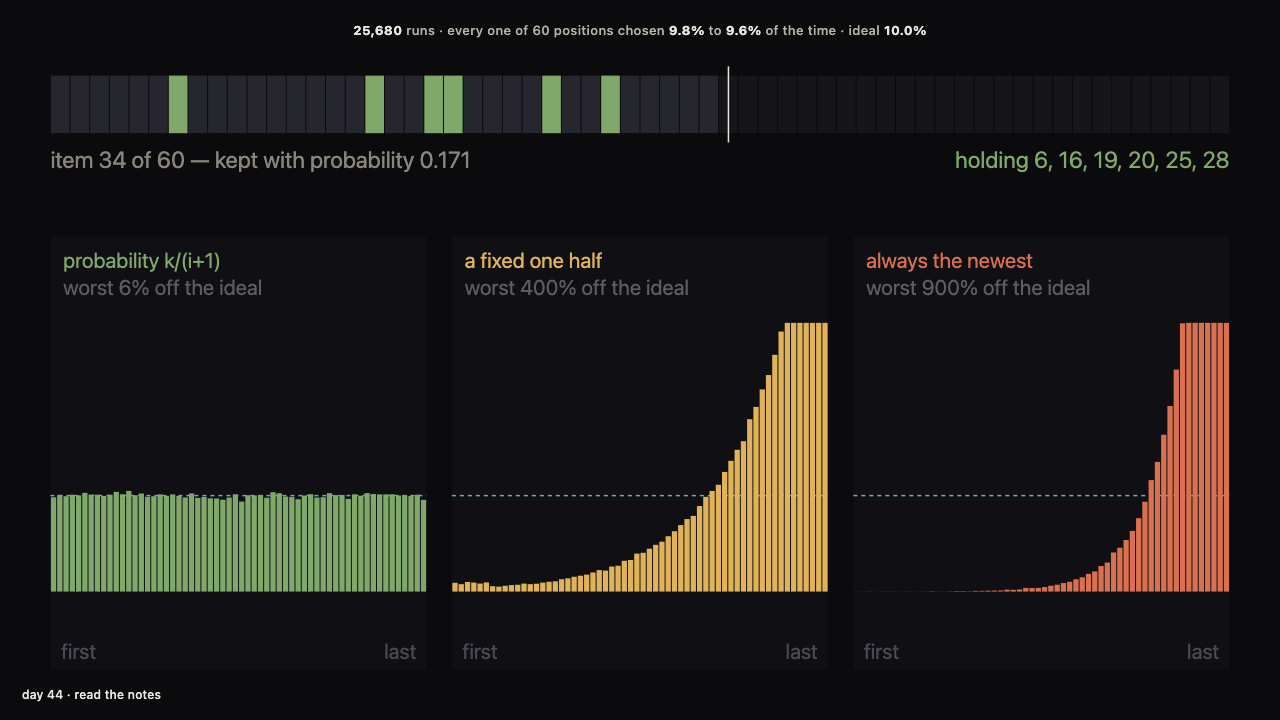
Pick six items uniformly from a stream of unknown length while holding only six. The items you threw away had exactly the same chance as the one in your hand.
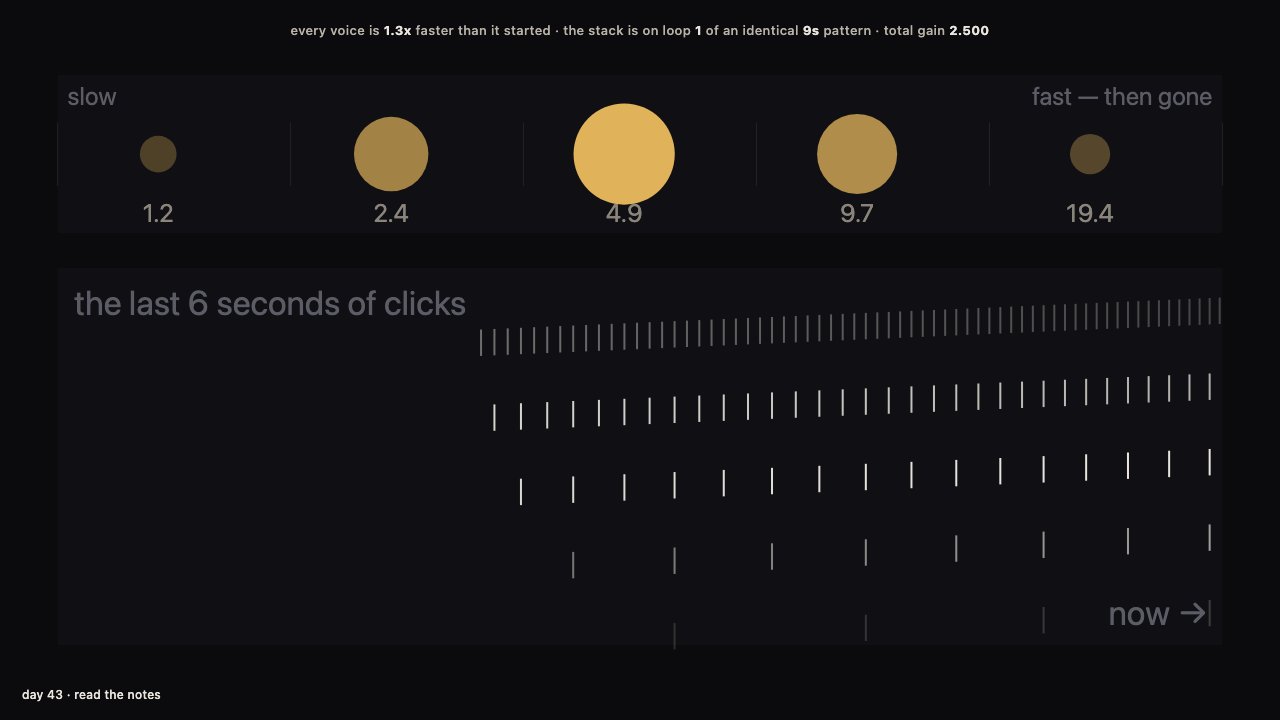
A click track that speeds up without limit, built out of a nine-second loop that repeats exactly.
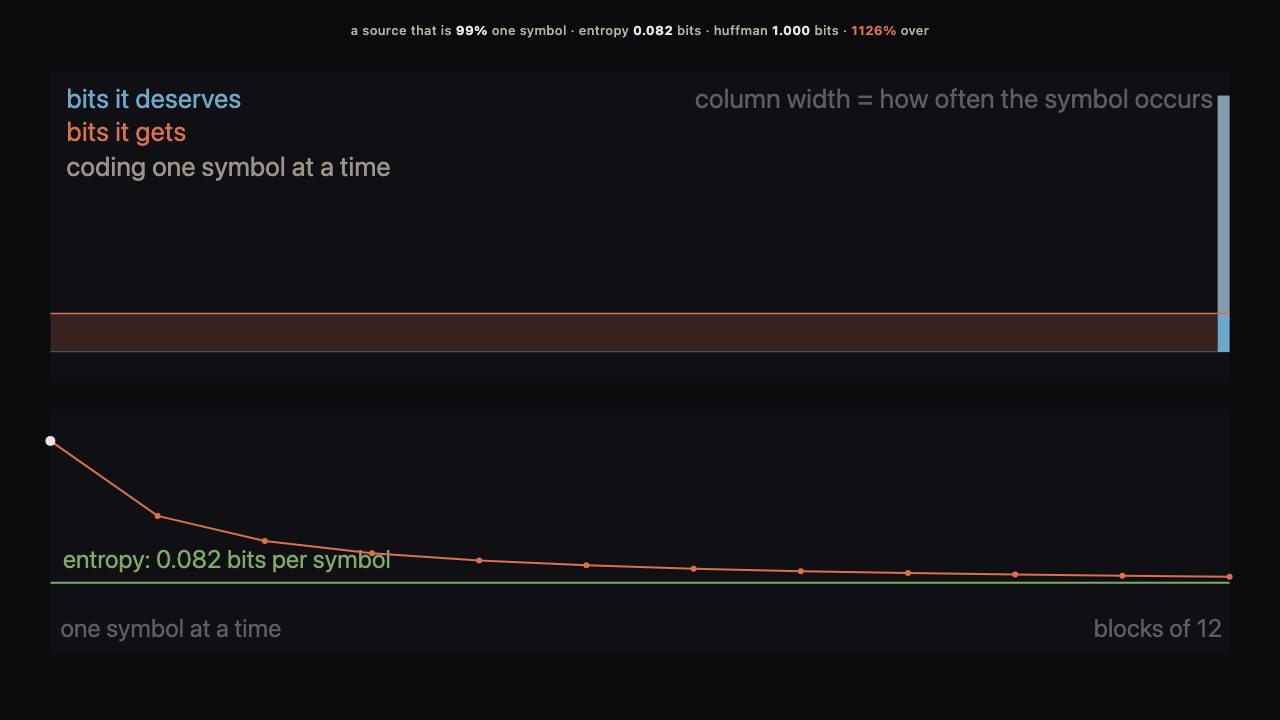
Huffman coding is provably optimal and famously within one bit of entropy. On the right source that one bit is a twelve-fold overhead.
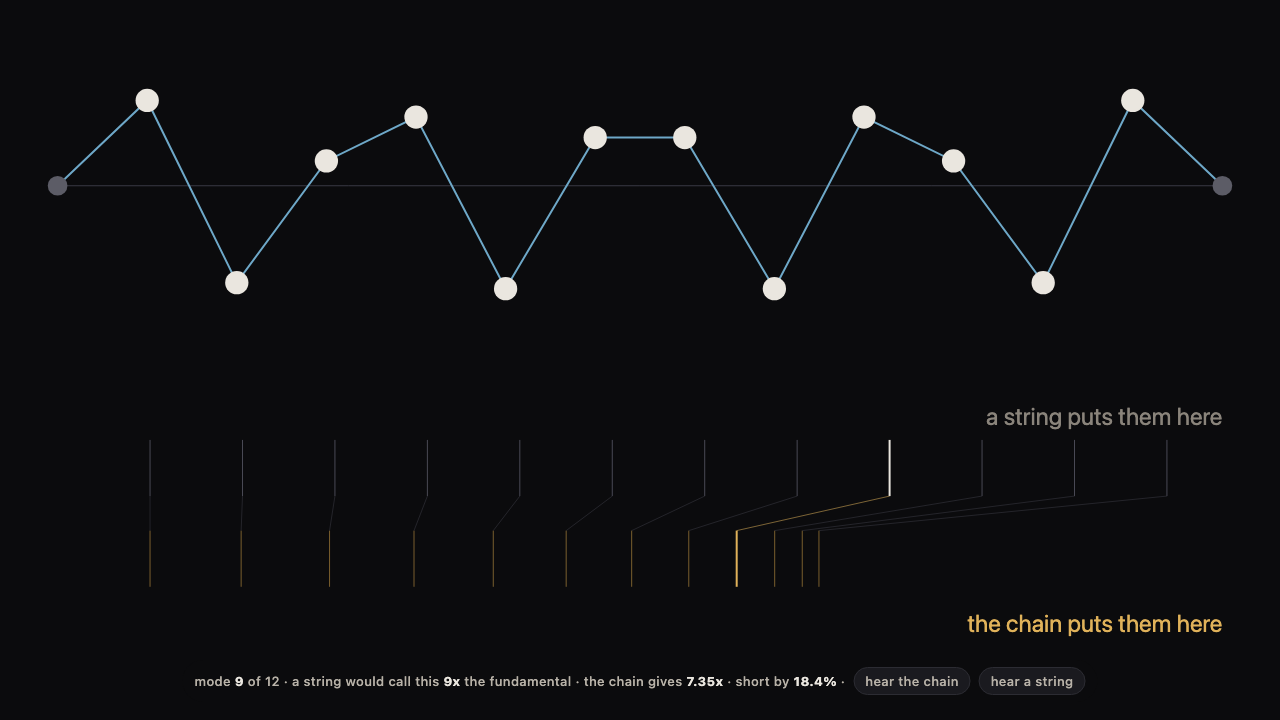
Twelve masses on springs. The first few modes are the harmonics you would expect. The last few are nowhere near.
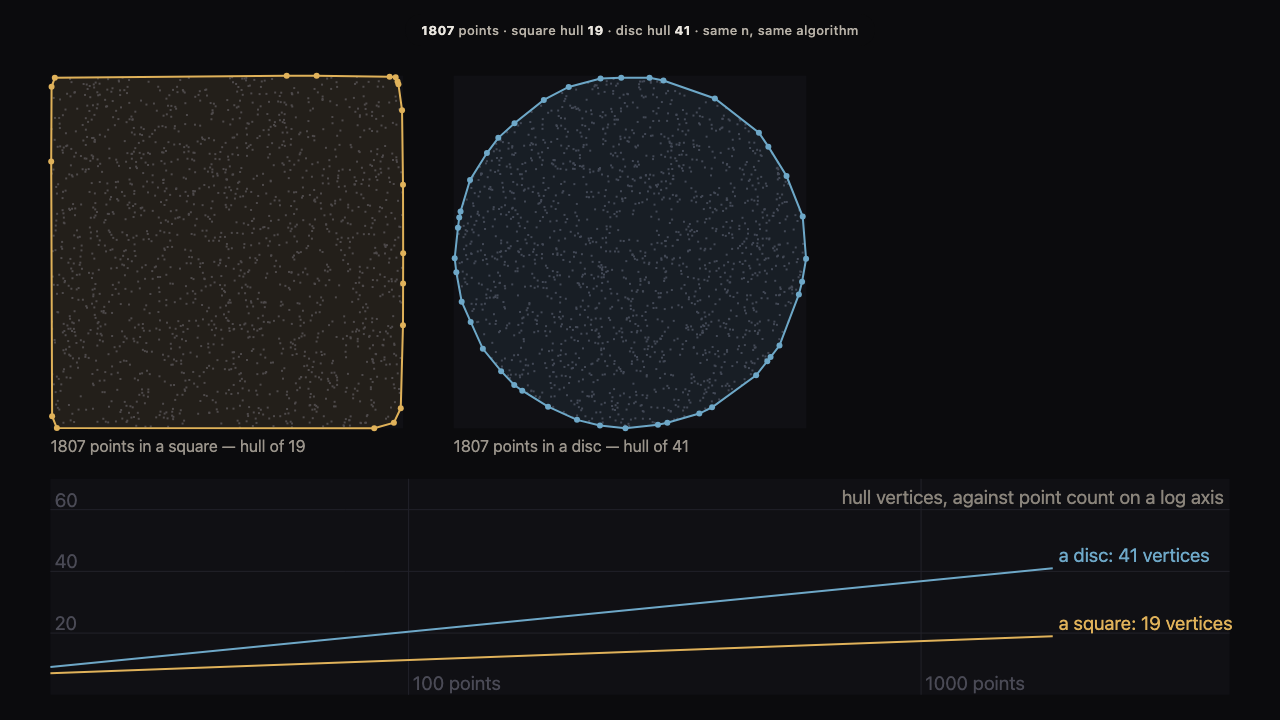
The convex hull of n random points has far fewer than n vertices. How many fewer depends on the shape they came from, not on n.
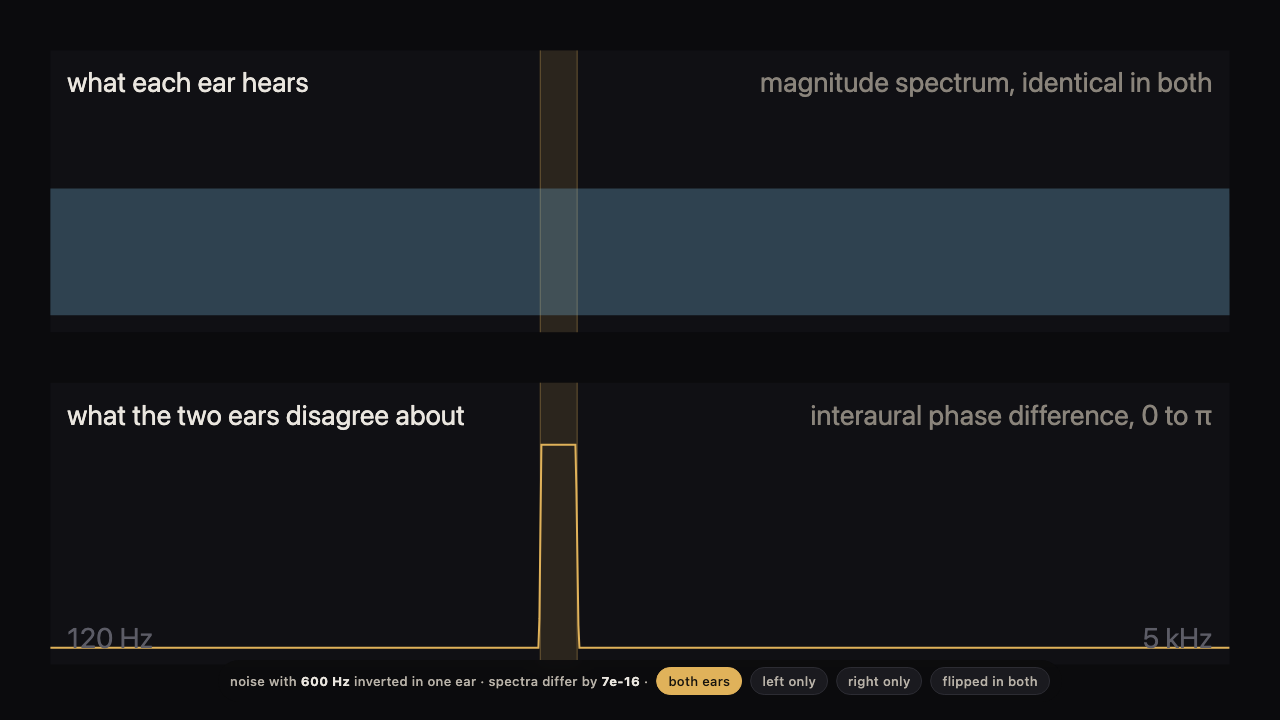
The same noise in both ears, with one narrow band phase-inverted on the right. Each ear alone is featureless. Together they produce a pitch.
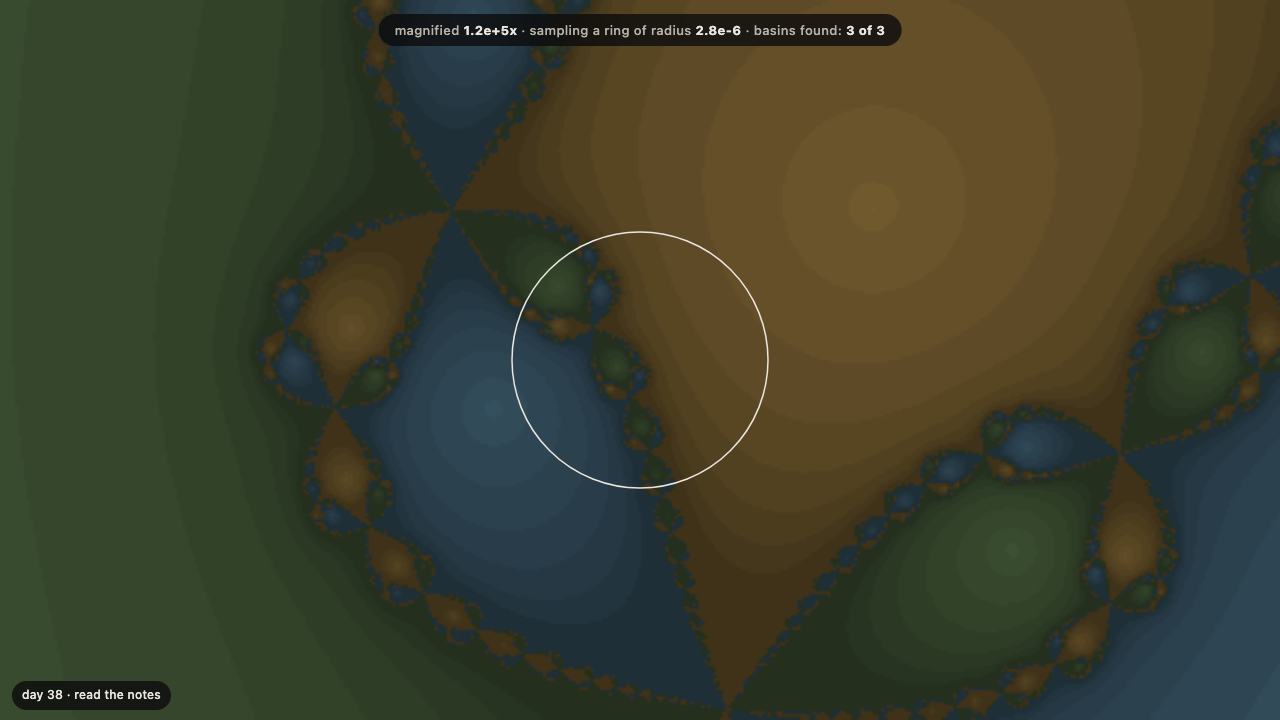
Newton's method on z³ − 1 has three basins. Pick any point on any boundary between them and all three are arbitrarily close.
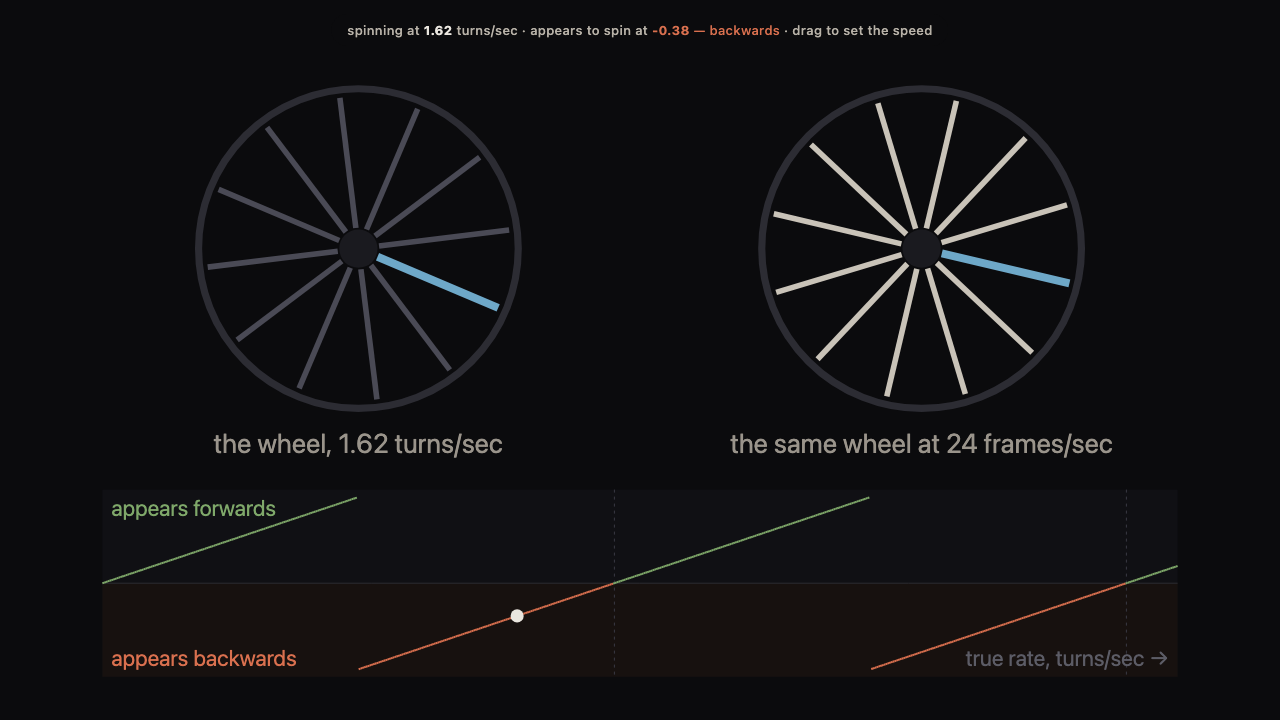
Two wheels on one shaft, one seen continuously and one at 24 frames a second. Half of all speeds make the second wheel spin the wrong way.
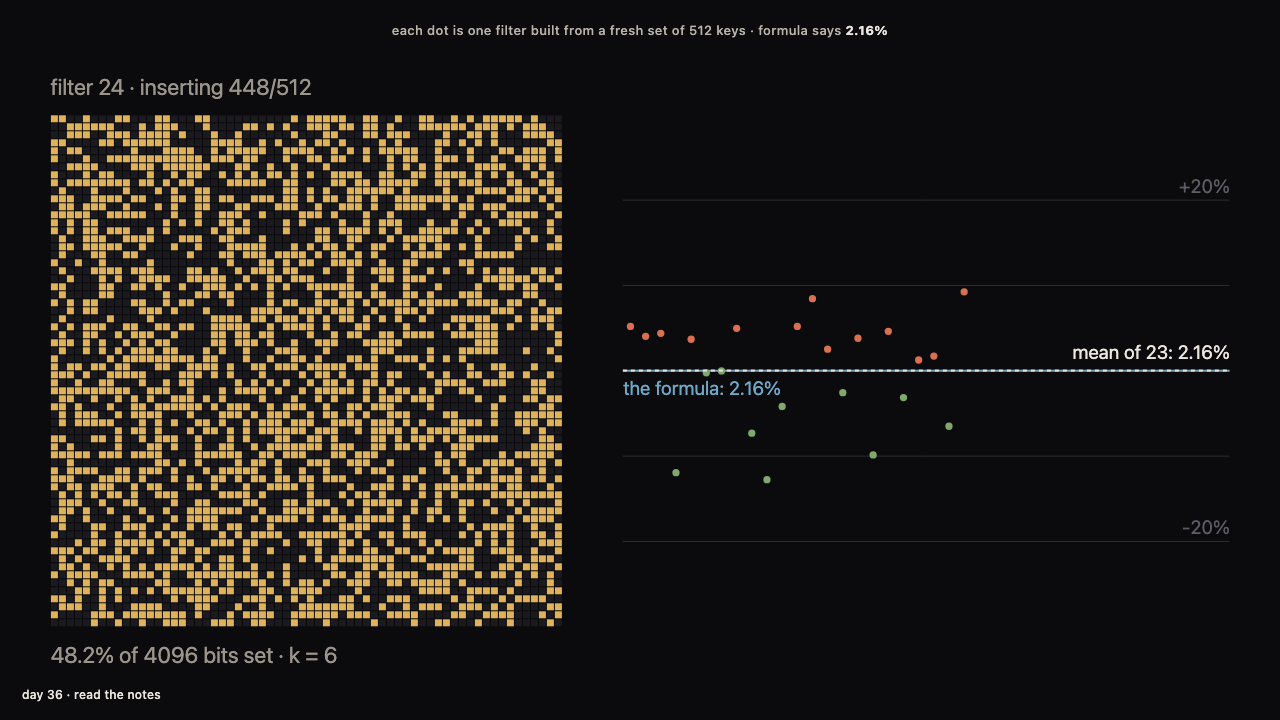
A Bloom filter's false-positive rate has a famous closed-form formula. The formula is right about filters in general and wrong about yours.
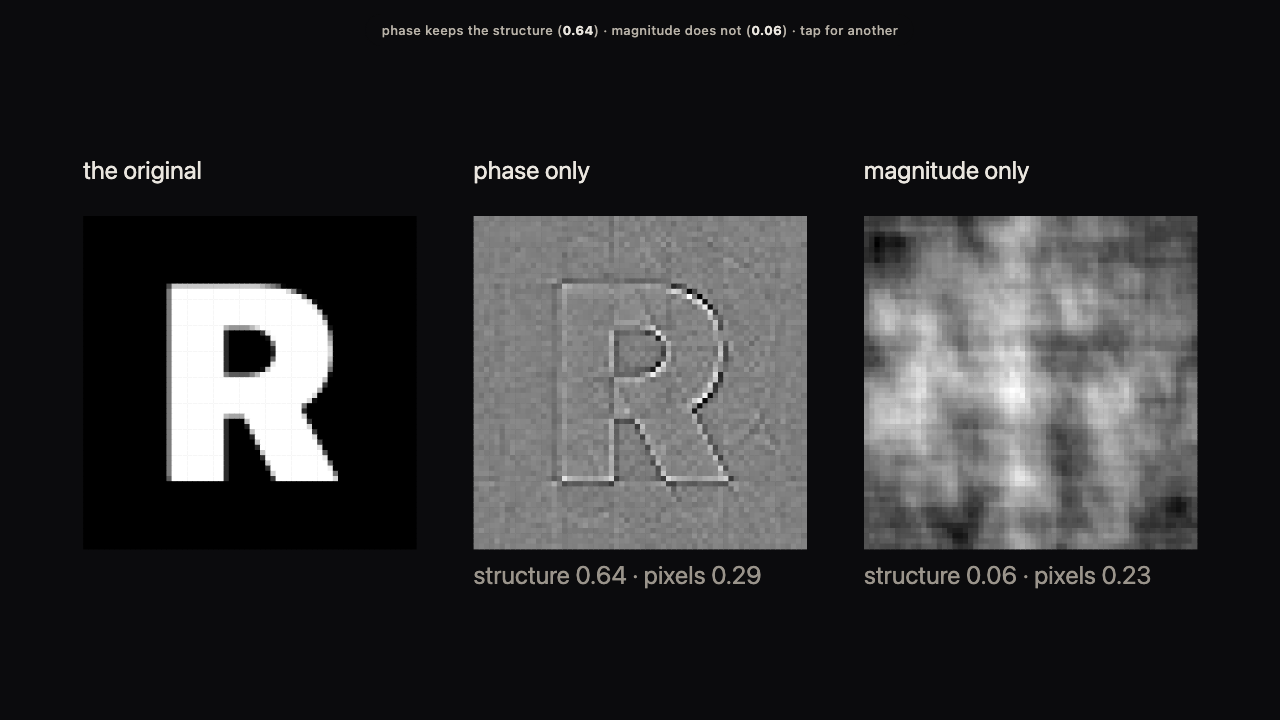
A Fourier transform splits an image into sizes and offsets. Throw away the sizes and you can still read it. Throw away the offsets and you cannot.
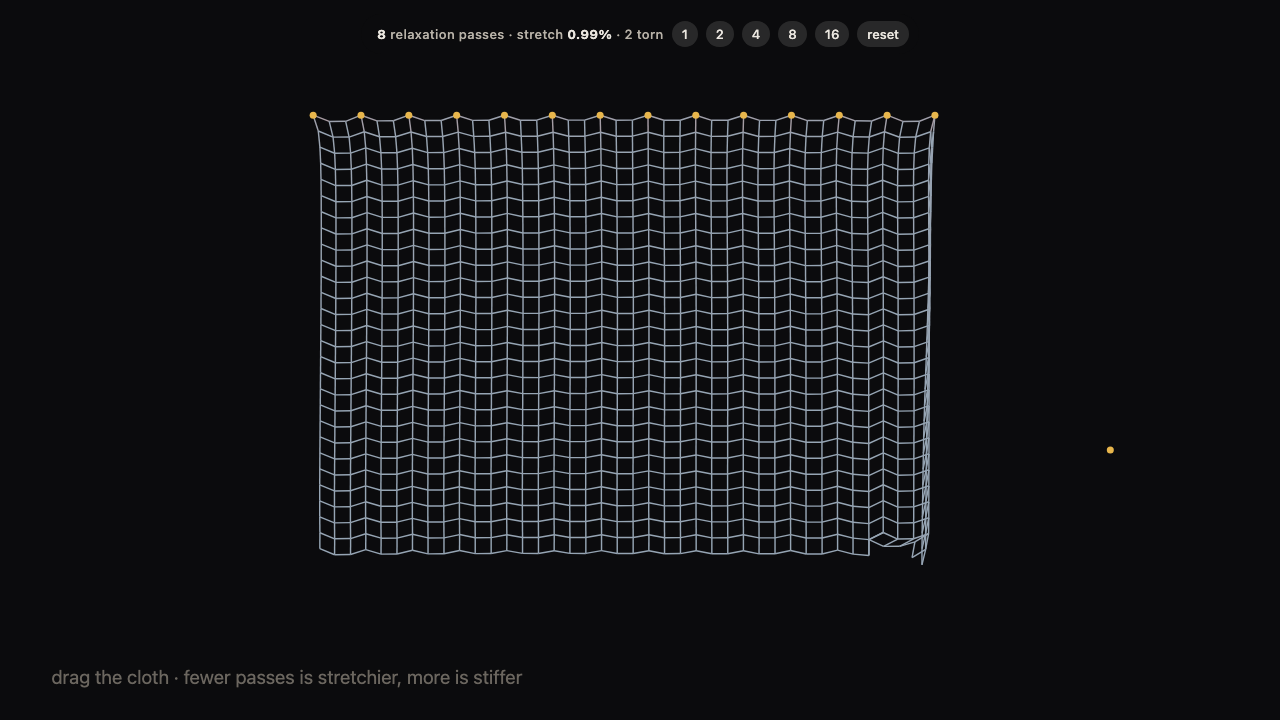
No springs, no stiffness, no forces between the threads. Just moving the links back to the right length, over and over.
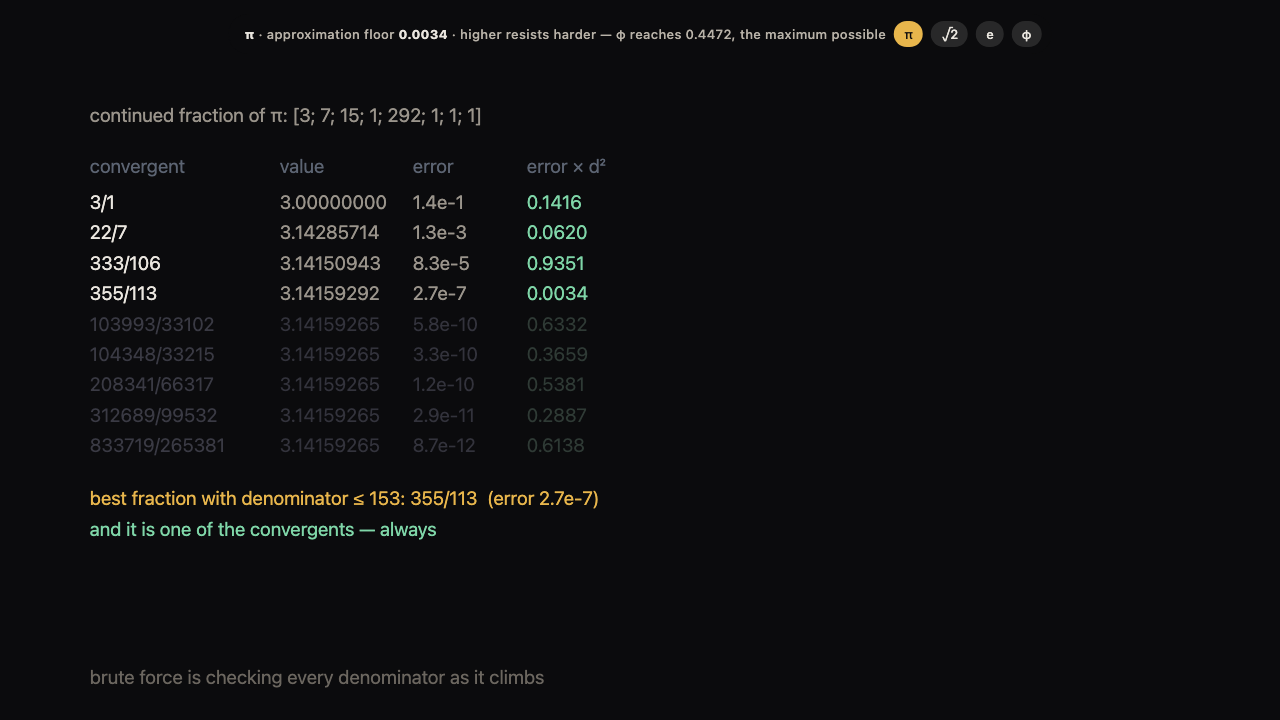
22/7 is not just close to π. Nothing with a smaller denominator is closer, and there is a machine that finds such fractions.