The Shadow A Sound Casts
A loud sound hides quiet ones for a fifth of a second afterwards, and for a few milliseconds beforehand.
Page 7 of 9
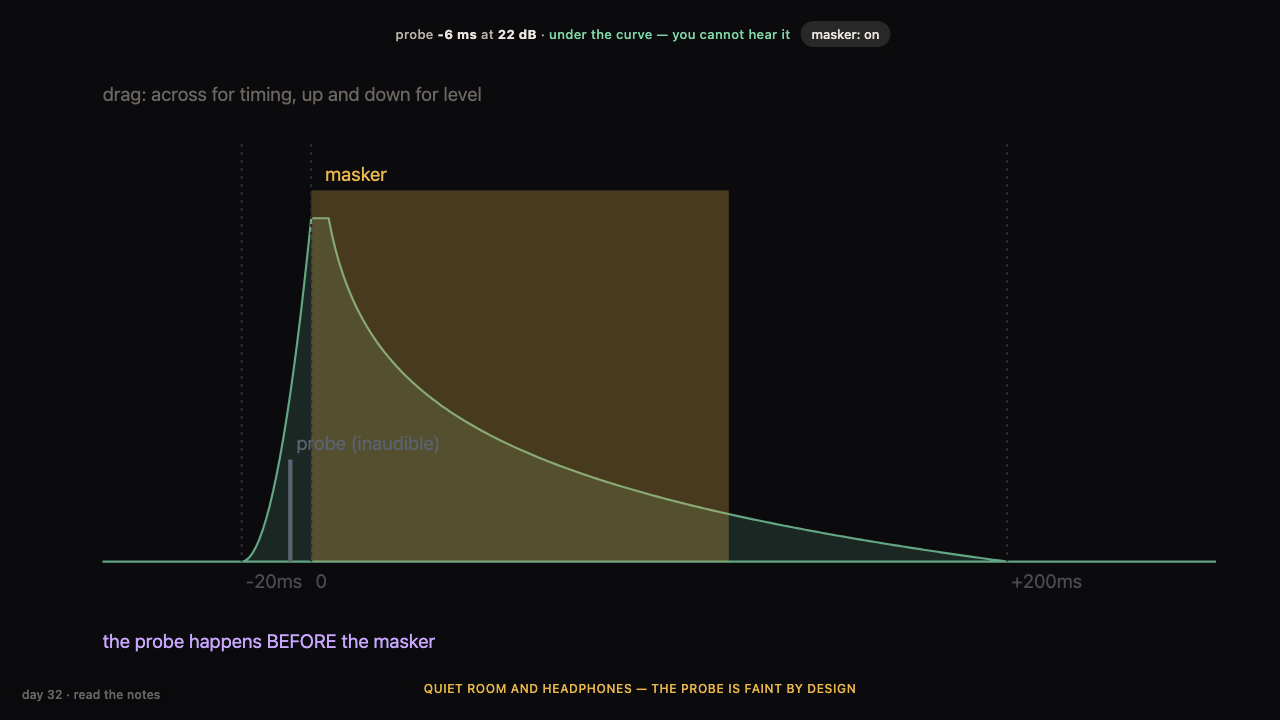
A loud sound hides quiet ones for a fifth of a second afterwards, and for a few milliseconds beforehand.

Turn 137.507° between seeds and they pack perfectly. Turn 137.3° and it falls apart.
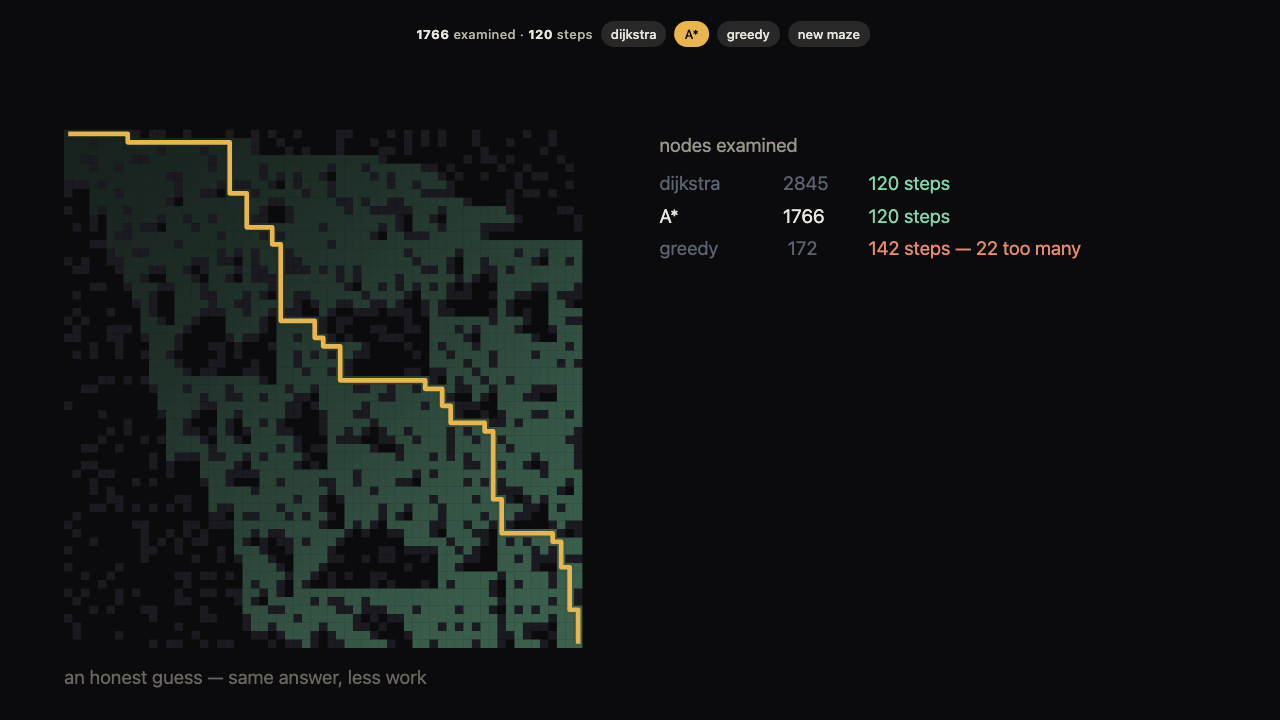
Three searches for the same route. One is careful, one is clever, and one is fast and wrong.

Two patches, one grey value, byte for byte. They do not look the same, and joining them into one bar does not help.
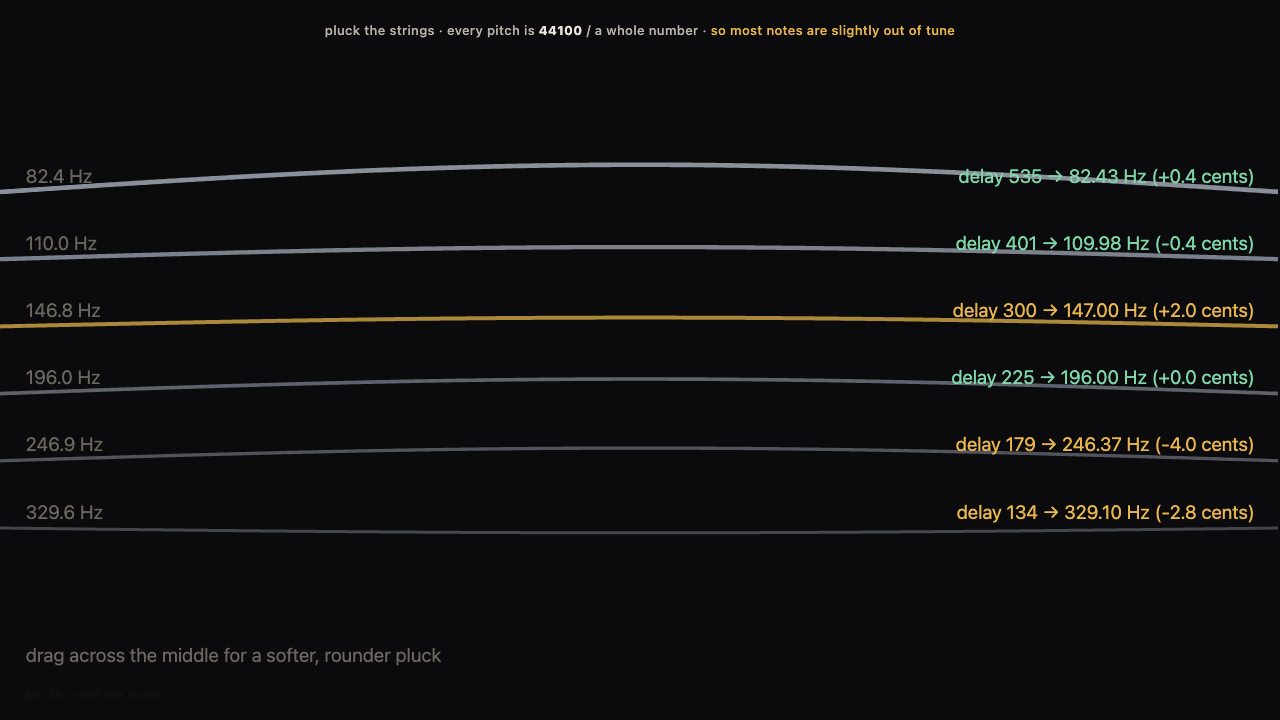
A buffer of noise and a two-sample average. That is a plucked string, and it cannot be tuned properly, for a reason you cannot fix.
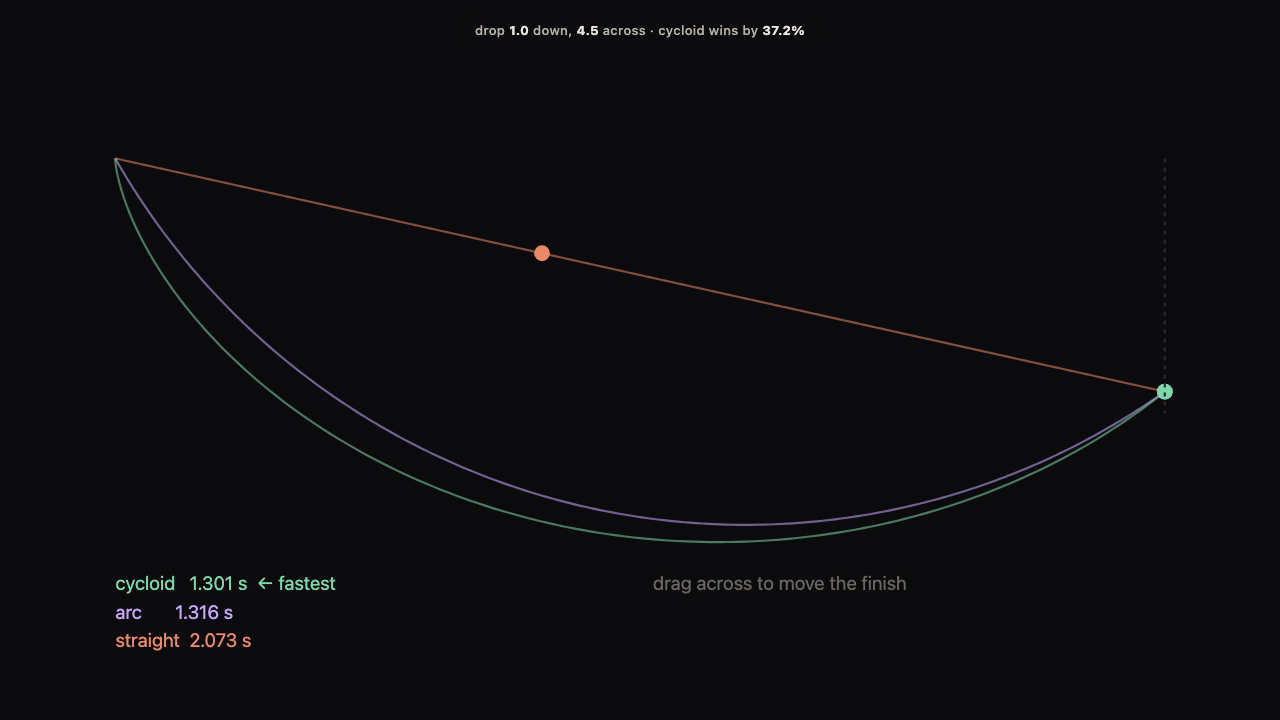
Three beads, three ramps, same start and finish. The straight one loses badly.
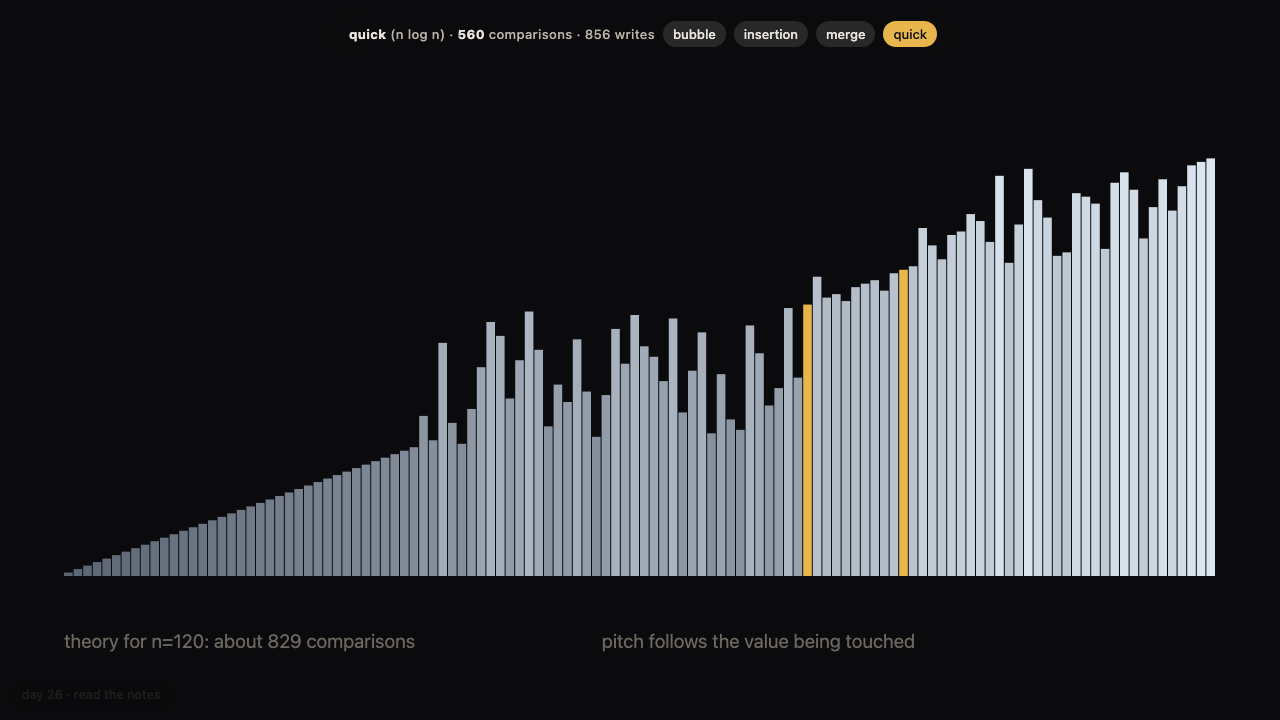
Four algorithms doing the same job, with their comparison counts checked against the theory that predicts them.
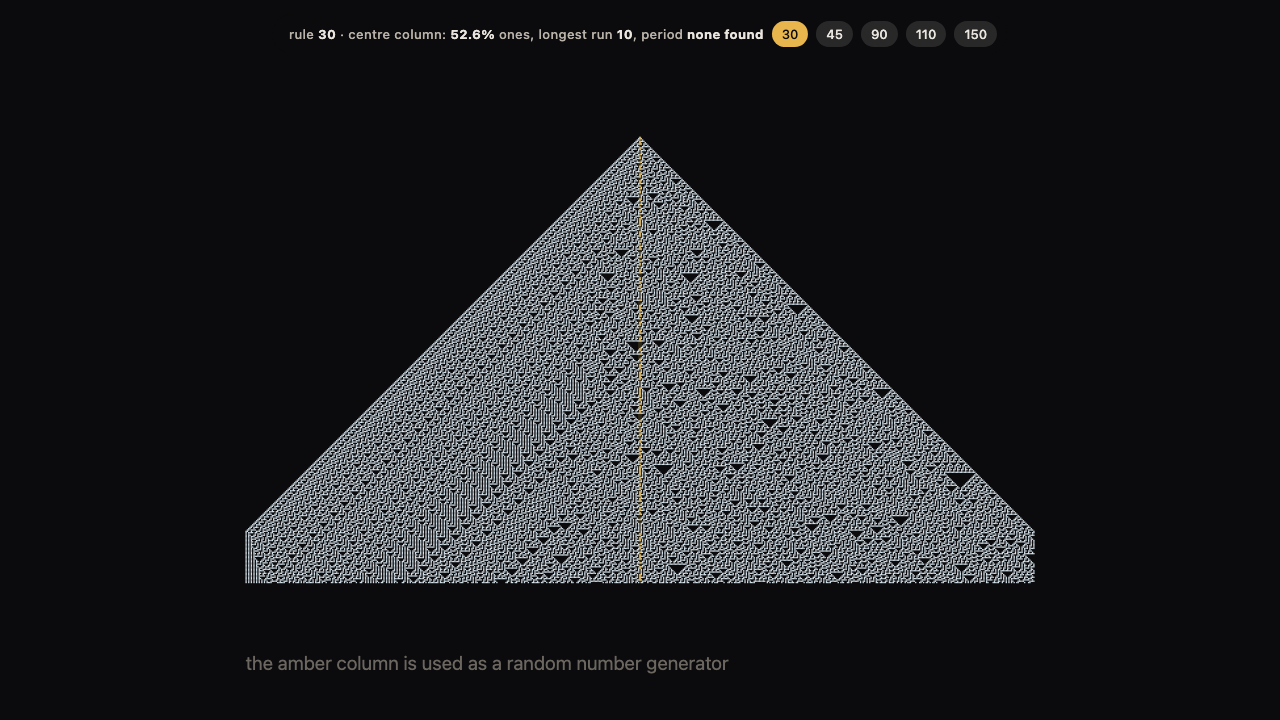
A row of cells, eight bits of rule. One draws Pascal's triangle, one makes usable random numbers, and one is powerful enough to compute anything at all.

Draw any closed shape and it turns out to be a stack of rotating circles. Provably, and with a receipt.
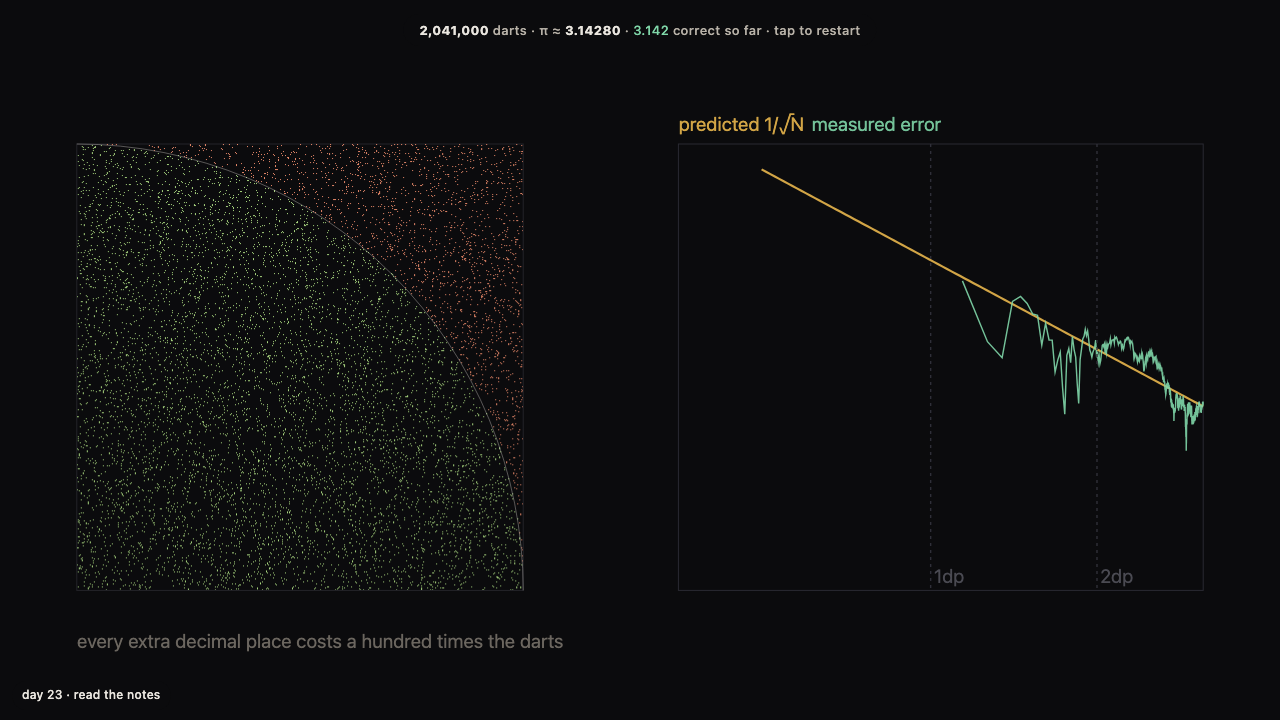
Throwing darts at a circle finds π in seconds, then spends the rest of eternity finding the next decimal place.
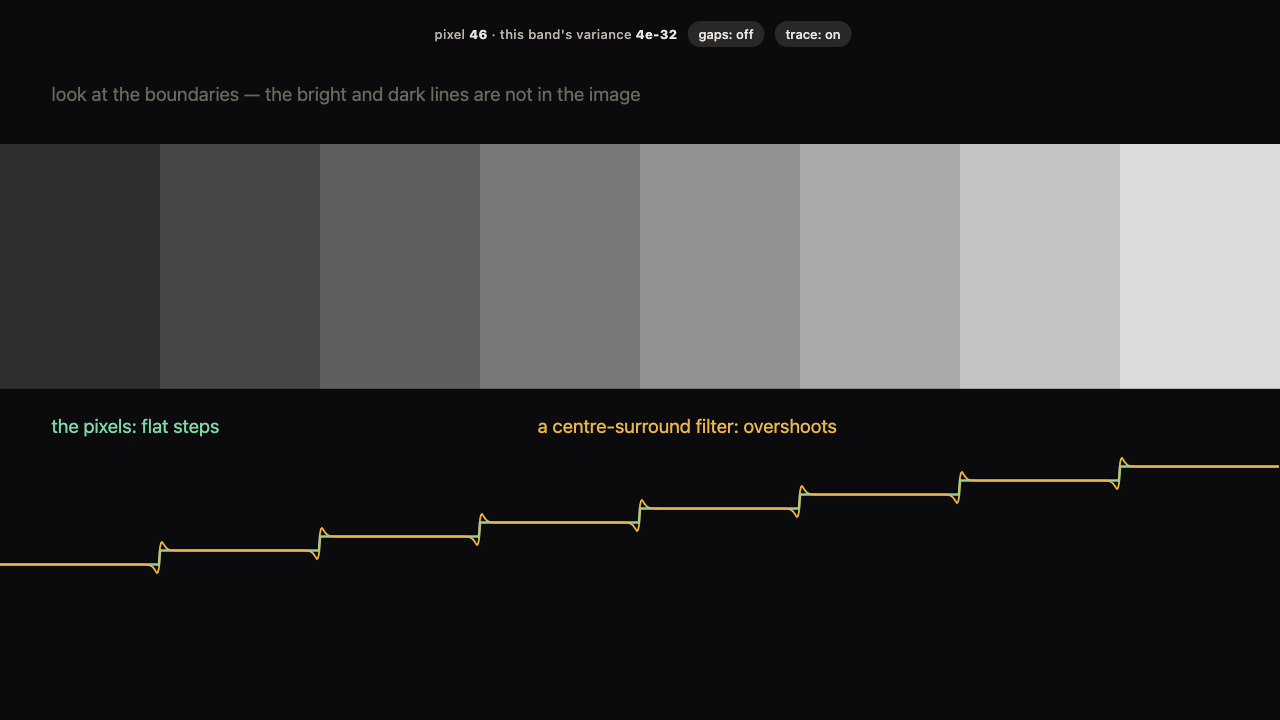
Eight flat grey strips. You will see a bright line and a dark line at every boundary, and I can prove neither exists.
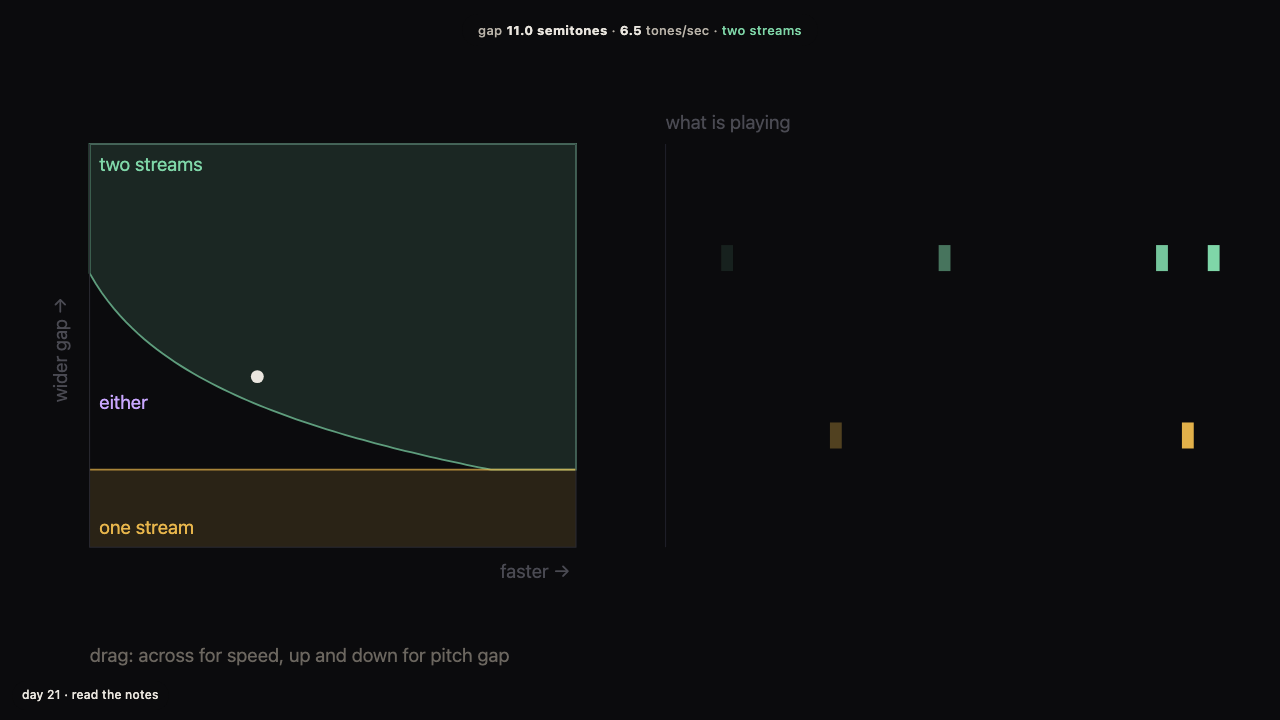
High, low, high, rest. Either a galloping rhythm or two separate beeping lines, and near the boundary, both.