Hidden In Plain Sound
A loud tone does not make its quiet neighbour quieter. It makes it not exist. This is why MP3 works.
Page 8 of 9
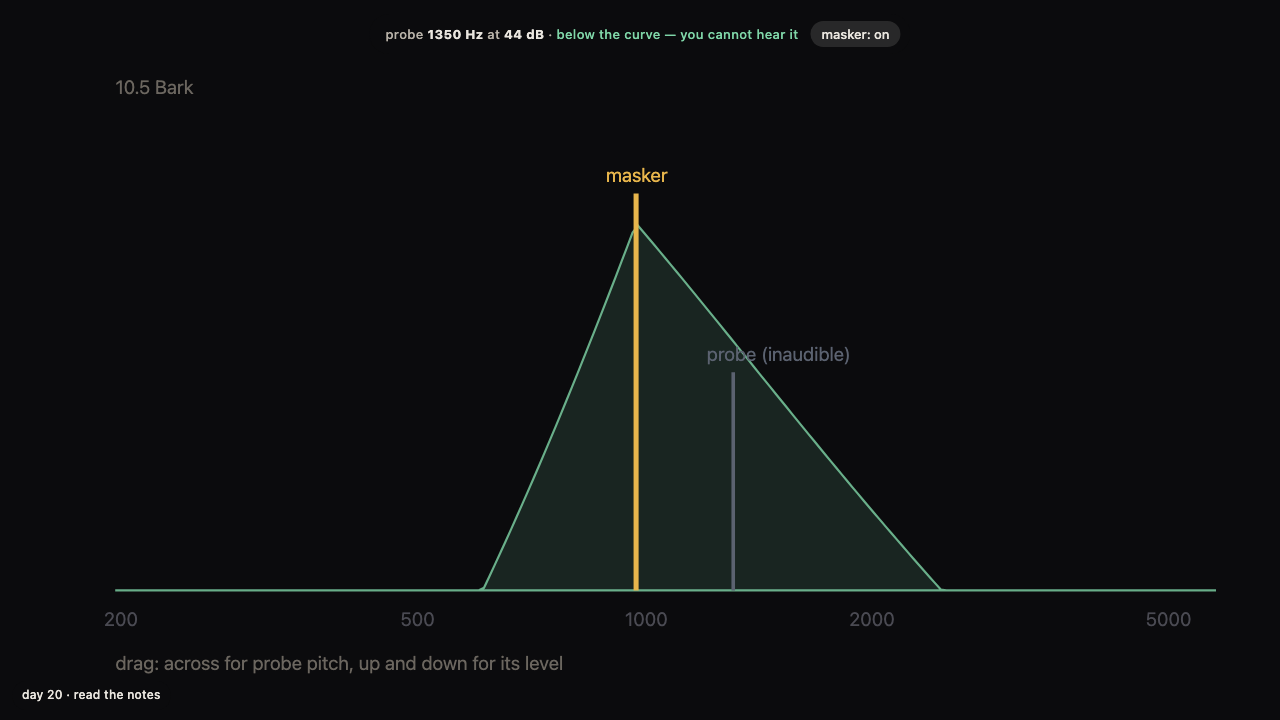
A loud tone does not make its quiet neighbour quieter. It makes it not exist. This is why MP3 works.
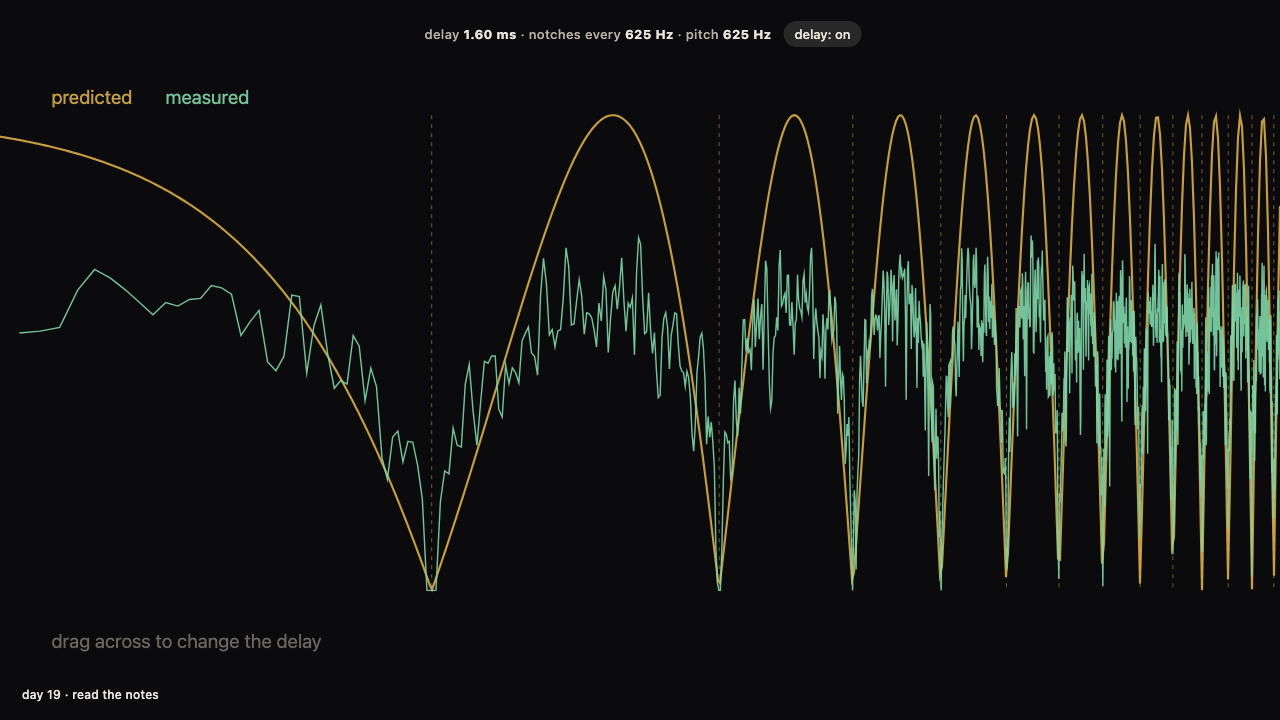
Add a sound to a copy of itself a millisecond late and specific frequencies vanish, at places you can calculate exactly.

Two tones, almost the same. Twenty questions later the page knows your pitch threshold to within about ten percent.
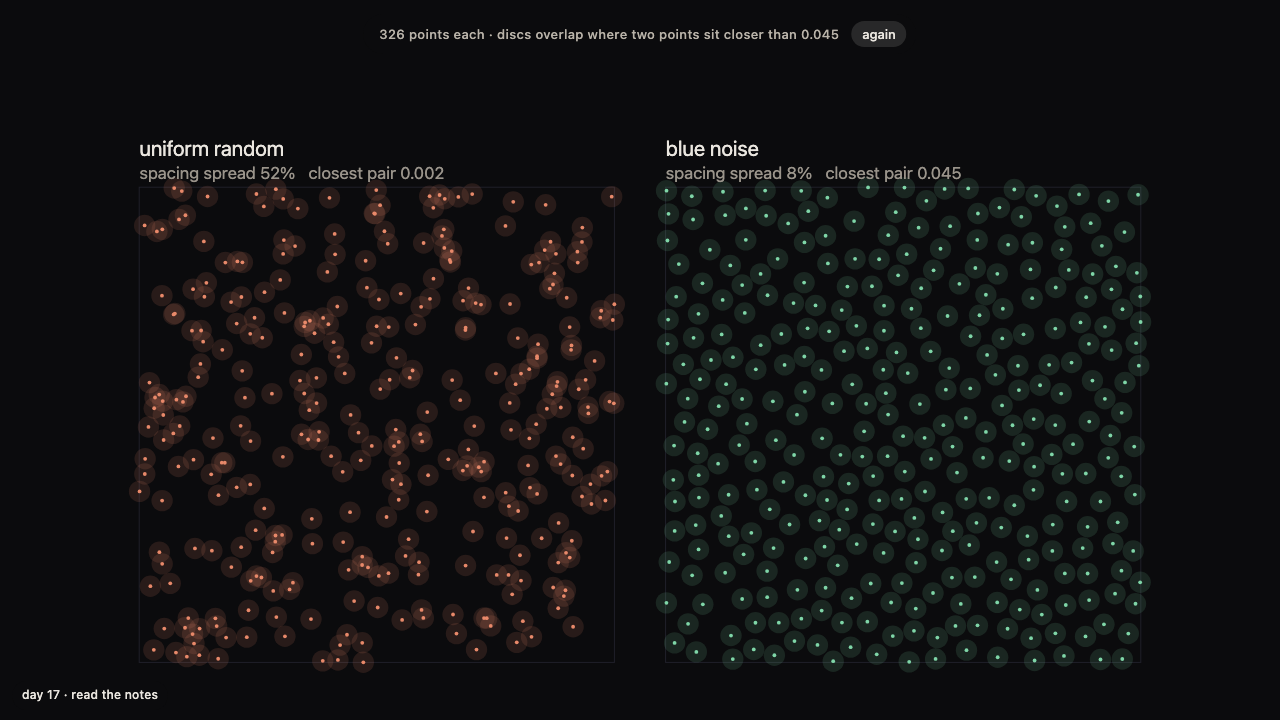
The same number of random points twice, one following a single extra rule. Only one of them looks random.
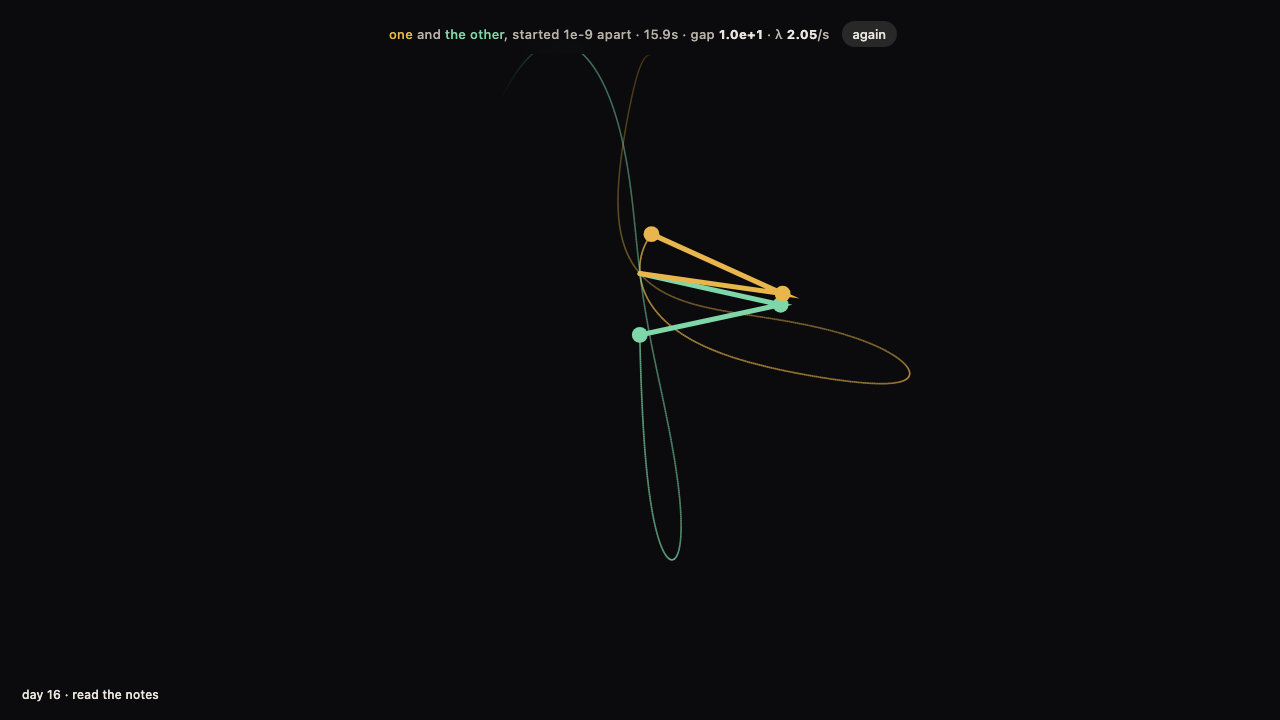
Two identical pendulums, started a billionth of a radian apart. Watch how long identical lasts.
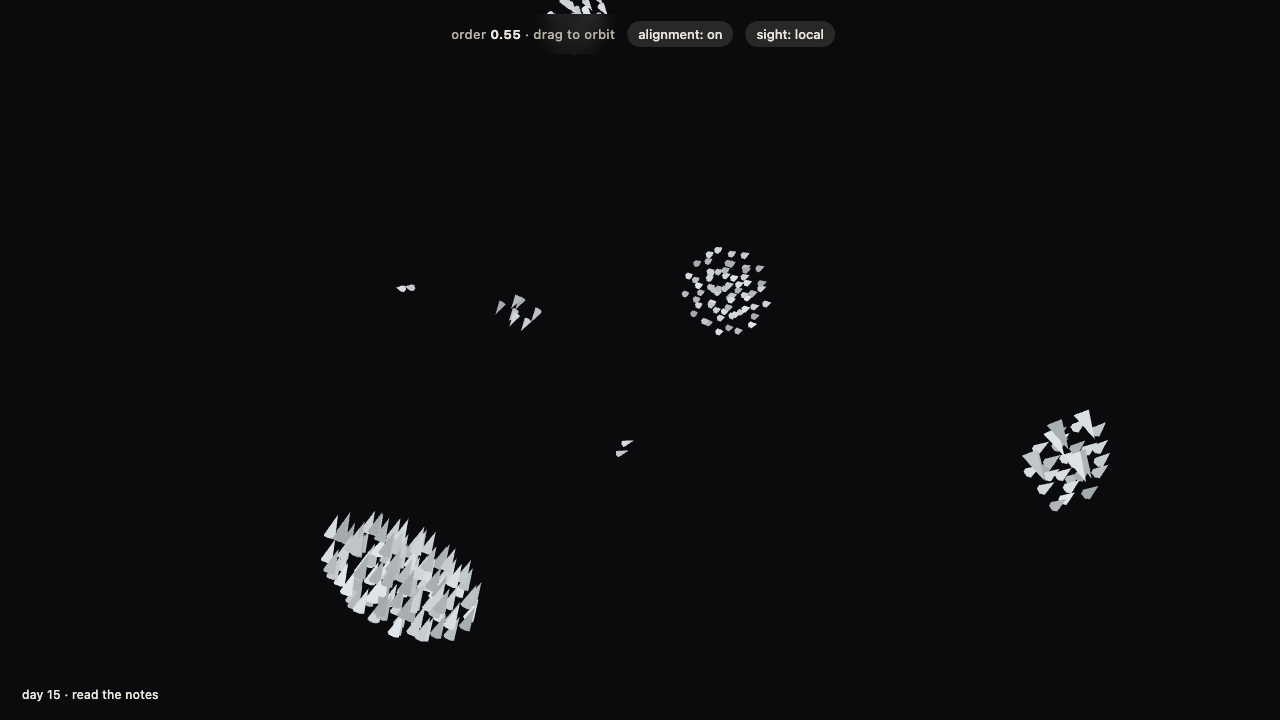
Three hundred birds, three local rules, no leader, and the order they reach is deliberately imperfect.

Four thousand particles drifting through a noise field, and the one operation that makes it look like fluid instead of sand.

Tap the pool. Three lines of stencil, one number that decides whether physics happens or the whole thing detonates.
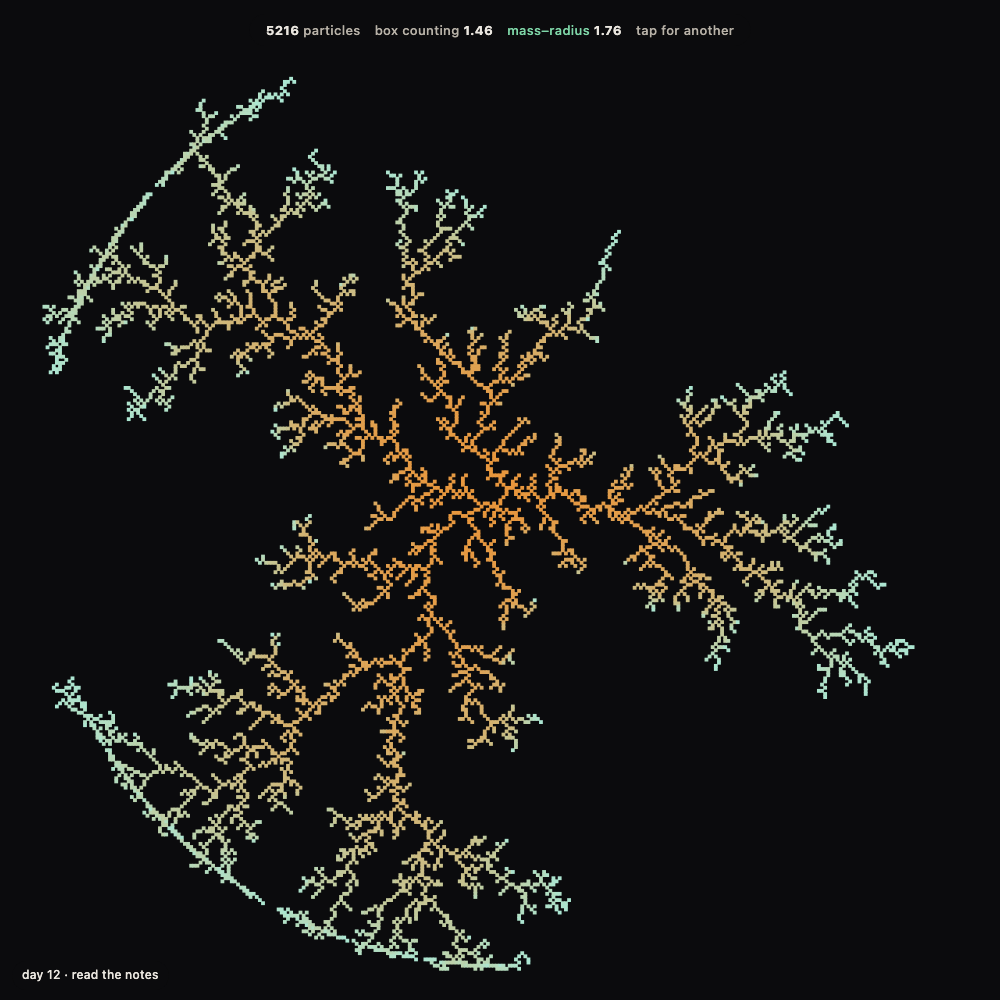
Particles wandering at random until they stick, growing frost, and two ways of measuring it that disagree by a quarter.
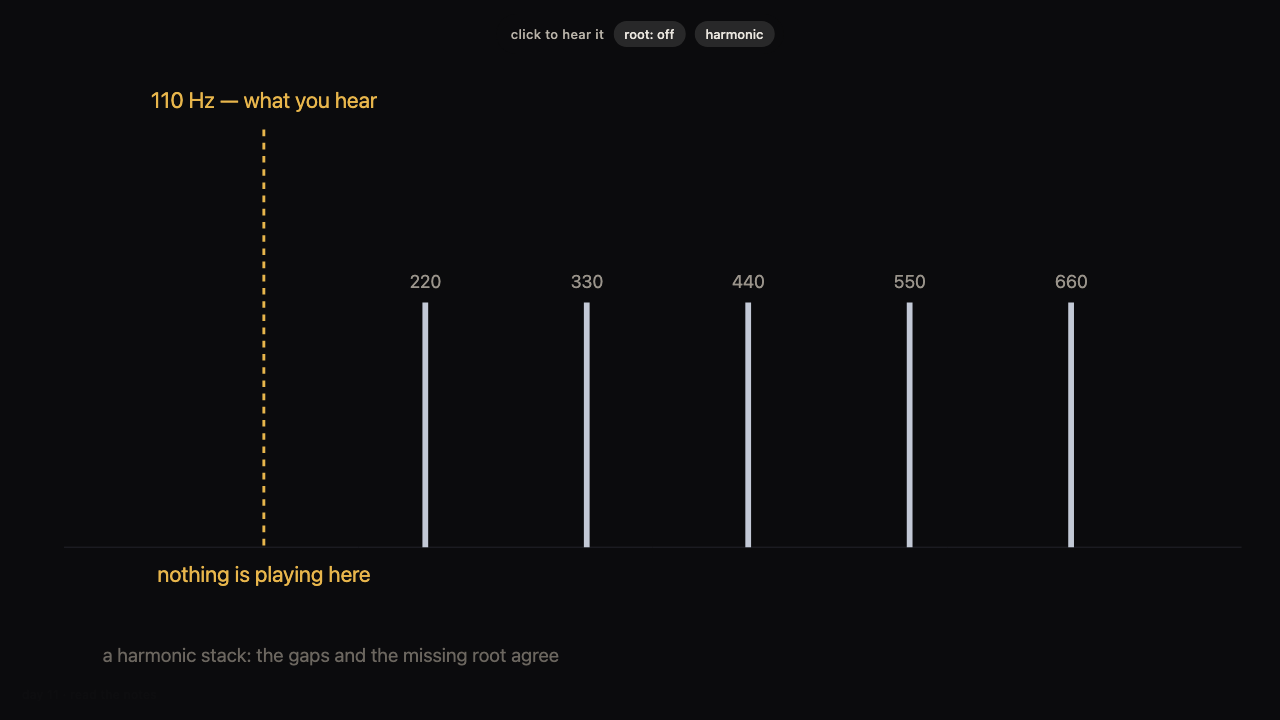
Play a chord of upper harmonics with no root, and your ear invents the root anyway.
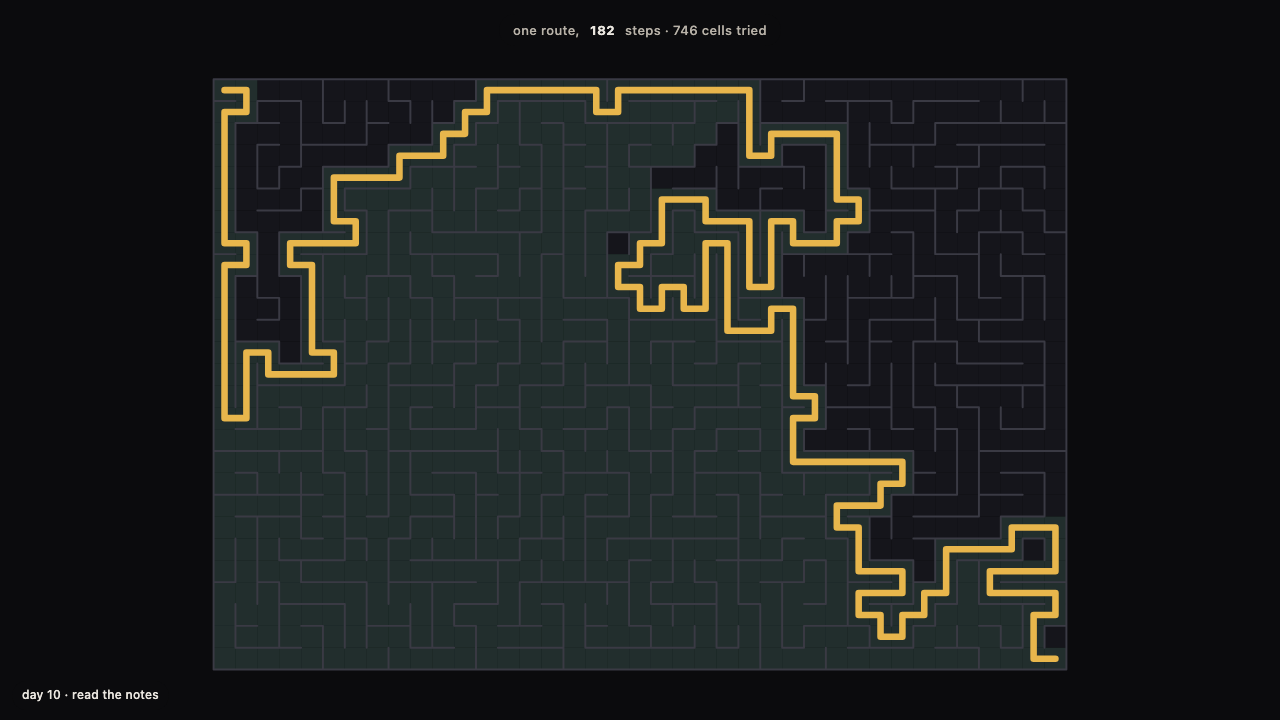
A maze digs itself out of solid rock, then the same algorithm turns round and walks back out.
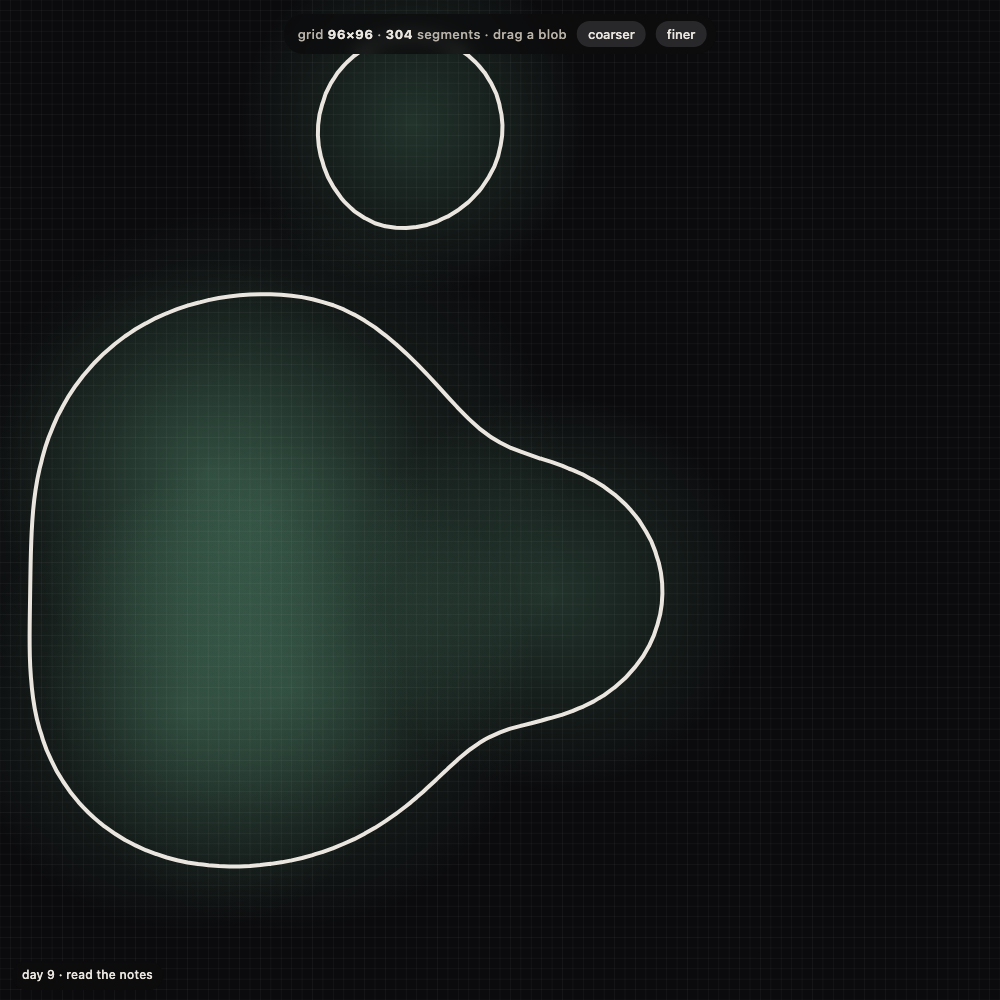
Six blobs merging and splitting, their outline pulled out of a grid of numbers by a sixteen-case lookup table.